
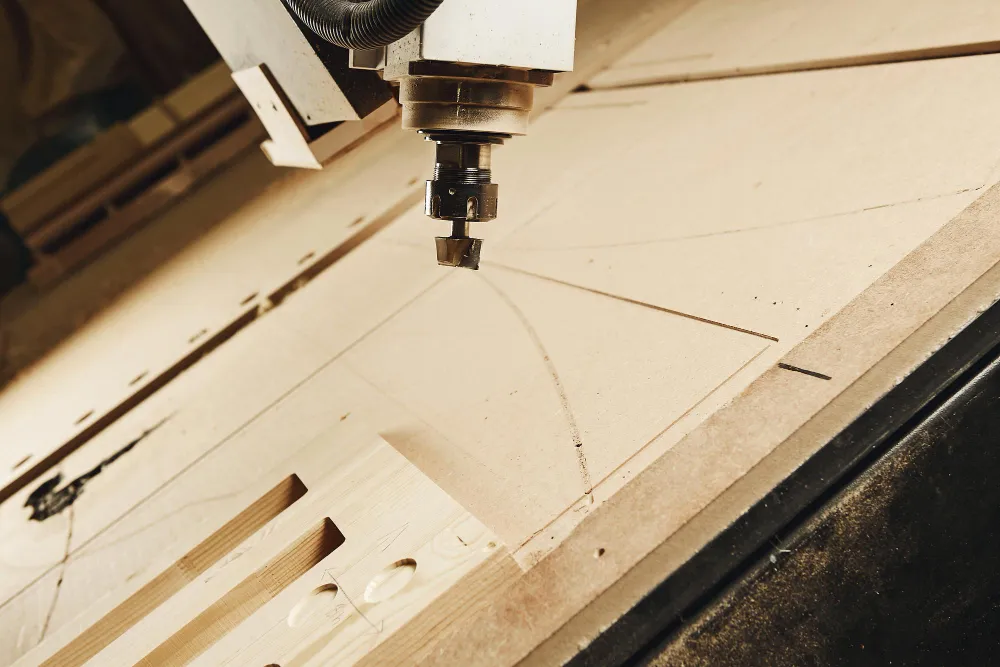
Getting a clean, precise cut with your CNC router largely boils down to one thing: picking the right bit for the job. It’s not just about jamming any old bit into the collet; understanding the specific characteristics of different bits and how they interact with various materials is key to achieving those beautiful, professional results without unnecessary frustration. In 2026, the array of specialized tools and materials means your bit selection is more important than ever.
Before we dive into specifics, let’s get a handle on the basic categories of CNC router bits. Each type is designed with a particular cutting action or finish in mind.
End mills are probably what most people picture when they think of CNC bits. They have cutting edges on both the sides and the end, making them versatile for a wide range of operations.
These bits have a flat, square bottom, making them ideal for creating flat-bottomed pockets, 2D contours, and general material removal. They’re excellent for achieving sharp corners in pockets, though not perfectly sharp due to their radius.
Unlike flat end mills, ball nose bits have a rounded, hemispherical tip. This makes them perfect for 3D contouring, sculpting, and creating smooth, curved surfaces in materials. They’re often preferred for finishing passes in projects where intricate shapes are involved, as they minimize step marks.
These bits have a slight taper along their length, combining some of the features of both flat and ball nose mills. They can offer a good balance between achieving depth and maintaining rigidity, and are sometimes used for fine detail work or mold making.
Spiral bits are distinguished by their helical flutes. The direction of the spiral dictates how chips are evacuated and how the workpiece surface is affected. This is crucial for both cut quality and tool longevity.
With an upcut spiral, the flutes lift the chips up and out of the cut. This is great for clearing chips efficiently, which helps prevent recutting and reduces heat buildup. However, for some materials, especially veneers or thin workpieces, it can cause some fraying or tear-out on the top surface. They’re typically good for full-depth cuts and softer materials.
As the name suggests, downcut spirals push chips downwards into the cut. This creates a really clean top surface finish, making them excellent for materials prone to tear-out on the surface, like plywood or laminated stock. The downside is that chip evacuation can be less efficient, potentially leading to chip packing in deeper cuts, which can cause heat buildup and tool wear. You’ll need to keep an eye on your feed rates and cut depths with these.
Compression bits combine the best of both worlds. The bottom section of the bit has an upcut spiral, while the top section has a downcut spiral. This clever design compresses the material from both sides towards the center of the stock. The result? Exceptionally clean cuts on both the top and bottom surfaces, making them the go-to choice for sheet goods like plywood, melamine, and laminates. Just remember, they need to cut deep enough for both spirals to be engaged to be effective.
Beyond the common end mills and spiral bits, there’s a whole world of specialized bits designed for particular tasks.
These bits have a distinctive V-shape profile, available in various angles (e.g., 60°, 90°). They’re indispensable for engraving, chamfering, and creating decorative V-grooves. The depth of the cut controls the width of the groove, offering a lot of flexibility for artistic designs and sign making.
Straight bits have a flat bottom and straight flutes, running parallel to the shank. While less common in modern CNC where spiral bits often offer advantages for chip evacuation, they are still useful for general routing, dadoes, and mortises, particularly in less demanding applications or when simple, straight cuts are desired.
These are large-diameter, flat-bottomed bits, often with interchangeable carbide inserts. They are specifically designed for surfacing your CNC router’s spoilboard, ensuring it’s perfectly flat and parallel to the gantry. This is crucial for consistent depth of cut across your entire workpiece.
These often include very fine-tipped V-bits or conical bits, sometimes with extremely small radii. They are used for highly detailed artistic carving, intricate graphics, and fine lettering. The precision they offer is remarkable, especially when combined with advanced CNC software.
If you’re looking to enhance your CNC routing projects, understanding the different types of CNC router bits is essential. A great resource for this topic is an article that delves into the various materials and designs of router bits, helping you choose the right one for your specific needs. You can read more about it in this informative piece: Understanding CNC Router Bits: A Comprehensive Guide. This article provides valuable insights that can significantly improve your machining results.
The material you’re cutting has a massive impact on which bit you should choose. A bit that’s perfect for wood might quickly be ruined by aluminum, and vice versa.
For natural wood and wood composites like MDF, plywood, and particle board, you have a wide range of options.
Upcut spirals are great for general cutting and material removal, especially when you need efficient chip evacuation. Downcut spirals excel when you need a pristine top surface finish on woods prone to tear-out. Compression bits are champions for plywood and melamine, delivering flawless edges on both sides.
These dense materials can create a lot of fine dust. Upcut bits are good for clearing this dust, but compression bits are often preferred for their clean cuts, especially on laminated MDF. Consider bits with diamond-like coatings for extended life due to the abrasive nature of MDF.
Compression bits are king here for achieving clean edges on both the top and bottom plies, preventing tear-out. Downcut bits can also work well if top surface finish is the priority and you can manage chip extraction.
Cutting plastics requires bits that can evacuate chips efficiently and minimize heat buildup, as plastics can melt and re-weld if temperatures get too high.
Single-flute O-flute bits are often the best choice for acrylics, especially cast acrylic. The large flute helps with chip evacuation, and the geometry is often designed to create a “swarf” rather than fine chips, reducing friction and heat. Polished flutes also help create a smoother edge. For engraving, V-bits work well.
Similar to acrylics, single-flute or two-flute bits with good chip clearance are important. Upcut bits are generally a safe choice to ensure chips are removed. Adjust your feed rate and RPM to find the sweet spot that cuts cleanly without melting.
Cutting metals on a CNC router requires specific bits designed to handle the hardness and generate appropriate chips.
Carbide end mills are essential for aluminum. Look for bits with a strong core and specific geometries designed for non-ferrous metals, often with fewer flutes (1, 2, or 3) and a sharper cutting edge to prevent chip re-welding. Proper lubrication (a mist coolant system or cutting fluid) is highly recommended to extend tool life and improve finish. Helical flutes designed for aluminum also help with chip evacuation.
These softer metals can be cut with similar bits to aluminum, though generally, you might use slightly different feeds and speeds. Lubrication is still a good idea.
Highly abrasive, these materials require extremely durable bits.
Solid carbide bits with specific geometries designed for abrasive composites are crucial. Often, these bits will have diamond-like coatings (DLC) or even be diamond-coated themselves to withstand the extreme wear. Bits with more flutes can sometimes help distribute the wear. Dust extraction is critical due to hazardous dust.

Once you’ve narrowed down the type of bit, you need to look at its specific characteristics. These details affect everything from cutting speed to surface finish.
This is the diameter of the non-cutting part of the bit that fits into your router’s collet. Common sizes include 1/8″, 1/4″, and 1/2″. Always match the shank diameter to your collet size precisely to ensure secure gripping and prevent runout.
This is the actual diameter of the cutting part of the bit. A larger diameter bit is generally more rigid and can remove more material per pass (due to larger chip load capability) but reduces detail. Smaller diameter bits are for finer details and smaller radii.
The number of cutting edges on a bit, called flutes, significantly impacts performance.
Excellent for chip evacuation and melting-prone materials like plastics and aluminum, as there’s a lot of space for chips.
A good all-rounder for many materials (wood, plastics, softer metals). Offers a balance between chip removal and cutting stability.
Better for harder materials or for achieving a finer surface finish, as more cutting edges are engaged with the material. However, they reduce chip space, so might require lower feed rates or more efficient chip evacuation.
We’ve covered these, but remember: Up-cut for efficient chip removal and general routing, down-cut for clean top surfaces, and compression for clean top and bottom surfaces in sheet goods.
Modern bit coatings (like TiN, AlTiN, or diamond-like carbon/DLC) are game-changers. They increase hardness, reduce friction, and improve heat resistance, significantly extending tool life, especially in abrasive materials or high-speed applications. For 2026, expect to see even more advanced and specialized coatings available.
Ensure the overall length of your bit is sufficient to reach the maximum depth of your cut, plus enough length to be securely held in the collet. The flute length (or length of cut) should ideally be slightly longer than your intended cutting depth, but not excessively so, as a longer flute can reduce rigidity and increase deflection.
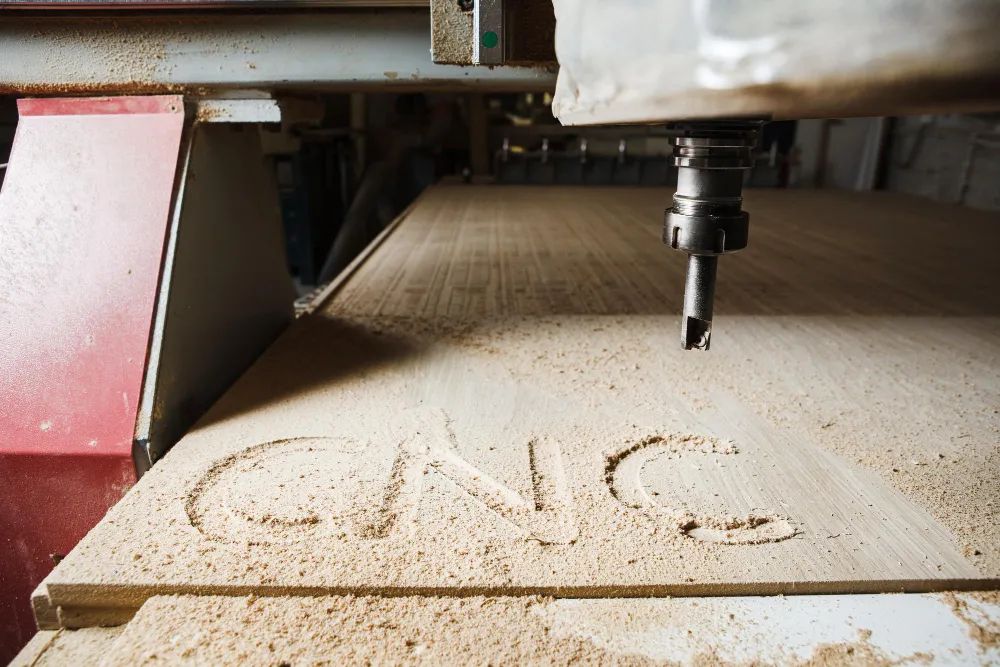
You can have the perfect bit, but if your feeds and speeds are off, your results will suffer, and your bits will wear out quickly. This is where precise control comes in.
Chip load is arguably the most critical factor. It’s the thickness of the material that each cutting edge removes per revolution.
Start with the bit manufacturer’s recommended chip load values for your specific material. These are usually provided in thousands of an inch or millimeters per tooth (IPT/MMT).
Once you have the recommended chip load (CL), you can calculate appropriate feeds and speeds:
Or, if you know your desired RPM:
It’s better to think more simply:
When exploring the world of CNC router bits, it’s essential to understand their various types and applications to achieve the best results in your projects. For a deeper insight into the selection process and the impact of different materials on performance, you can check out this informative article on CNC Router Bits. This resource provides valuable tips that can enhance your understanding and help you make informed decisions for your woodworking or metalworking tasks.
| Bit Type | Chất liệu | Application | Shank Size |
|---|---|---|---|
| Straight Bit | Carbide | Grooving, dadoes, and rabbets | 1/4 inch |
| Upcut Spiral Bit | Carbide | Routing out materials | 1/2 inch |
| Downcut Spiral Bit | Carbide | Creating clean top surfaces | 1/4 inch |
| Compression Bit | Carbide | For laminated materials | 1/2 inch |
Even the best bits won’t perform if they’re not cared for. Proper maintenance ensures consistent precision and extends the life of your investment.
After each use, especially with resinous woods or plastics, clean your bits. Resinous buildup on the flutes reduces cutting efficiency, increases heat, and can make the bit appear dull.
Regularly inspect your bits under good light. Look for:
Store bits properly to protect their delicate cutting edges.
By understanding these fundamentals, making informed choices about bit types and specifications, and diligently maintaining your tools, you’ll be well on your way to achieving consistently precise and high-quality results with your CNC router. Keep exploring new bits and techniques, and in 2026, you’ll find an even wider array of specialized tools to push the boundaries of your CNC projects.
CNC router bits are cutting tools used with computer numerical control (CNC) machines to shape, cut, and carve various materials such as wood, plastic, and metal. These bits come in a variety of shapes and sizes to achieve different cutting and carving effects.
There are various types of CNC router bits, including straight bits, spiral bits, ball-nose bits, V-bits, and specialty bits such as dovetail and keyhole bits. Each type is designed for specific cutting tasks and materials.
When choosing a CNC router bit, consider the material you are working with, the desired cutting or carving effect, and the speed and feed rates of your CNC machine. It’s important to match the bit’s design and cutting edge to the specific requirements of your project.
To maintain and prolong the life of CNC router bits, it’s important to clean them regularly, store them properly, and avoid excessive heat and wear. Additionally, using the correct cutting speeds and feeds, as well as proper tool paths, can help extend the life of the bits.
CNC router bits can be purchased from various suppliers, including woodworking and metalworking stores, online retailers, and directly from manufacturers. It’s important to choose reputable suppliers that offer high-quality bits suitable for your specific CNC machine and project requirements.


 English English
 العربية
 Bahasa Indonesia
 ไทย
ไทย Deutsch
 Русский
 Español
 Nederlands
 Italiano
 Tiếng Việt
 Português do Brasil
 Français
 Dansk
Dansk Xhosa
Xhosa 日本語
日本語 香港中文
香港中文