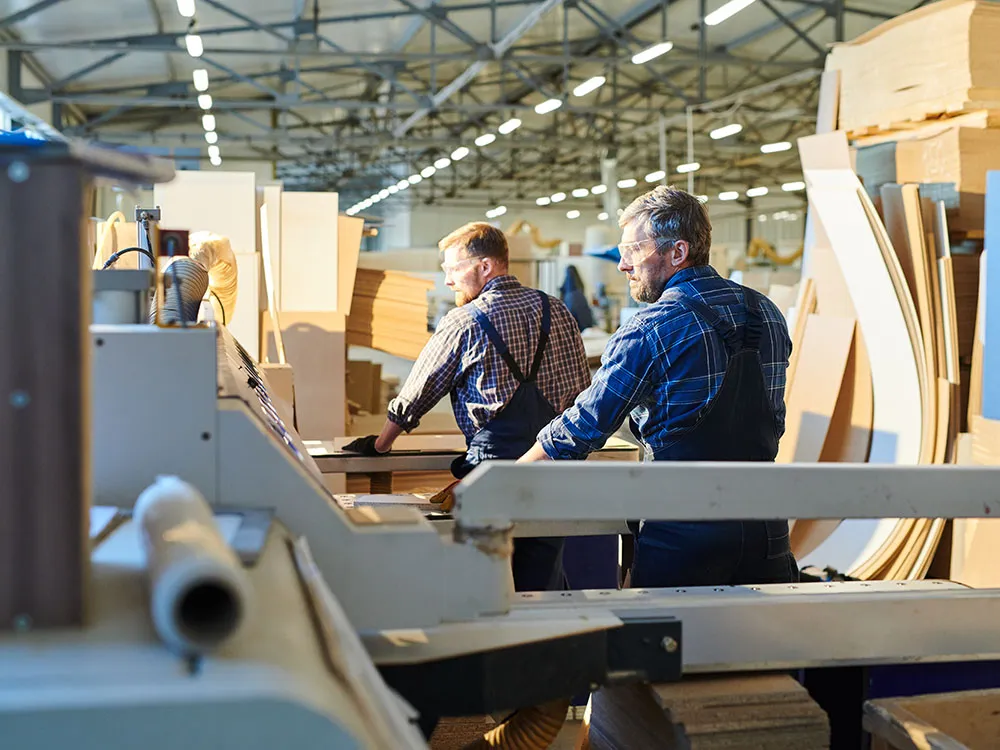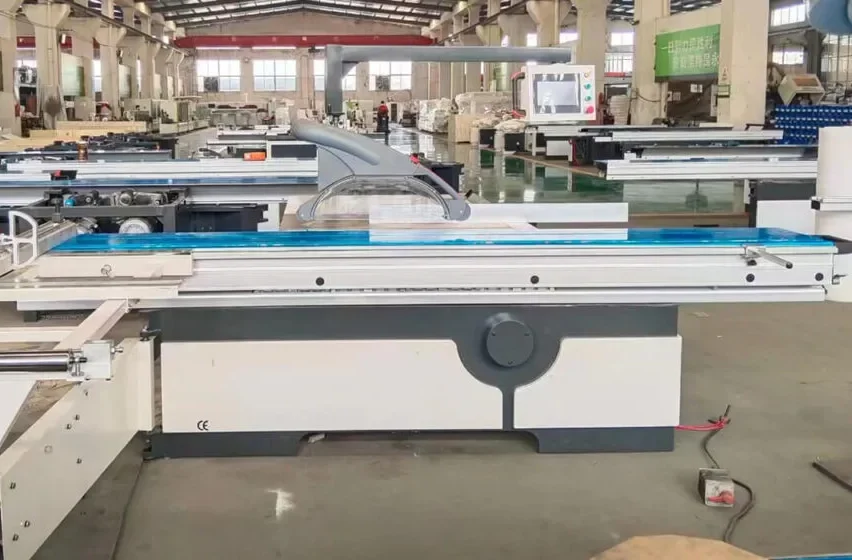

If you’re looking to elevate the finish and durability of your woodworking projects, especially those using melamine boards, a melamine edge bander can be a really practical tool. It essentially applies a thin strip of material to the raw edges of your panels, creating a clean, finished look and protecting the core. This is particularly useful for achieving professional-grade results in projects like cabinetry, shelving, and furniture.
Even if you’re comfortable with basic woodworking, you might wonder if edge banding is truly necessary. It’s more than just aesthetics; it’s about both form and function.
When you cut a melamine panel, you’re left with an exposed particleboard or MDF core. This not only looks unfinished but also leaves the core vulnerable.
Let’s be honest, those raw, chipped edges don’t exactly scream “professional craftsmanship.” Edge banding instantly transforms the look, making your project appear much more polished and intentional.
The core material beneath the melamine is often susceptible to moisture absorption. If exposed, it can swell, delaminate, and eventually compromise the structural integrity of your piece. Edge banding acts as a protective barrier against spills and humidity, greatly extending the lifespan of your work. It also offers a degree of impact resistance, preventing chipping and damage to the panel’s delicate edges.
Especially in kitchen or bathroom cabinetry, raw edges can harbor dirt and grime. A sealed edge is far easier to clean and maintain, contributing to a more hygienic environment.
Modern melamine boards are a fantastic material for many woodworking projects. They’re affordable, consistent, and come in a vast array of colors and finishes.
These boards are an efficient and environmentally responsible choice for many professionals. They make excellent use of wood byproducts and their consistent quality means less waste and more predictable results.
Compared to solid wood or veneered plywood, melamine offers a significantly more cost-effective option while still providing a durable and aesthetically pleasing surface.
If you’re interested in learning more about the applications and benefits of using a melamine edge bander, you might find this related article insightful: Melamine Edge Banding: What You Need to Know. This article delves into the various features of melamine edge banders, their efficiency in furniture production, and tips for selecting the right equipment for your woodworking projects.
Not all edge banders are created equal. The right machine for you will depend on your scale of production, budget, and desired level of automation.
For the hobbyist or small workshop, manual edge banders are a great entry point. They require a bit more user input but are much more affordable.
These are essentially glorified heat guns and rollers. You apply a pre-glued edge band, heat it with the tool, and then press it firmly into place. They’re good for occasional use and small, straight edges.
They are highly portable, inexpensive, and don’t require much space. You can easily take them to a job site or move them around your shop.
Consistency can be a challenge, especially on longer runs or curves. The quality of the bond depends heavily on technique. They’re also slower than other methods.
These are a step up from handheld tools. They often feature a dedicated heating element and a more stable platform for applying pressure. Some even have a trim feature.
With a stable base, you get much better control over the application process, leading to more consistent results than handheld options.
They’re well-suited for smaller batches of components and can handle both straight and gently curved edges with practice.
These machines bridge the gap between manual and fully automatic. They often automate the glue application and feed, but still require manual trimming and finishing.
If you’re moving beyond occasional projects and doing more repetitive work, a semi-automatic machine can significantly speed up your process and improve quality.
The automated feed and glue application drastically reduce the time spent per piece compared to purely manual methods.
By standardizing the glue spread and feed rate, you’ll achieve a more uniform and durable bond.
When considering a semi-automatic, pay attention to features like adjustable feed speeds, temperature control, and the type of glue pot.
Some use granular hot melt glue, others cartridges. Cartridge systems can be cleaner and quicker to change colors.
Some semi-automatic machines offer integrated trimming units, which save a lot of time and yield a cleaner finish right off the machine.
These are the workhorses of professional furniture production. They automate almost every step, from feeding the panel to trimming and polishing the edge.
For any serious furniture maker or cabinet shop, an automatic edge bander is an absolute necessity. It delivers unparalleled speed, consistency, and a flawless finish.
These machines are designed for continuous operation and can process hundreds or even thousands of panels per day.
With multiple stations for pre-milling, glue application, end trimming, flush trimming, corner rounding, scraping, and buffing, they produce a perfectly finished edge every time.
Modern automatic machines come with a wide range of advanced features that go beyond basic banding.
This station squares and cleans the panel edge just before glue application, ensuring the best possible bond and eliminating saw blade marks.
For a premium look, these machines can automatically round the corners of your banded panels, eliminating sharp points and improving durability.
High-end machines can even band panels with complex curves and intricate shapes, essential for custom furniture and architectural millwork.

The type of edge band you use plays a significant role in the final look and durability of your project.
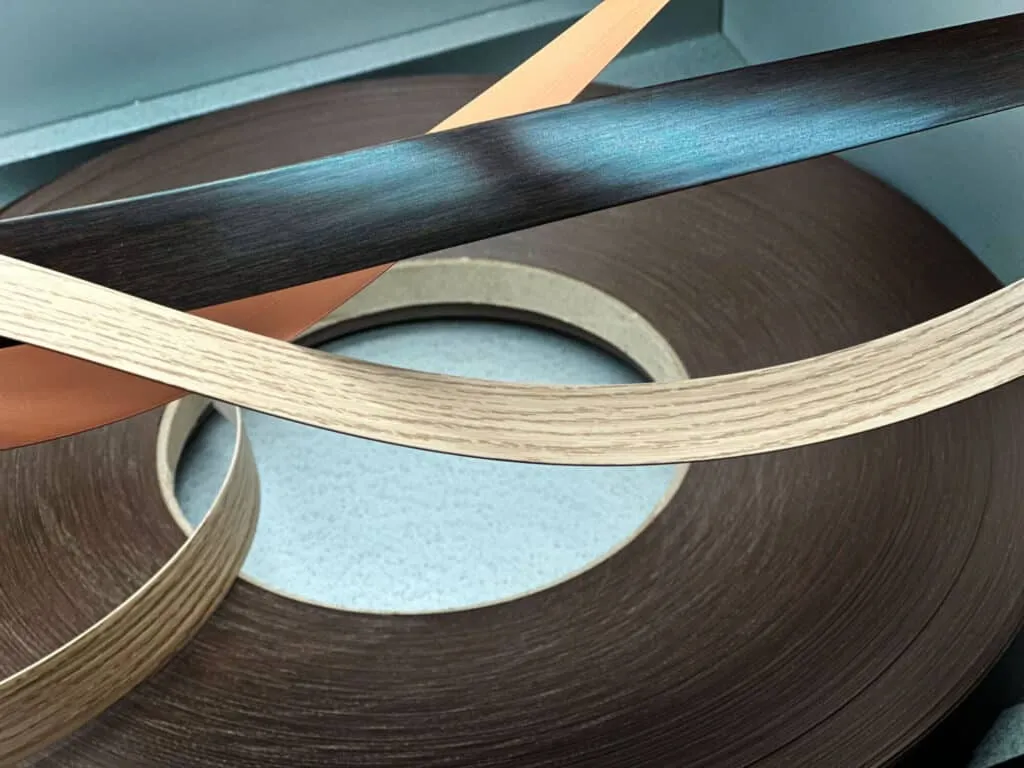
These are the most common types of edge banding materials used with melamine. They are durable, flexible, and come in countless colors and patterns.
PVC and ABS are resistant to impact, chemicals, and moisture, making them ideal for high-traffic areas. Their flexibility allows them to conform to minor curves.
You can find PVC or ABS edge banding that perfectly matches the color and texture of virtually any melamine board, creating a seamless and integrated look.
For projects that require a natural wood look, veneer edge banding is an excellent choice.
If your melamine board has a wood grain pattern, a real wood veneer edge band can significantly enhance the realism of the design.
Veneer edge banding can be stained and finished to match other wood components in your project, offering more customization options.
Some specific types of edge banding are actually made from melamine. These are less common with hot-melt glue systems but exist.
Melamine edge banding can be a very affordable option, especially for internal or less visible components.
It’s generally less flexible than PVC or ABS, making it more challenging to apply to curves.

Even without a fancy machine, you can still achieve decent results with some patience and the right methods.
This is the most accessible method for hobbyists. You’ll need an iron, a utility knife, and a sanding block.
Place the pre-glued edge band onto your panel edge, then use a household iron (on a medium-hot setting) to melt the adhesive. Press firmly as you move the iron along the strip.
Once cooled, use a sharp utility knife or a specialized edge banding trimmer to remove the excess material flush with the panel. Finish with a light sanding to break any sharp edges.
For a more robust bond than iron-on, you can use contact cement with non-glued edge banding.
Liberally apply contact cement to both the edge of the panel and the back of the edge band. Allow it to set until tacky (read the product instructions carefully), then carefully align and press the band onto the panel.
This method offers a very strong bond but requires careful alignment, as once the surfaces touch, they’re difficult to reposition. It also involves working with fumes, so good ventilation is essential.
If you’re looking to enhance your woodworking projects, understanding the benefits of a melamine edge bander can be crucial. This tool not only provides a professional finish but also improves the durability of your furniture. For a deeper dive into the advantages of using edge banding in furniture making, you can check out this informative article on understanding edge banding. By exploring this resource, you’ll gain insights that can elevate your craftsmanship and help you make informed decisions about your woodworking tools.
| Feature | Specification |
|---|---|
| Machine Type | Automatic |
| Edge Banding Thickness | 0.4-3mm |
| Panel Thickness | 10-60mm |
| Feeding Speed | 12-20m/min |
| Gluing System | Pre-milling and Gluing |
Proper setup and regular maintenance are key to consistent performance and longevity of your edge banding machine, regardless of its type.
Even simple machines benefit from careful setup. For automatic machines, calibration is critical.
Adjusting the feed speed and glue pot temperature for the specific edge banding material and adhesive you’re using will ensure optimal bonding and a clean application. Too hot or too cold, and your bond quality will suffer.
Properly set trimmers are essential for a flush, clean edge. Even a slight misalignment can lead to “proud” (protruding) or “under-cut” (recessed) edges.
Glue residue is the enemy of any edge bander. Regular cleaning prevents build-up and ensures smooth operation.
For hot melt glue pots, regularly clean out old glue, especially if you’re switching colors or types. Follow manufacturer guidelines for cleaning agents.
Resin and glue can build up on trimmer blades, leading to dulling and poor cuts. Keep them clean and sharp.
Dull blades reduce finish quality and put strain on your machine.
Regularly check these blades for sharpness. Sharpening services exist, or you can keep spare sets on hand.
Keep scraper blades sharp and free of nicks. Buffing wheels can eventually wear out or become impregnated with old glue; replace them as needed.
An edge bander, whether simple or complex, is an investment. Getting the most out of it means understanding its capabilities and maintaining quality practices.
Using high-quality edge banding and compatible adhesives is crucial. Don’t skimp here, as it can compromise the entire project.
Always ensure your edge banding is compatible with the substrate material and the glue system of your machine. This prevents delamination and ensures a strong, lasting bond.
If your project will be exposed to specific environmental conditions (e.g., high humidity, extreme temperatures), choose an edge banding material and adhesive that can withstand them.
Good technique, even with an automatic machine, makes a difference.
Ensure your panel edges are clean, square, and free of dust or debris before feeding them into the machine. Any imperfections here will be magnified by the edge band.
Maintain consistent feed speeds and monitor glue application. Deviations can lead to weak bonds or unsightly glue lines.
Even with the best tools, problems can arise. Knowing how to troubleshoot helps.
If you’re seeing a prominent glue line, check your glue temperature, application rate, and panel pressure. It could also indicate an issue with the panel edge preparation.
This often points to insufficient glue, incorrect temperature, or inadequate pressure during application. Ensure surfaces are clean and dry, and that your machine is properly calibrated.
By understanding these points, you can make informed decisions about integrating a melamine edge bander into your woodworking process. It’s about achieving a professional, durable finish that elevates the quality and lifespan of your projects.
A melamine edge bander is a machine used in woodworking to apply a thin strip of material, typically melamine, PVC, or wood veneer, to the edges of furniture components such as shelves, cabinets, and tabletops.
A melamine edge bander works by feeding the edge banding material through a heated adhesive application system, which then applies the material to the edge of the workpiece. The machine also trims the excess material and applies pressure to ensure a secure bond.
Using a melamine edge bander can improve the appearance and durability of furniture components by providing a seamless and protective edge. It also increases efficiency and productivity in woodworking operations.
A melamine edge bander can apply various types of edge banding materials, including melamine, PVC, wood veneer, and ABS. The specific type of material used depends on the desired aesthetic and functional requirements of the furniture component.
When choosing a melamine edge bander, it is important to consider factors such as the size and thickness of the workpieces, the type of edge banding material to be used, the required production capacity, and the level of automation and customization needed for the woodworking operation.


 English English
 العربية
 Bahasa Indonesia
 ไทย
ไทย Deutsch
 Русский
 Español
 Nederlands
 Italiano
 Tiếng Việt
 Português do Brasil
 Français
 Dansk
Dansk Xhosa
Xhosa 日本語
日本語 香港中文
香港中文