
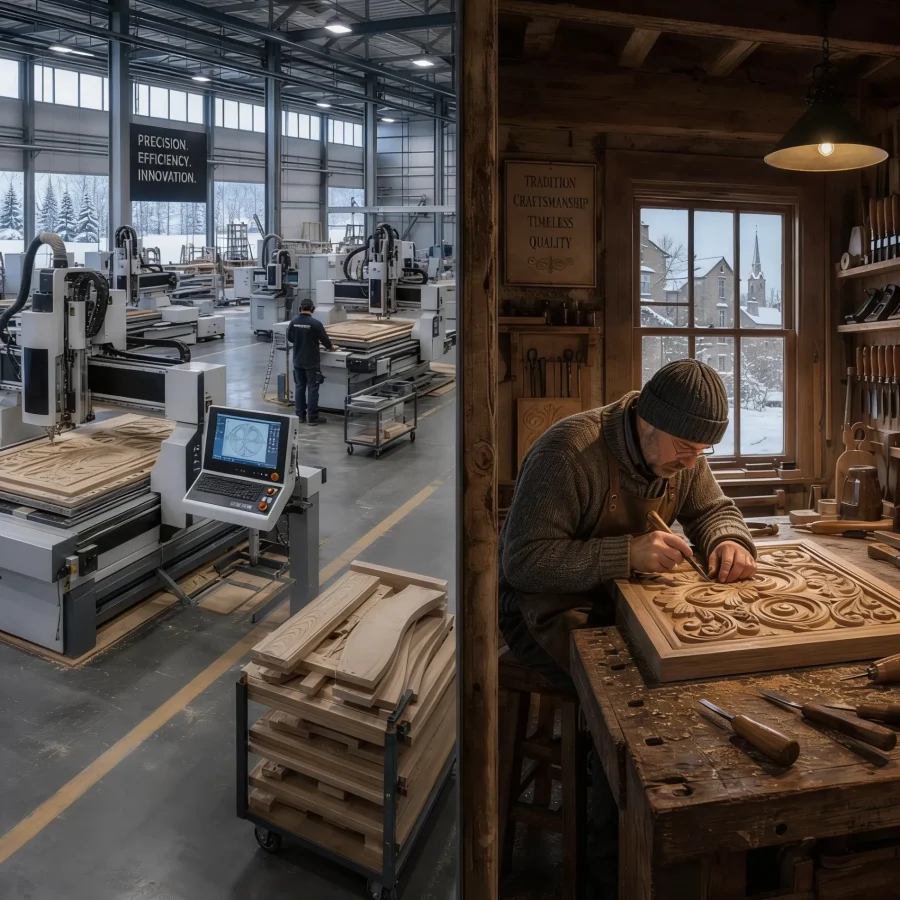
Throughout history, the ancient craft of woodworking has experienced incredible changes, progressing from simple tools to complex machinery. Among these developments, the introduction of Computer Numerical Control (CNC) technology has created an intriguing contrast with the age-old techniques of traditional wood carving. Although both methods seek to create complex patterns in wood, they differ greatly in their methods, capacities, and end products. This article explores the benefits, drawbacks, & subtle differences between traditional wood carving & CNC carving.
The art of traditional wood carving, which has been handed down through the generations, is based on human talent, intuition, & a deep comprehension of the material. Using guiding tools to shape & refine the form, the craftsman works directly with the wood in a hands-on manner. The Hand of the Artisan.
Traditional wood carving relies heavily on the skill of the individual carver. An intuitive sense of the grain, resistance, & natural beauty of the wood is the result of years of practice. This close relationship enables impromptu modifications and a design fluidity that is frequently challenging to reproduce mechanically. Methods and Tools. Traditional carvers use a variety of hand tools, each with a distinct function.
Knives, gouges, mallets, and chisels are used precisely to sculpt intricate details and remove material. The technique and tool selection have a direct impact on the carving’s texture and personality. A thorough grasp of edge geometry and careful manipulation are required to achieve a variety of cuts, from smooth curves to sharp lines. Content Knowledge.
Sure, here is the sentence with the clickable link:
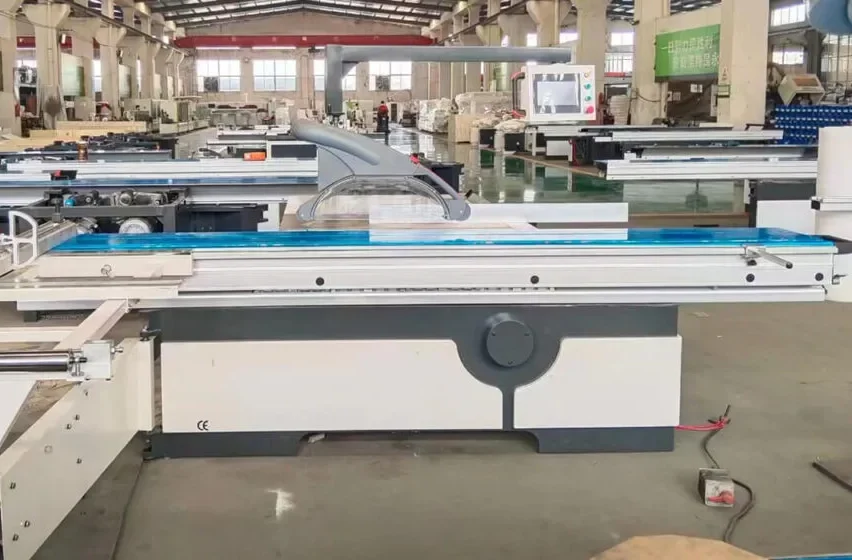
I’m interested in learning more about wood CNC carving machines, and you can find them here:
An unmatched understanding of the wood itself is developed by a traditional carver. They gain the ability to read the grain, spotting areas with different densities, knots, & possible weaknesses. This information is essential for avoiding splits & fractures as well as for making use of the wood’s inherent qualities to improve the carving’s appearance. The carving process and the finished product are greatly influenced by the kind of wood selected, its age, & how it has been seasoned.
A relatively new development in woodworking, CNC carving uses automated machinery & computers to produce incredibly accurate & consistent results. It signifies a dramatic change from manual labor to automated execution. Workflow and Digital Design. A CNC carving’s journey starts in the digital world. To produce three-dimensional models of the carvings they want, designers use specialized software like CAD (Computer-Aided Design) and CAM (Computer-Aided Manufacturing).
Before any actual material is touched, this digital blueprint enables precise detailing, iterative design modifications, and a full visualization of the finished product. The accuracy of the carved object is directly correlated with the accuracy of these digital models. The function of G-Code. CAM software converts the completed digital model into G-code, a programming language that directs the movements of the CNC machine. This code controls the cutting tools’ depth, speed, and path, guaranteeing that the machine performs the design with unmatched precision and consistency.
The entire carving process is orchestrated by the G-code, where each line represents a distinct action. Automated Tools and Functions. A spindle that holds different interchangeable cutting bits is a common feature of CNC machines. Similar to conventional chisels, these bits come in a variety of sizes and shapes, but the machine’s programming controls every aspect of their movement. Complex geometries & minute details can be carved without human assistance thanks to the machine’s automatic tool changes.
This automation minimizes the possibility of human error and significantly lessens the operator’s physical demands. One of the most obvious differences between the two approaches is how well they work for one-of-a-kind, artistic projects as opposed to large-scale, repetitive production. distinctiveness and creative expression. When it comes to producing one-of-a-kind pieces, traditional wood carving excels.
Every carving displays the unique handprint of the craftsman, showcasing their unique approach, style, and artistic interpretation. Even if they are unintentional, small flaws frequently add to the piece’s personality and authenticity, making it genuinely bespoke. A key component of its artistic appeal is this innate uniqueness. Narrative and Personal Investment.
Traditional carving is a time-consuming and difficult process that frequently gives the final product a very personal story. The carver’s hardships, victories, and devotion become an integral part of the object’s narrative, enhancing its emotional worth & viewer connection. When comparing the emotional resonance of traditional versus machine-made objects, this personal investment is a crucial differentiator. Both consistency and reproducibility. By its very nature, CNC carving is perfect for mass production and achieving flawless reproducibility.
Any number of identical carvings can be created with consistent quality & accuracy once a digital design is refined. When producing parts, architectural details, or decorative elements that need consistent sizing & detailing across several units, this capability is priceless. Uniform output is ensured by the machine’s lack of fatigue and hand waivering. Scalability and speed. In terms of speed & scalability, CNC carving offers substantial benefits for large-scale projects or pressing deadlines.
In the time it would take a traditional carver to finish a single piece, a single machine operating continuously can produce multiple items. This efficiency makes CNC carving a preferred choice for commercial applications where volume and timely delivery are paramount. Although both techniques can create complex designs, their approaches to the problem have different advantages and disadvantages.
The hand’s limitations. Traditional carving, while capable of astonishing detail, is ultimately constrained by the physical limitations of the human hand and the tools employed. It can be difficult and time-consuming to consistently execute extremely fine lines, perfectly symmetrical curves, or intricate undercuts; these tasks frequently call for specialized tools and extraordinary skill. The detailing has a certain organic quality due to the natural variations in hand pressure and movement.
accuracy in mathematics. When it comes to creating extremely complex and geometrically accurate details, CNC carving shines. Extremely fine lines, sharp angles, and intricate three-dimensional forms that would be nearly impossible to create by hand are made possible by the machine’s ability to follow precise digital coordinates. For designs that need precise symmetry or tight tolerances, this mathematical accuracy is especially helpful.
undercuts & overhangs. Contemporary CNC machines, especially those with several axes (e.g. A g. 5-axis machines) can produce intricate overhangs and undercuts that would be very difficult, if not impossible, for a conventional carver to accomplish without a large amount of material waste or highly specialized methods, like joining and carving several pieces. The physical execution process is greatly simplified by the digital model’s capacity to account for these intricate geometries.
The decision between CNC carving and conventional techniques involves important economic and environmental factors in addition to artistic and technical considerations. Operating costs and the initial investment. Depending on its size, axes, and capabilities, a high-quality CNC machine can require an initial investment of several thousand to hundreds of thousands of dollars. In addition to the machine itself, this expense covers continuing maintenance & the required CAD/CAM software.
But once it’s up and running, the labor costs per piece can be much less than hiring a professional traditional carver, especially for repetitive jobs. Training & acquisition of skills. A thorough understanding of the craft, years of committed practice, and mentoring are necessary to become a skilled traditional wood carver. It is a methodical, gradual process of learning new skills that is frequently transmitted through apprenticeships. On the other hand, operating a CNC machine necessitates training in software and machine operation, which can be obtained more quickly, though experience is still needed to master advanced techniques.
Efficiency & Material Waste. When making corrections or carving intricate shapes out of solid blocks, traditional carving can occasionally result in more material waste. The nature of subtractive carving by hand can be less accurate in waste management, even though expert carvers strive for efficiency. With its accurate tool paths & optimized material usage algorithms, CNC carving can frequently reduce waste by effectively planning cuts and possibly using smaller stock sizes for particular components. Environmental Impact & Energy Consumption. Larger industrial machines may have high power requirements, and CNC machines need electricity to function.
The energy used in the production of the machines & the disposal of electronic parts at the end of their useful lives are also included in the environmental impact. In terms of power consumption during the carving process, traditional carving typically has a lower direct carbon footprint, even though it still requires human energy. For a comprehensive comparison, it is necessary to take into account the environmental effects of tool manufacturing, such as the production of steel for chisels. Beyond the technical aspects, the final tactile and aesthetic characteristics of the carved object frequently vary greatly, affecting how a piece is viewed and valued.
Organic versus Clinical. Conventional carvings frequently have an organic, “hand-hewn” appearance. Many people find the unique texture and aesthetic appealing due to the subtle variations in tool marks, the slight unevenness of surfaces, & the obvious signs of human effort. This organic quality reflects the human touch & gives the piece a feeling of warmth and authenticity. Surface Texture and Finish.
Depending on the carver’s intent and finishing methods, a traditional carving can have a wide range of surface finishes, from smooth and polished to deeply textured and robust. Tool marks are frequently purposefully left to add to the piece’s personality and provide a tactile & visual record of the carving process. uniformity and perfection.
CNC carvings, on the other hand, usually have a smooth, consistent finish. Depending on the tool path strategy and bit used, the machine’s precision guarantees perfectly smooth surfaces, uniform curves, & the same textures on several pieces. Some critics contend that this degree of perfection can occasionally produce a “clinical” or soulless appearance, lacking the distinctive character of a handmade object, even though this can be extremely desirable for some applications. The importance of flaws.
The minor flaws in traditional carving are seen by many collectors and connoisseurs as signs of authenticity, evidence of human effort, and a demonstration of the artisan’s skill rather than as defects. These subtleties add to each piece’s individuality and are frequently crucial to its perceived artistic value. Traditional wood carving and CNC carving are not mutually exclusive, despite the fact that they are frequently portrayed as antagonistic.
In fact, there is a growing trend of artisans adopting both approaches, utilizing their respective advantages to advance their craft. hybrid strategies. Using CNC machines for precise joinery, complex repetitive patterns, or initial roughing out of complex forms, many modern woodworkers are embracing hybrid approaches. The artisan then uses traditional hand tools to refine details, add particular textures, and give the piece that distinct, human touch after the machine has completed the basic work.
This cooperative approach maximizes productivity without compromising artistic expression. Developing Creative Perspectives. For conventional carvers, CNC technology can also be an effective design tool.
Before committing to labor-intensive hand carving, it enables them to experiment with intricate geometries, more precisely visualize forms, and produce prototypes. More ambitious and creative designs that might have been too difficult or time-consuming to try by hand can result from this iterative design process. education as well as skill development.
CNC technology’s incorporation into woodworking curricula is also developing. A new generation of artisans who are skilled at navigating the nexus of technology and craft is being fostered by modern woodworkers who are increasingly trained in both digital design and traditional hand skills. This dual skill set guarantees that the fundamentals of woodworking are preserved rather than diminished by new abilities.
When CNC & traditional wood carving are compared, two different but equally effective methods for shaping wood are revealed. Traditional carving produces one-of-a-kind, soulful pieces by honoring the human touch, individual skill, and the organic beauty of imperfection. CNC carving produces mathematically flawless and consistent results, making it perfect for complex geometries & mass production. It also promotes efficiency, precision, and reproducibility.
The most promising future for the woodworking industry probably entails a harmonious fusion of both approaches, enabling craftspeople to utilize technology while maintaining the ageless artistry of the human hand. This partnership is expected to expand the realm of wood carving’s potential & open up new creative avenues.
.
CNC carving, or computer numerical control carving, is a process of using a computer-controlled machine to carve designs into wood or other materials. The machine follows a digital design file to precisely carve the desired pattern or shape.
Traditional wood carving involves using hand tools such as chisels, gouges, and mallets to carve designs into wood. This method requires skilled craftsmanship and can be a time-consuming process.
CNC carving offers precision and repeatability, allowing for intricate and complex designs to be carved with ease. It also reduces the amount of manual labor required and can produce consistent results.
Traditional wood carving allows for a more hands-on and artistic approach, providing a sense of craftsmanship and artistry that may be lacking in CNC carving. It also allows for greater creativity and spontaneity in the carving process.
The choice between CNC carving and traditional wood carving depends on the specific requirements of the project. CNC carving is well-suited for mass production and intricate designs, while traditional wood carving may be preferred for one-of-a-kind, artistic pieces that require a personal touch.

 English English
 العربية
 Bahasa Indonesia
 ไทย
ไทย Deutsch
 Русский
 Español
 Nederlands
 Italiano
 Tiếng Việt
 Português do Brasil
 Français
 Dansk
Dansk Xhosa
Xhosa 日本語
日本語 香港中文
香港中文
