

You want to improve your woodworking skills, right? Well, there isn’t a magic spell or secret handshake involved. It takes practice, knowledge of your tools, and a genuine concern for the details to master woodworking techniques. It’s about constructing a strong base, piece by piece, in the same manner that you construct your projects.
We’re going to delve into a few fundamental topics that, if you concentrate on them, will significantly enhance both your work and your pleasure of the craft. Let’s discuss what makes a skilled woodworker before you even consider cutting wood. Being proficient with the fundamental tools is more important than having fancy ones. There is no negotiating safe habits. This isn’t boilerplate, I promise.
Numerous avoidable workplace accidents occur each year. You can avoid pain, money, & possibly even your fingers if you start practicing good safety habits right away. Your first line of defense should be eye protection. No deviations.
Your eyes must be shielded when cutting, sanding, or chiseling. Wear a face shield or a comfortable pair of safety glasses. Always.
Ewe, nantsi isivakalisi esinikhonkco onokucofa kuso:
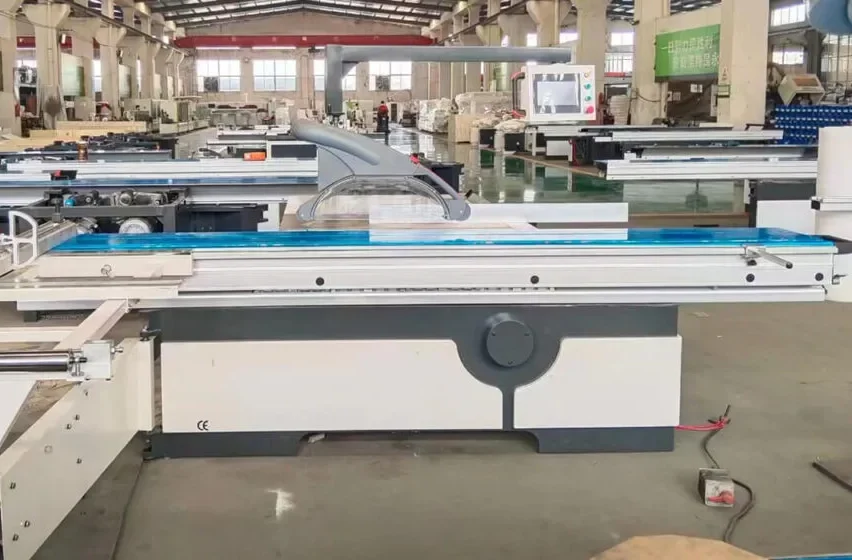
Ndinomdla wokuthenga isaha yetafile etyibilikayo yeprojekthi zam zokubumba iinkuni, ungafumana iinkcukacha ezithe vetshe ngayo apha Apha.
Don’t regret wearing hearing protection later. Planers, routers, and table saws are all noisy. Long-term exposure to loud noises will harm your hearing. Earmuffs or earplugs are inexpensive preventative measures for hearing loss.
Breathe easy as you collect dust. Wood dust poses a health risk in addition to being untidy. You may develop major long-term problems if fine dust enters your lungs. Purchase a shop vacuum, dust masks, and, if funds permit, a suitable dust collection system for stationary tools. Comprehending Your Wood.
Wood is more than just a cut block. The behavior of this organic material is influenced by its density, moisture content, and grain. The direction of the grain is important. Observe the grain at all times. For optimal results, different techniques & equipment are needed for cutting across the grain (cross-cutting) & with the grain (rip cutting).
Going against the grain, or “tear-out,” will cause frustration and splintered edges. Why Moisture Content Matters. Wood expands & contracts in response to variations in humidity. Your joints will open and parts may warp if you use excessively wet wood for a project and it dries out. Use a moisture meter, particularly if the project is big or the wood is pricey.
In most climates, interior projects should have a moisture content of between 6 & 10 percent. No matter how fancy your joint is, it won’t fit perfectly if the pieces aren’t cut precisely. This is an area that requires a lot of attention and is where many novices struggle.
Accurately measuring & marking. There’s a reason why the proverb “measure twice, cut once” is a mantra. However, accurate marking is just as important as measuring.
Utilize a high-quality tape measure or ruler. The readings from a cheap, flimsy tape measure will be inconsistent. Invest in a high-quality tape measure or steel rule. Choose one with minimal hook play & obvious markings.
Marking knives & sharp pencils. A blunt pencil creates thick, haphazard lines. Use a sharp mechanical pencil or, for more precise cuts, a marking knife.
When you score the wood fibers with a knife, your saw or chisel can follow a clear, precise line. Increasing the Size of Your Stock. Make sure your reference edge is square & straight before you even start measuring for a cut. Make use of a larger framing square or a dependable combination square. All subsequent measurements will be incorrect if your stock is not square in the first place.
Getting the hang of a hand saw. Effective hand saw use is an essential skill, even with power tools. Smaller cuts, intricate work, and situations where dust or noise are a problem are all excellent uses for it. The proper saw for the task.
When cross-cutting, a rip saw is not used. Recognize the distinction between cross-cut saws, which have more smaller teeth intended to cut fibers cleanly across the grain, & rip saws, which have fewer, larger teeth angled for cutting with the grain. Japanese pull saws are also excellent due to their thin kerf and ease of use. Position and Method. Proper posture is essential. Let the saw’s weight do the work as you hold it naturally.
Create a kerf by gently pulling or pushing to begin your cut. To prevent a “drift” or angled cut, focus on keeping the saw completely vertical. Your powerful cutters are the table saw and mitre saw. These are the mainstays for accurate, consistent cuts. It’s critical to comprehend their strengths and weaknesses.
Table Saw Setup & Safety. When the stock approaches the blade, always use a push stick or push block. Don’t remove the blade guard. Make sure the blade and your fence are parallel. Take your time precisely adjusting the blade’s height & angle.
In this case, a dial indicator is very helpful. accuracy of the miter saw. Miter saws work well for cross-cuts at precise angles. Make regular adjustments to yours. Use a trustworthy square to verify the accuracy of your 90-degree and 45-degree stops. Allow the saw’s blade to cut; don’t push it.
This is where the magic happens, transforming disparate pieces of wood into a robust, cohesive structure. Effective joinery determines the caliber and durability of your work. Glue Ups: Not Just Squeeze-Out.
Wood glue is very powerful, but only when used properly. A sufficient clamping force. Don’t overtighten; you just need enough clamps to bring the joint surfaces into close contact. A weak bond can result from the joint being starved of glue due to excessive pressure. Strive for firm, constant pressure.
Closed & Open Times. Recognize the open time (the amount of time you can place pieces) and closed time (the amount of time it must be clamped) of your glue. Do not rush it. Think about the various kinds of glue, such as PVA (Titebond, etc.).
Hide glue for conventional work, epoxy for strength and gap-filling, & reversible joints for everyday use. Run dry. Make sure to do a dry fit before using any glue.
Without the mess & pressure of wet glue, you can use this to find any problems with your joinery or clamping setup. Using chisels with precision. Chisels are necessary for fine-tuning joints and making clean, sharp corners in addition to roughing out. Keeping Your Chisels Sharp. Compared to a sharp chisel, a dull one is less efficient and more dangerous. Develop a regular sharpening technique for your chisels.
A dull edge crushes wood fibers, causing tear-out & an uneven surface, whereas a sharp edge neatly pares them away. To keep a constant bevel, use sharpening stones or a sharpening jig. Grip and stance for a chisel properly. Keep the chisel in a firm but flexible grip. One hand should be used to guide the blade, while the other should be used to strike or apply pressure. Whenever possible, work with the grain.
For accurate paring, push the chisel with your entire body weight rather than just your arms. Hand Planes: The First Power Sander. For surfacing, jointing, and fine-tuning, hand planes are fantastic tools.
They leave a finish that sandpaper cannot match. assembling your aircraft. It requires repetition.
Make sure the iron’s blade is parallel to the sole & adjust it for the depth of cut. You should aim for a fine shaving rather than a thick chip. perusing the grain. Knowing how the grain works is essential to successful planning. Plan “downhill” in relation to the grain.
Tear-out is what happens when you plan against it. By examining the fibers or performing a quick test, you can learn to “read” the grain. Various Planes for Various Purposes. A negative.
For general surfacing, a 4 or 5 smoother is ideal, but a longer No. For glue-ups, the 7 or 8 jointer plane is ideal for producing perfectly straight edges. End grain, chamfers, and minor adjustments are all excellent uses for block planes. Even a straightforward project can be improved with a well-done finish. It both preserves and enhances the wood’s inherent beauty. Sanding intelligently.
Although sanding is sometimes viewed as a chore, it’s an essential step that gets the wood ready for a gorgeous finish. progressive development of grits. Begin with a lower level of grit (e. A g. 80 or 100) to get rid of glue residue or milling marks before progressively switching to higher grits (150, 180, 220).
Grits should not be skipped because doing so will require more time to get rid of the scratches from the previous grit. Sand and Grain. Sand consistently with the grain.
When a finish is applied, the noticeable scratches left by sanding across the grain will become extremely visible. In between grits, dust is removed. Remove all sanding dust completely after each grit. When you switch to a finer grit, this keeps the surface from being scratched by coarser dust particles.
Compressed air, a tack cloth, or a shop vacuum are all effective. Using Finishes Efficiently. Each of the many finishes has unique qualities. Knowing a few typical types will help you.
Natural beauty is enhanced by oil finishes. Danish oil, tung oil, & linseed oil are examples of oil finishes that penetrate wood to give it a natural appearance and feel. Applying (wipe on, wipe off) and fixing them is simple. To improve protection, apply multiple thin coats.
Polyurethane and varnish provide long-lasting defense. These film-building finishes are incredibly resilient and water-resistant. They create a layer of protection by sitting atop the wood.
For improved adhesion and a smoother finished surface, apply thin, even coats and lightly sand in between with fine-grit sandpaper (about 320–400 grit). Reaching a Perfect Final Product. Applying thin, even coats, working in a dust-free environment, and properly preparing the surface (sanding!) are essential regardless of the finish. Your best friend in finishing is patience.
Drips, runs, and inconsistencies are the results of rushing. This is arguably the most important skill for quick woodworking improvement, so it merits its own section. A dull edge makes everything more difficult, risky, and imprecise.
Why Safety Is Sharp. Cutting with a sharp tool is easier & more efficient. As a result, you have more authority. Slips and accidents are more likely when using a dull tool because it requires more force. fundamental principles of sharpening. The fundamentals are the same whether using a knife, plane iron, or chisel.
Create a Bevel Angle. Make sure your cutting edge is always at the same angle. The primary bevel of most woodworking tools is between 25 and 30 degrees. Maintaining this angle consistently can be greatly aided by sharpening jigs. Work with Grit.
To achieve a razor-sharp edge, you’ll work through progressively finer sharpening stones (or sandpaper on a flat surface), just like when sanding wood. To eliminate nicks or create an angle, start with coarse grits, progress to medium grits, and end with fine grits. Create a Strop or Micro-Bevel.
Using a fine stone, gently hone a tiny, slightly steeper secondary bevel (micro-bevel) on the very tip of your primary bevel for the final edge. After that, strop the edge on a leather strop that has been charged with honing compound to polish and remove burr. If it’s really sharp, you should be able to shave the hair off your arm. It’s a journey, not a destination, to become an expert woodworker. These methods are the foundation of excellent craftsmanship. You learn best when you concentrate on them, practice frequently, and don’t be scared to make mistakes.
Your confidence will soar and your projects will improve. Enjoy your woodworking!
.
Some common woodworking techniques include cutting, shaping, joining, and finishing wood. These techniques can be achieved using various tools such as saws, chisels, routers, and sanders.
Woodworking techniques are important for creating strong and durable wood products. They allow woodworkers to manipulate and shape wood to create functional and aesthetically pleasing items such as furniture, cabinets, and decorative pieces.
For beginners, some basic woodworking techniques to start with include measuring and marking, cutting with a saw, drilling holes, and sanding. These techniques are essential for getting started with woodworking projects.
One can improve their woodworking techniques by practicing regularly, seeking guidance from experienced woodworkers, and learning from instructional resources such as books, videos, and workshops. Additionally, using high-quality tools and equipment can also contribute to improving woodworking skills.
When using woodworking techniques, it is important to wear appropriate safety gear such as goggles, ear protection, and dust masks. Additionally, woodworkers should be mindful of proper tool usage, secure workpieces properly, and maintain a clean and organized workspace to prevent accidents and injuries.


 English English
 العربية
 Bahasa Indonesia
 ไทย
ไทย Deutsch
 Русский
 Español
 Nederlands
 Italiano
 Tiếng Việt
 Português do Brasil
 Français
 Dansk
Dansk Xhosa
Xhosa 日本語
日本語 香港中文
香港中文
