
Don’t worry if you want to start woodworking but are intimidated by the abundance of tools available. It’s not necessary to start with a fully stocked, professional store right away. If you purchase tools in a smart, phased manner, you can definitely create some incredible things. The secret is to begin with the necessities—tools that will teach you basic skills and are adaptable and reasonably priced.
Your collection of tools will organically expand as you advance to meet your goals. It’s crucial to become proficient with a few basic hand tools before considering power tools. They teach you patience, accuracy, and a deeper understanding of wood itself, in addition to being frequently safer for novices. They also don’t immediately need sophisticated dust collection and are typically quieter!
Crucial Marking and Measuring Instruments. When it comes to woodworking, accuracy is vital. Even if you have the most elegant saws & airplanes, your project will be flawed if your measurements are incorrect. Use a tape measure.
It may seem obvious, but your best friend is a high-quality tape measure. Choose one with a dependable lock, clear markings, and a sturdy design. For the majority of beginner projects, a 16-foot or 25-foot tape is usually sufficient. sq. Combination.
Ewe, nantsi isivakalisi esinikhonkco onokucofa kuso:
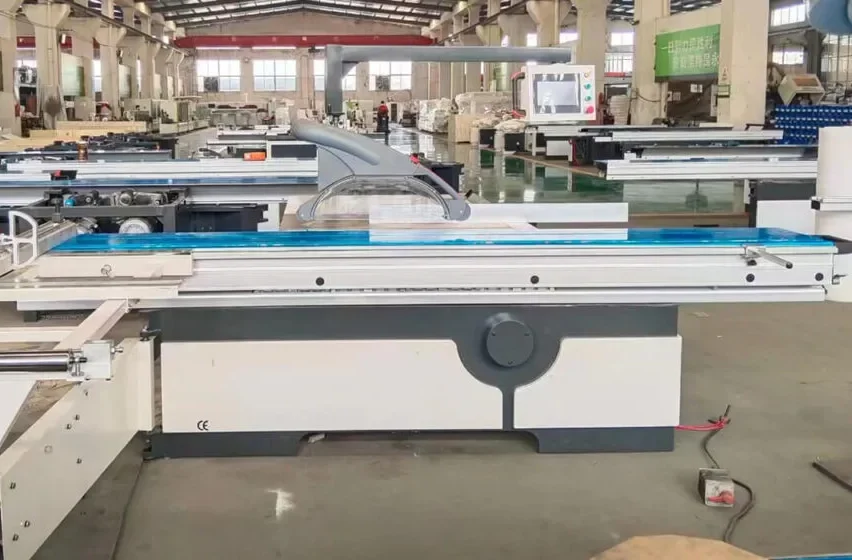
Ndinomdla wokuthenga isaha yetafile etyibilikayo yeprojekthi zam zokubumba iinkuni, ungafumana iinkcukacha ezithe vetshe ngayo apha Isaha yeTafile eTyibilikayo ye-CNC.
This is more advanced than merely a ruler. You can accurately mark 90-degree and 45-degree angles with a combination square. Striking lines parallel to an edge is another excellent use for it. Choose a metal one; plastic ones simply aren’t as reliable or accurate. knife and pencil for marking.
A sharp marking knife, which produces a thin, crisp line that your saw or chisel can register against, is frequently more accurate for fine work than a pencil, despite the latter’s apparent simplicity. A decent mechanical pencil (0.5mm or 0.7mm) is great for general layout because it keeps the line thickness constant. Simple Cutting Tools. If you can’t cut wood, you can’t build much. These hand saws are essential.
Hand saws: rip saw and crosscut saw. In the past, woodworkers used different saws to cut across the grain (crosscut) and with the grain (rip). For small projects, a simple panel saw made for general cutting can frequently perform both jobs well. To be more precise, search for a 20- or 22-inch saw with 4-6 points per inch (PPI) for ripping and 6-8 PPI for crosscutting.
A fundamental skill is knowing how to operate a hand saw efficiently. Dozuki or Ryoba pull saws are made in Japan. With these saws, you can cut cleanly & with great control because they cut on the pull stroke. A Ryoba is very versatile because it has teeth on both sides, one for ripping and one for crosscutting. A Dozuki is a type of fine-toothed saw that is frequently used for dovetails and other joinery.
Compared to Western-style push saws, they are frequently simpler for novices to learn. Tools for refining & shaping. After cutting your pieces, make sure they fit together perfectly by refining their shape.
Chisels for benches. Sharp chisels are a must-have. To begin, you don’t need a large set. For the majority of tasks, a decent 1/4-inch, 1/2-inch, and 1-inch chisel is sufficient.
It’s essential to learn how to sharpen them because a dull chisel is both dangerous and useless. Block plane. This little hand plane is very useful for cleaning up end grain, chamfering edges, & trimming small pieces. It’s reasonably priced & an excellent way to learn how to set up and operate a plane before purchasing a bigger, more complicated one. Power tools are useful once you’re proficient with hand tools and want to expedite tasks or take on somewhat larger projects.
Safety is of the utmost importance, so before you begin cutting, always read the instruction manual and learn how to use each tool safely. Flexible Cutting Power. These tools will significantly improve the accuracy and efficiency of your cutting. Saw in circles. Most novices should probably start with a high-quality circular saw.
It is portable, adaptable, and capable of producing remarkably accurate rip and crosscuts on sheet goods or wider boards when used with a straight edge guide. Choose a model that is 7-1/4 inches. Miter Saw (Chop Saw). A mitre saw is an excellent purchase if you’re producing a lot of precise crosscuts for items like picture frames, trim, or simple furniture.
It facilitates bevel cuts and repeatable angle cuts (miters). The capacity & cost of a 10-inch sliding compound miter saw are well-balanced. Jigsaw.
A jigsaw is the tool of choice for creating internal cutouts, cutting curves, and creating complex shapes. It’s necessary for anything other than straight lines, but not for precise straight cuts. Invest in an orbital action model with variable speed control. Joining and smoothing.
These power tools make it easier for you to assemble parts and tidy up after yourself. Orbital Sander at Random. When it comes to surface preparation, this tool will quickly become your best friend. Before applying any stain or topcoat, it is essential to remove sanding marks effectively and leave a smooth finish. Start with a variety of sandpaper grits (80, 120, 180, 220).
cordless driver/drill. Very important. not only for woodworking but also for everyday household chores. Invest in a 12V or 18V model that comes with two batteries so you can always charge it.
It’s ideal for driving screws, drilling larger holes with the right bits, and drilling pilot holes. Just as crucial as the tools themselves are a sturdy, stable surface to work on and methods for safely holding your wood. It is dangerous & frustrating to try to chisel or cut a piece that is swaying.
robust work surface or workbench. A fancy, specially designed workbench is not necessary right away. Your first workspace could be a sturdy, heavy table or even two sawhorses with a thick piece of plywood on top.
Stability is important. When you are sawing or planing, it must remain stationary. clamping. It is impossible to have too many clamps. They serve as extra hands, hold your workpieces while the glue dries, and secure pieces for cutting. Clamps in the F style.
These are reasonably priced and very adaptable. A few 12- & 24-inch clamps are excellent places to start. Parallel or bar clamps. Longer bar clamps are necessary when clamping wider panels or frames. Although they cost more, parallel clamps are even more effective at guaranteeing square assemblies.
Bar clamps can be added as needed, starting with F-style. Bench Vise (not required, but strongly advised). When it comes to holding pieces during sawing, planing, or chiseling, having a suitable woodworking vise installed on your workbench is crucial.
Safety & accuracy are significantly increased. You should consider personal safety equipment before you even consider plugging in a power tool or making your first cut. This is necessary for a fun and safe woodworking experience; it is not an option. protecting the eyes.
Wearing safety glasses or a face shield is essential. Always. Permanent eye damage can result from wood chips, dust, and even broken tool bits. Have multiple pairs on hand so you’ll always have one on hand. protection for the ears. Long-term exposure to power tools can result in permanent hearing loss because they can be extremely loud.
Earplugs or earmuffs are affordable insurance. Use them whenever using power tools, just like eye protection. A respirator or dust mask. Wood dust is serious.
Allergies and respiratory issues may result from it, and certain types of wood produce especially irritating dust. A simple N95 dust mask is a good place to start, but if you’re constantly using power tools or sanding, you should think about getting a respirator. These are the items that improve the functionality of your tools or that you will always need to restock. glue. For nearly all woodworking projects, wood glue (PVA glue like Titebond) is a necessary component.
You will use the bottle, so get a good size. The sandpaper. As with the random orbital sander, a variety of grits are required.
If you can, buy it in bulk because it will end up being less expensive. Driver and drill bits. The majority of your drilling and fastening requirements can be met with a simple set of twist drill bits and a set of driver bits (Phillips, square drive, Torx). Sharpening materials. You need to learn how to sharpen any hand planes or chisels you own. This could be diamond plates or a set of sharpening stones (oil or water stones).
For novices, a honing guide is an excellent investment to guarantee constant angles. Wood, of course. Without material, you can’t make anything! If your budget permits, start with common hardwoods like oak or maple, or common & easy-to-work woods like pine or poplar.
Salvaged materials can also be an excellent, low-cost place to start. You should have a very strong foundation without going over budget with this list. Recall that you should begin with a few high-quality hand tools, become comfortable with them, and then progressively add power tools as your projects & abilities require them. Enjoy your woodworking!
.
Woodworking equipment includes a wide range of tools and machinery such as saws, drills, sanders, planers, routers, lathes, and jointers.
Safety precautions when using woodworking equipment include wearing appropriate protective gear such as goggles and ear protection, using push sticks and guards on machinery, keeping work areas clean and organized, and following proper operating procedures.
Common woodworking projects that require specific equipment include building furniture (which may require saws, drills, and sanders), creating intricate designs (which may require routers and lathes), and making precise cuts (which may require table saws and miter saws).
Popular brands of woodworking equipment include DeWalt, Bosch, Makita, Jet, Powermatic, and Festool.
Woodworking equipment can be purchased at hardware stores, specialty woodworking stores, online retailers, and directly from manufacturers.



 English English
 العربية
 Bahasa Indonesia
 ไทย
ไทย Deutsch
 Русский
 Español
 Nederlands
 Italiano
 Tiếng Việt
 Português do Brasil
 Français
 Dansk
Dansk Xhosa
Xhosa 日本語
日本語 香港中文
香港中文
