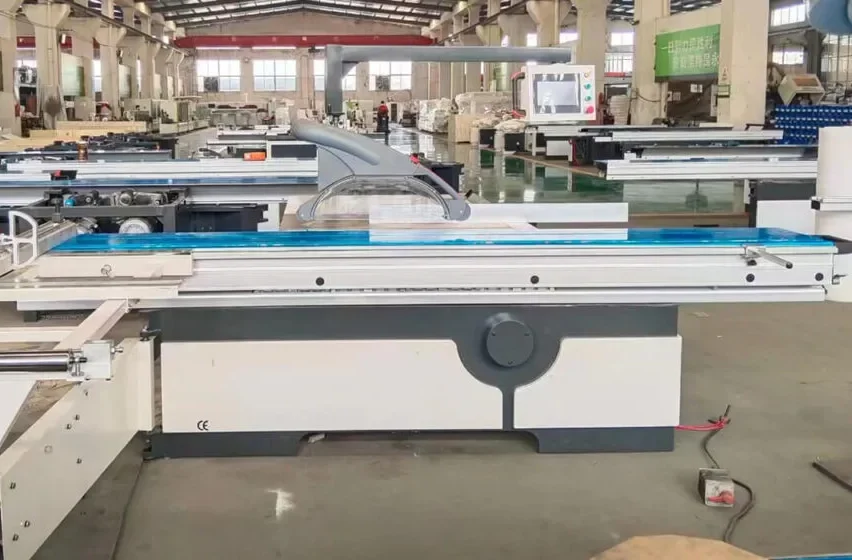

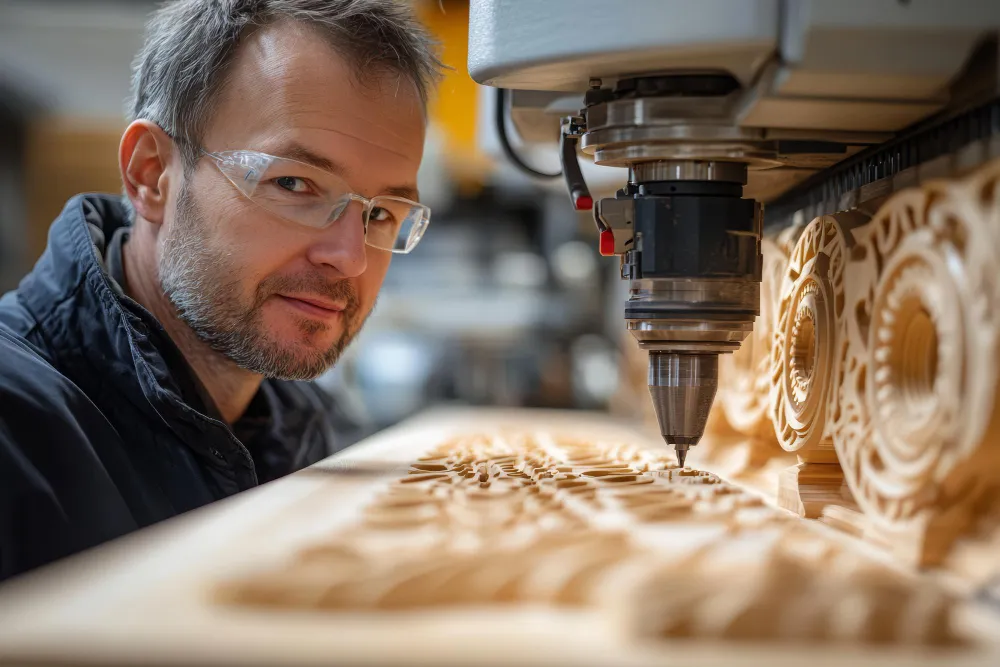
With its unmatched accuracy, consistency, and adaptability in creating complex designs, CNC carving has completely transformed the fabrication industry. Gaining proficiency in CNC carving techniques can greatly improve the caliber and intricacy of one’s projects, regardless of one’s level of expertise. With the help of this thorough guide, users will be able to fully utilize the capabilities of their CNC machines. It is crucial to have a firm understanding of the fundamentals before taking on complicated projects. Using a computer-controlled milling machine, CNC carving converts a digital design into actual cuts. This procedure depends on a number of interrelated components that, when comprehended & enhanced, produce better outcomes.
Design software’s function. CAD/CAM software is where the adventure starts in the digital sphere. Users can create 2D and 3D models using CAD (Computer-Aided Design) programs, and CAM (Computer-Aided Manufacturing) software converts these models into G-code, the language that CNC machines can understand. It is essential to be proficient in a selected program, such as Aspire, VCarve Pro, or Fusion 360. These programs allow users to visualize the carving process prior to actual execution by providing a variety of tools for defining cutting paths, simulating tool movements, & creating complex geometries.
A solid foundation is created by experimenting with various design techniques, ranging from straightforward outlines to intricate relief carvings. Selecting the Correct Tools and Machine. The CNC machine and the cutting tools used have a significant impact on the final carve’s quality.
The degree of rigidity, work area size, and precision offered by various machines varies. While industrial-grade machines offer the power & precision for larger and harder materials, entry-level desktop computers are appropriate for smaller, less demanding projects. The choice of end mills, which are available in a variety of sizes, shapes, and flute configurations, is equally crucial. Because of their rounded tips, ball-nose bits are perfect for intricate 3D carving, while flat-end mills are great for producing flat surfaces and sharp corners.
Sharp, angled cuts & engraving are ideal uses for V-bits. Tool selection will be influenced by knowledge of the material being carved and the intended aesthetic. Considerations for Material Selection.
A project’s overall success and carving parameters are greatly impacted by the material selection. Softer materials are great places for beginners to start because they are forgiving & simple to carve, such as basswood, MDF, and different plastics. More durable tools, slower feed rates, and particular cooling techniques are required for harder materials like aluminum, hardwoods (oak, maple), and even some composites.
To get the best results and avoid tool breakage or material damage, spindle speed, feed rate, and depth of cut must be adjusted for each material’s particular opportunities & challenges. The foundation of a successful CNC carving process is the efficient and effective generation of toolpaths. Excessive machining time, poor surface finish, and even damage to the tool or workpiece can result from poorly designed toolpaths. Roughing and final passes.
A popular and very successful method is to divide the carving process into roughing and finishing passes. The majority of the material is rapidly removed during roughing passes, which are usually carried out with bigger, more forceful tools, leaving a tiny amount for the finishing pass. This method drastically cuts down on total machining time and lessens wear on finer finishing tools. Finishing passes are intended to produce the required level of detail and surface smoothness.
They are carried out using smaller, more delicate tools and shallower depths of cut. A crucial factor in this situation is the stepover, or the distance the tool travels sideways between passes; a smaller stepover produces a finer surface finish but takes longer to machine. comprehending spindle speeds & feed rates.
Spindle speed, or how quickly the tool rotates, and feed rate, or how quickly the tool passes through the material, are crucial factors that need to be carefully balanced. Inadequate surface finish, chatter marks, burned material, & tool breakage can result from incorrect settings. Harder materials typically need higher spindle speeds & slower feed rates, whereas softer materials can withstand lower spindle speeds and faster feed rates. Recommended settings for tools and materials are frequently provided by manufacturers, and these are great places to start.
However, to get the best results for particular machine-tool-material combinations, it is frequently necessary to fine-tune these parameters through experimentation. Advanced Strategies for Toolpaths. Advanced toolpath techniques can greatly improve carving efficiency and quality beyond simple roughing and finishing. Techniques like “raster” or “offset” toolpaths can be used for complex 3D carvings. Whereas offset paths follow the design’s contours, raster paths move the tool linearly back & forth across the material. For producing smooth, flowing surfaces, parallel and spiral toolpaths are especially helpful.
V-carve toolpaths dynamically modify the depth of cut for text or engraving according to the letter’s width, producing crisp, clear lines. Users can choose the best approach for each unique design element by investigating & comprehending these different tactics. A smooth, aesthetically pleasing surface finish is the ultimate aim of many CNC carving projects.
This is caused by a number of factors, which can be systematically addressed to take a project from good to exceptional. Overseeing Chip Evacuation. Preventing heat accumulation, tool clogging, and surface imperfections requires efficient chip evacuation. In order to remove chips from the cutting zone, CNC machines frequently use air blasts & dust collection systems.
A strong dust collector is necessary for materials like MDF that generate fine dust. An air blast can assist in clearing the cutting tool’s path for materials like wood or aluminum that produce larger chips. If chip evacuation is neglected, chips may recut, dulling the tool and compromising the surface finish. Methods for deburring & post-processing.
For a truly flawless finish, some degree of deburring and post-processing is frequently required, even with optimized toolpaths and sufficient chip evacuation. Particularly in complex areas or with certain materials, tiny burrs or fuzz may still be present. Sanding by hand using increasingly finer grits is a typical post-processing method. Miniature files or specialized hand tools might be needed for interior corners and details. Flame polishing can eliminate tool marks and restore transparency in materials like acrylic.
By experimenting with different finishing methods, such as sanding, polishing, & sealing, users can choose the best strategy for their particular material and preferred look. addressing vibration & chatter. In CNC carving, chatter—audible vibrations that result in an uneven surface finish—is a frequent problem. A dull tool, an unstable workpiece, an excessively fast feed rate, or inadequate machine rigidity are some of the causes. Users should use appropriate and sharp tools, adjust feed rates & spindle speeds, and make sure the workpiece is firmly clamped to reduce chatter. Vibrations can also be lessened by strengthening machine rigidity or by employing shorter, stiffer tools.
Achieving a flawless, smooth surface requires locating the source of chatter and taking direct action to address it. After mastering the fundamental methods, users can experiment with more sophisticated approaches to deal with extremely intricate and complex carvings. concepts of multi-axis machining. Understanding multi-axis machining opens up new possibilities, even though many hobbyist CNC machines are 3-axis—that is, they can move along the X, Y, and Z axes. Carving on curved surfaces or rotating the workpiece for machining from various angles are made possible by 4-axis machines, which incorporate a rotary axis (A-axis). The ability to move simultaneously along all five axes for extremely complex, organic shapes is further expanded by 5-axis machines.
Even though multi-axis machines are expensive, realizing their potential can lead to more complex designs and a deeper comprehension of advanced manufacturing. Undercutting & Tapered Approaches. Certain techniques are needed to achieve undercut features or carve objects with different wall angles.
Compared to straight-sided tools, tapered tools can reach into tighter spaces and create sloped surfaces because of their angled cutting edge. Specialized tools and multi-axis movements are frequently needed for undercuts, in which the tool must cut beneath a surface that is otherwise inaccessible from above. For these intricate features to be executed successfully and to prevent tool collisions, careful planning in the CAM software is essential. For such difficult designs, carefully simulating the toolpath prior to carving is crucial.
using multi-material carvings and inlays. CNC carving is not just for projects involving a single material. Inlays produce beautiful visual effects by carefully cutting and fitting contrasting materials together. This entails carving pockets out of one material and then making matching inserts out of another, which frequently calls for a high level of design & machining precision.
For truly one-of-a-kind pieces, multi-material carvings can even combine CNC carving with other fabrication techniques like laser cutting or involve carving various materials sequentially. These cutting-edge methods demonstrate the adaptability of CNC technology and enable incredibly imaginative and unique projects. Even seasoned users have difficulties.
Time, resources, & frustration can be saved by being able to identify and fix common problems. Handling Tool Breakage. Tool breakage is a frequent and frequently annoying occurrence. Excessive feed rates, inadequate chip evacuation, choosing the wrong tool for the material, or a dull tool are some of the causes.
When a tool breaks, users should stop the machine right away, examine the tool and workpiece, and carefully remove any broken pieces. Examine & modify feed rates, spindle speeds, depth of cut, and make sure the tool is sharp and suitable for the material to avoid such incidents in the future. It is essential to regularly inspect and maintain tools.
resolving runout and misalignments. Uneven cuts, subpar surface finish, & early tool wear can result from misalignments and runout, which occurs when the tool does not spin precisely centered. The calibration of their machine should be routinely checked by users to make sure the axes are parallel and perpendicular as intended. Using high-quality collets and making sure they are clean and debris-free before inserting the tool can reduce runout.
Examining the spindle for wear or damage is also crucial. If alignment problems continue, a professional recalibration might be required. Resolving Material Movement and Warping.
During the carving process, material movement or warping can destroy a project. This is especially common with wood, which is sensitive to temperature and humidity changes. It is crucial to securely clamp the workpiece to the spoil board; larger pieces frequently require multiple clamps or vacuum hold-down systems. It can also be beneficial to use stable, high-quality material & let it acclimate to the workshop setting before carving. Sacrificial layers or specialized fixtures may be required for thin or delicate materials in order to offer extra support and stop movement during machining.
Gaining proficiency in CNC carving requires constant learning and improvement. Users can unleash the full potential of their CNC machines and reliably create intricate, high-quality carvings by comprehending the principles, optimizing toolpaths, aiming for superior finishes, investigating cutting-edge techniques, and successfully resolving common problems. The secret to becoming a skilled CNC carver is to practice consistently and be open to trying new things and learning from your mistakes.
.
CNC carving, also known as computer numerical control carving, is a manufacturing process that uses computerized controls and machine tools to remove material from a workpiece to create a custom design or pattern.
CNC carving techniques offer several advantages, including precision and accuracy, the ability to create complex designs, repeatability, and the ability to work with a wide range of materials such as wood, plastic, and metal.
CNC carving techniques can be used to create a wide range of designs, including intricate patterns, detailed reliefs, 3D sculptures, custom signage, and decorative elements for furniture and cabinetry.
CNC carving techniques can be used with a variety of materials, including wood, plastic, foam, aluminum, brass, and other non-ferrous metals. The specific material used will depend on the requirements of the project.
To utilize CNC carving techniques, you will need CAD (computer-aided design) software to create the design, CAM (computer-aided manufacturing) software to generate toolpaths, and a CNC carving machine equipped with the appropriate cutting tools.

 English English
 العربية
 Bahasa Indonesia
 ไทย
ไทย Deutsch
 Русский
 Español
 Nederlands
 Italiano
 Tiếng Việt
 Português do Brasil
 Français
 Dansk
Dansk Xhosa
Xhosa 日本語
日本語 香港中文
香港中文
