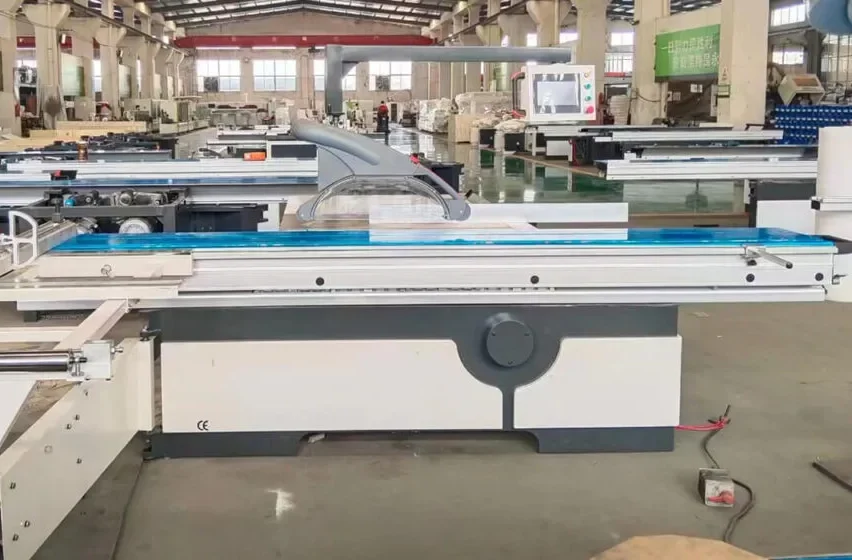

You’re considering panel saw machines and are curious about the cost. High-end, CNC-controlled vertical models can cost well over $100,000, while smaller, simpler horizontal models typically cost $3,000. That’s a fairly wide range, isn’t it? The type, features, brand, and retailer all have a significant impact on the final cost.
To help you better understand what to anticipate for your particular needs, let’s examine the factors that affect these costs. It’s important to comprehend the landscape before diving into numbers. Panel saws are essential tools for precisely cutting big sheets of materials like particleboard, MDF, plywood, & even plastics. There are two primary types of them: vertical & horizontal.
If you’re interested in understanding the pricing dynamics of panel saw machines, you might find this article on the bottom shaft multi-blade saw particularly insightful. It discusses various factors that influence the cost of such machinery, including features, manufacturing quality, and market demand. For more details, you can read the full article here: Bottom Shaft Multi-Blade Saw Manufacturer.
Each has a unique market niche and, as a result, a unique pricing structure. Saws for horizontal panels. Usually found in high-production settings, these are larger machines.
They provide amazing accuracy and are excellent for cutting several sheets at once. Entry-Level Horizontal Saws: These could be semi-automated or manual push-feed models. Shops with modest production requirements can benefit from them.
Claro, aquí está la frase con el enlace clicable:
I am interested in purchasing a Panel Saw for my woodworking business, you can find more information about it here: Sierra de panel.
Mid-Range Horizontal Saws: Usually fully or semi-automated, these saws have some sophisticated features like digital readouts and scoring saws. High-end horizontal saws are made for continuous, high-volume production with intricate cutting patterns. They are completely automated & frequently CNC-controlled. Consider manufacturing based on nesting. Saws that are vertical panels.
When considering the investment in a panel saw machine, it’s essential to also explore related equipment that can enhance your woodworking capabilities. For instance, the KDT fine trimming knife is a valuable tool for achieving precise edge banding, which complements the functionality of a panel saw. Understanding the pricing and features of both machines can help you make an informed decision for your workshop needs.
| Marca | Modelo | Potencia (kW) | Cutting Length (mm) | Price |
|---|---|---|---|---|
| Altendorf | F45 | 5.5 | 3200 | 15000 |
| SCM | Nova SI 400 | 7.5 | 3800 | 18000 |
| Holzher | Pro-Master 7225 | 6.6 | 4300 | 20000 |
Because they take up less floor space, vertical saws are often used in smaller workshops or for specialized jobs where a large horizontal saw cannot handle the material overhead. Manual vertical saws are the most straightforward & reasonably priced choices. The saw carriage and material are manually moved. Semi-Automatic Vertical Saws: These can have automatic clamping or powered saw movement, which reduces operator fatigue and improves accuracy.
When considering the investment in a panel saw machine, understanding the factors that influence its price is crucial for making an informed decision. A recent article discusses various aspects that can affect the cost of panel saw machines, including brand reputation, features, and market demand. For more detailed insights, you can read the article on panel saw machine pricing aquí. This information can help you navigate your options and choose the best machine for your needs.
Automatic vertical saws: These are frequently CNC-controlled, providing high repeatability and preprogrammed cuts while retaining the benefit of saving space. The final cost of a panel saw is influenced by numerous factors. You can prioritize features and stick to your budget by being aware of these. Type of Machine (Horizontal vs.
vertically). The basic design is important, as previously stated. Because of their larger footprint, more intricate material handling systems, & higher production volume capabilities, horizontal panel saws are typically more costly. Larger tables, frequently automated material feeding, and stronger construction for managing large stacks are examples of horizontal cost drivers. Vertical cost drivers include simpler material support and space-saving design, though some more sophisticated models have automated material handling.
degree of automation. This is possibly the most significant price difference. A machine that is more automated requires less manual labor and is typically more expensive. Manual machines: All positioning, clamping, and moving are done by the operator.
most economical. Semi-Automatic Devices: Certain tasks are automated (e.g. “g.”. blade movement, fence placement), but part recognition or general material handling may still be done by hand. cost in the middle. Fully Automatic (CNC) Machines: Everything is computer-controlled, including offloading, material feeding, cutting patterns, and optimization software. The highest precision and throughput are available at the highest cost.
Cutting Size & Capacity. The price of a machine is directly affected by the physical dimensions it can handle. Longer rails, stronger frames, & frequently more potent motors are needed for larger cutting depths and lengths. Maximum Cut Length: A machine built to cut 8-foot panels will cost less than one made to cut panels that are 12 feet or longer.
For many machines, the ideal sheet size is typically 4 by 8 feet. Max Cut Depth: The thickness of a stack of material that a machine can cut. Higher stack cutting machines need stronger motors and more stable blade assemblies. Power from motors. The saw motor’s horsepower (HP) determines how fast and effectively it can cut through a variety of materials, particularly thick stacks or denser ones. Smaller motors (3–5 HP): Ideal for single sheet cutting, lighter use, and thinner materials.
Medium Motors (7.5-15 HP): Suitable for most manufacturing facilities, they can handle a variety of materials and occasionally cut stacks. High-volume stack cutting, extremely dense materials, & continuous operation all require large motors (20+ HP). The origin and brand.
Certain panel saw brands command a premium because of their reputation for quality, dependability, and after-sales support, much like cars. Tier 1 Brands (e.g. A g. Schelling, Homag, SCM, Holzma): These European producers are renowned for their superior engineering, cutting-edge features, & durability.
They are expensive, which frequently reflects better parts and RandD. Tier 2 Brands (e.g. The g. provide a good mix of features and quality without going over budget (Altendorf, Martin, and some Asian brands).
Brands at Entry Level (e.g. “g.”. Some Asian or lesser-known domestic brands): More affordable, but you may have to give up some features, build quality, or support. Extra Technology and Features. Beyond the essentials, a number of additions can raise the cost while greatly enhancing functionality & effectiveness.
In order to cut laminated materials cleanly & avoid chipping on the bottom edge, a scoring saw is essential. increases complexity while also increasing precision. Optimizer Software: This software determines the most effective cutting patterns for CNC machines in order to reduce waste. a significant material cost savings, but frequently an additional expense.
Set cut dimensions more quickly and accurately with digital readouts and controllers. A good digital readout is invaluable, even on manual machines. By automating material clamping, pneumatic clamping ensures constant pressure while requiring less manual labor. Air Float Tables: These are installed on horizontal saws & facilitate the movement of heavy sheets without causing scratches.
Advanced sensors, blade guards, and emergency stops are examples of safety features. Modern machines come equipped with standard safety features, but more sophisticated ones can add a bit more. Now that the factors have been discussed, let’s put some approximate figures to it. Remember that these are estimates, and costs may change depending on the supplier, the market, and particular configurations. Low-Cost Panel Saws.
For small businesses or hobbyists who occasionally need to cut large sheets, these are typically manual or very simple semi-automatic models. Vertical panel saws that are manual. The price range is $3,000 to $10,000. Features include a basic motor, simple material stops, manual saw movement, and occasional use.
Smaller Striebig or Safety Speed Cut models (used or very basic new ones) are possible examples. Simple horizontal panel saws, also known as sliding table saws with panel capacity. Cost: between $7,000 and $20,000. Features: Often called “sliding table saws,” these machines have long fences, manual feed, little automation, and possibly a scoring saw.
Excellent for accurately cutting panels, but not very large. Panel saws in the middle range. The majority of small to medium-sized woodworking businesses will locate in these areas. They provide an excellent mix of production capacity, automation, and accuracy. Vertical panel saws with semi-automation. The price range is $15,000 to $40,000.
Features include digital readouts, powered saw movement, automatic clamping, & frequently a scoring saw. Excellent for stores that require precise, reliable, and compact panel processing. brands such as entry-level Striebig models, some larger Safety Speed Cut models, & R & J. Horizontal panel saws that are semi-automated. Cost: $25,000 to $70,000.
Powered saw carriage, digital controls, programmable fence, scoring saw, and sturdy construction are among its features. capable of managing respectable production volumes. brands such as Altendorf (certain models), Felder, & SCM. Premium & Commercial Panel Saws. These are made for large-scale manufacturing, which calls for a high level of accuracy, dependability, and speed.
They frequently interface with other production systems & are CNC-controlled. CNC Saws with Vertical Panels. The price range is $40,000 to $80,000+. Features include pneumatic clamping, automatic optimization, full CNC control, and frequently integrated material handling capabilities.
still provides high throughput while saving space. This is where the Striebig Compact and Control models fit in. Horizontal panel saws that are CNC.
Cost: $70,000 to $200,000 or more. Features include fully automated CNC control, advanced optimization software, automatic loading and unloading, heavy-duty construction, & frequently multiple cutting lines. intended for continuous, high-volume manufacturing.
Higher end brands include Homag, Schelling, Holzma, and SCM. Purchasing used equipment, especially well-maintained machines, can save you a significant sum of money—typically between 30 and 70 percent off the new price. It has its own set of considerations, though.
benefits of purchasing used goods. The main attraction is significant cost savings. Faster Availability: Compared to ordering a new machine, this is frequently faster. Possibility for Higher Grades: For the same price, you may be able to purchase a more expensive used model than a new one.
Buying Used has drawbacks. Most used sales are “as-is, where-is,” with no warranty. The “. Anticipate some wear and tear and account for possible repair expenses.
Request your service history. Older Technology: It might not have the most recent software connectivity, efficiency enhancements, or safety features. Parts Availability: It may be more difficult to locate replacement parts for older models.
Costs associated with moving and installing a large machine can be significant & are frequently not covered. The location of used panel saws. Equipment Dealers: Reputable dealers may provide limited warranties or support in addition to frequently refurbishing machines. Websites for auctions: Websites such as eBay, BidSpotter, or particular websites for the sale of woodworking equipment.
may be riskier but have fantastic offers. Online marketplaces: Facebook Marketplace (local), Craigslist, or forums dedicated to a particular industry. Direct from Shops: Occasionally, stores upgrade and sell their outdated equipment directly.
Sometimes the quote’s price doesn’t tell the whole story. There are a number of additional expenses to account for in your budget. Installation & shipping. A table saw is not the same as a big, heavy panel saw.
Specialized rigging and transportation are needed. Freight: This can easily reach the thousands of dollars, particularly for long-distance or international shipments. Rigging and Placement: Taking the machine off the truck & placing it where it will be used in your shop. Making sure the machine is precisely calibrated & level for precise cuts is known as leveling and calibration.
Power needs. Panel saws are power-hungry devices. Make sure your workshop has the electrical services it needs. Electrical Upgrades: You may have to install specialized outlets, run new lines, or upgrade your main panel. This may come at a substantial cost.
Phase Converters: A phase converter is an extra cost if you only have single-phase power & require a three-phase machine. collection of dust. Dust is produced by these machines in enormous quantities. Strong dust collection systems are essential for both machine longevity and health and safety. Ducting and Collection Unit: Set aside money for a strong dust collector, suitable ducting, and perhaps an air filtration system.
Blades and Materials. Remember the continuing expenses of operations. Saw Blades: Depending on the type of material you’re working with, you’ll need different blades, & they need to be sharpened or changed frequently.
Also, specific blades are needed for scoring saws. Lubricants, cleaning products, and sporadic replacement parts are examples of maintenance supplies. preparation. To increase productivity and reduce errors when upgrading to a more sophisticated machine, particularly a CNC model, it is imperative that your operators receive adequate training. Operator Training: While some manufacturers offer it for free, others charge for it.
The “right” panel saw price for you ultimately depends on your budget, desired level of automation, production volume, and unique business requirements. Evaluate Your Volume: How many sheets do you cut each day or each week? Think About Material Types: How thick are the materials you’ll be cutting? Consider Your Space: Is a vertical model more practical, or do you have enough floor space for a horizontal saw?
Future Development: Will this device be able to satisfy your demands in five years or next year? Budget Beyond the Price Tag: Don’t forget to account for all of the unstated expenses. Don’t decide too quickly.
Speak with vendors, go to trade exhibits, and, if you can, observe machines in operation at other woodworking establishments. Your productivity and profitability can be significantly increased by investing in a well-chosen panel saw.
.
A panel saw machine is a woodworking machine used to make straight cuts in large sheets of wood, plastic, or metal. It is commonly used in furniture manufacturing and carpentry.
The price of a panel saw machine can be affected by factors such as the size and capacity of the machine, the brand, the type of cutting technology (such as manual, semi-automatic, or automatic), and additional features such as digital displays and safety features.
The price of a panel saw machine can vary widely depending on the factors mentioned above. However, the average price range for a panel saw machine is between $5,000 to $50,000.
Yes, there may be additional costs associated with purchasing a panel saw machine, such as installation, training, maintenance, and any necessary accessories or tooling.
Panel saw machines can be purchased from woodworking machinery suppliers, industrial equipment dealers, and online marketplaces. It is important to research and compare different options before making a purchase.



 English English
 العربية
 Bahasa Indonesia
 ไทย
ไทย Deutsch
 Русский
 Español
 Nederlands
 Italiano
 Tiếng Việt
 Português do Brasil
 Français
 Dansk
Dansk Xhosa
Xhosa 日本語
日本語 香港中文
香港中文