
Determining the cost of a reasonably priced automatic edge banding machine from China requires examining several important aspects rather than just one figure. Prices will probably range from $3,000 to $15,000 USD, and more expensive for more durable industrial models. But what really affects that range is the machine’s capabilities, build quality, reputation as a brand, and features.
Let’s examine the factors that go into that pricing and what you can reasonably anticipate when purchasing from China to help you better understand. The first thing you’ll notice when researching automatic edge banding machines from China is how much they can cost. This is more than just marking things up; it represents actual variations in the capabilities & construction of the machines. Consider it similar to purchasing a car: even if both get you from point A to point B, the price of a basic sedan and a fully loaded SUV will differ. Starting on a Budget with Entry-Level Models.
You can find machines that are appropriate for smaller workshops or hobbyists who want to increase their output at the lower end of the price range, typically starting around $3,000 to $5,000. Usually, these devices are made for easier jobs. Basic Functionality: PVC and melamine are examples of single-layer edge banding materials that these can usually handle. They may have a basic trimming unit and one glue station.
Manual Adjustments: You should anticipate doing more manual adjustments for things like trimming depth and tape thickness. This entails a little more hands-on work in between jobs. Smaller Scale Production: They work well for less demanding projects and lower volumes. They won’t be able to handle thousands of panels every day without experiencing some wear and tear more quickly.
Sure, here is the sentence with the clickable link: I am interested in learning more about automatic edge banding 用於我的木工業務。.
Simpler Componentry: Over time, speed and accuracy may be impacted by less advanced motors and control systems. Limited Edge Material Options: They can work with standard PVC and melamine, but they may have trouble with thicker materials or materials that need a higher level of finish. These machines are a practical choice if your woodworking business is new or you’re primarily making custom furniture pieces where batch sizes are small and turnaround time isn’t critical for every single piece.
| Brand | 型號 | Price Range | 特點 |
|---|---|---|---|
| Homag | Ambition 2262 | $30,000 – 50,000 | Automatic edge banding, high precision |
| SCM Group | K560 | $40,000 – 60,000 | Touchscreen control, fast processing |
| Biesse | AirForce 1 | $50,000 – 70,000 | Zero glue line, energy efficient |
| 晟恆機械 | SHEB001 | $20,000 – 40,000 | Durable and Affordable |
They provide a big improvement over manual banding without requiring a large financial outlay. Cost and capability are balanced in mid-range options. As you move up the price range—let’s say between $5,000 and $10,000—you’ll come across devices that provide a more significant increase in capability and performance. For expanding workshops that require a little more speed & automation, these are frequently the ideal conditions. Better Automation: You’ll notice more edge material being fed automatically, which can greatly accelerate your workflow.
Improved Trimming and Finishing: These models typically have more sophisticated trimming units, sometimes with separate controls for top and bottom trimming, which results in a cleaner finish. Even simple buffing or scraping stations may be provided by some. Variable Speed Control: The working speed can be changed to better accommodate various panel sizes and edge materials.
More Sturdy Construction: Generally speaking, the frame’s steel is of higher quality, and its parts are more resilient, meaning they can withstand more frequent use. Increased Edge Banding Thickness: Since these machines can usually handle banding materials that are thicker, you have more options when choosing a material. Improved User Interface: With digital readouts for settings, controls may be easier to use. For companies that need to boost output without sacrificing the quality of their edge banding and are seeing steady orders, a mid-range machine is a wise investment.
They offer an excellent trade-off between initial expenditure and sustained operational effectiveness. Higher-End Industrial Models: For Extensive Manufacturing. You’re looking at devices intended for significant industrial production when you go over $10,000 and into the $15,000+ range (and frequently above $20,000 for extremely complex setups). These are designed for continuous operation, high volume, and high precision. Complete Automation Suite: Panel feeding, edge application, trimming, scraping, buffing, and occasionally even corner rounding are all fully automated operations.
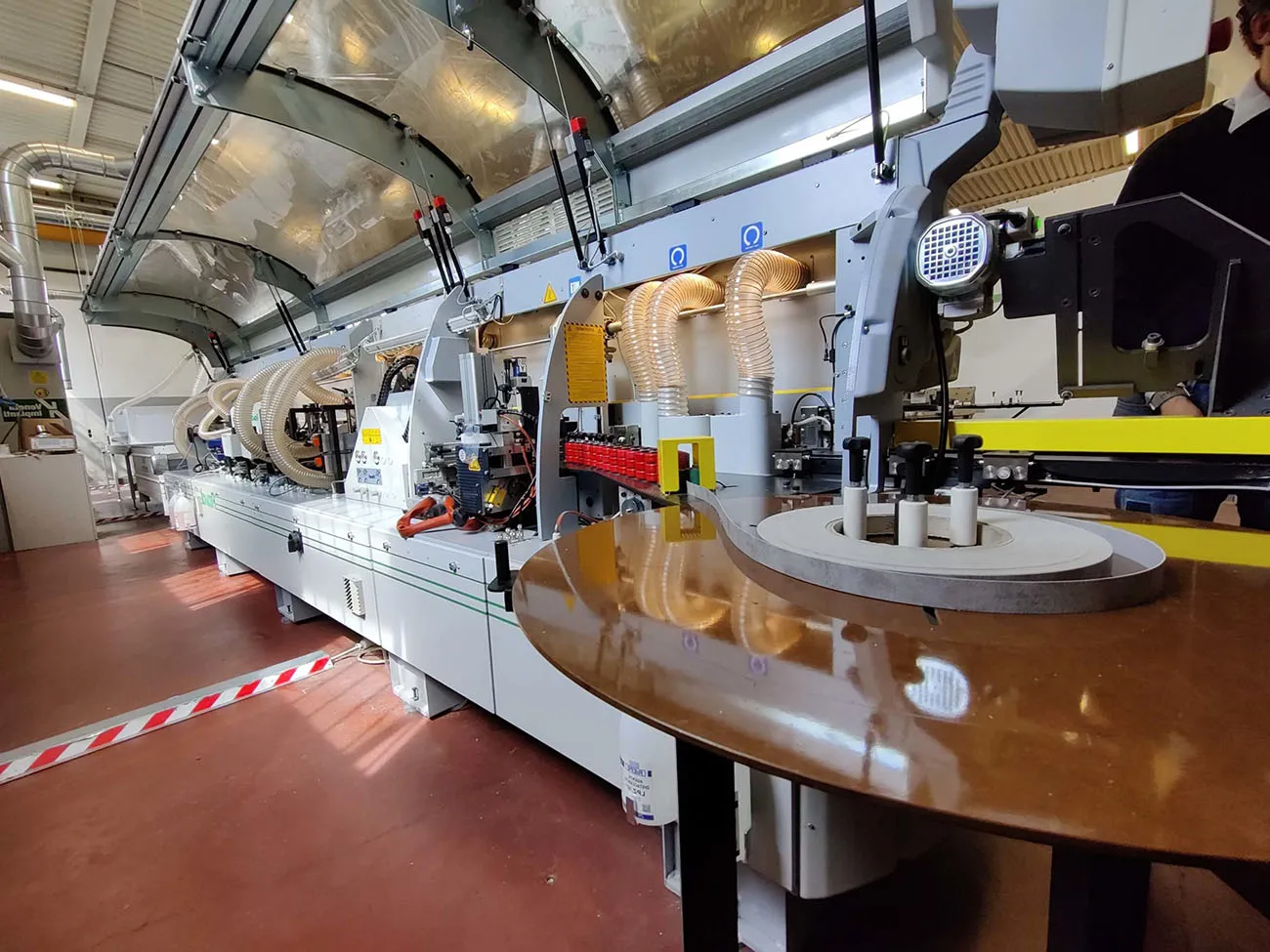
Precision Control Systems: By storing settings for various jobs & enabling extremely precise adjustments, advanced PLC (Programmable Logic Controller) systems significantly shorten setup times. Heavy-Duty Build: To endure the demands of round-the-clock operation, these machines are built with thicker steel, premium bearings, and industrial-grade motors. Multiple Workstations: Pre-milling, glue application, end trimming, top/bottom trimming, profile trimming, scraping, buffing, and other processes are all integrated into a single pass by machines that have multiple stations. Specialized Edge Material Handling: Able to handle a variety of edge materials with superior finish quality, such as thick solid wood edges, thin veneers, and intricate profiles. Integrated Dust Collection: For a cleaner workplace, many have integrated dust extraction systems.
These devices are intended for well-established manufacturers who must optimize throughput & guarantee reliable, superior results throughout lengthy production runs. Their superior finish quality, lower labor costs, and increased efficiency all justify their higher price tag. The cost of an automatic edge banding machine manufactured in China is directly impacted by a number of particular features & components in addition to the general categories. By being aware of these, you can avoid paying for unnecessary features or missing important ones.
Machine Dimensions and Capacity. A machine’s physical footprint and the variety of panel sizes it can process are important factors that affect its cost. Compact Models: These machines are typically less expensive because they are made to fit in a smaller space. They may have a smaller workspace and a shorter infeed track.
Table Size: The price is influenced by the total size of the table or infeed conveyor. Bigger panels are possible with larger tables, but the cost of production goes up. Panel Thickness and Width: Generally speaking, more expensive machines are able to handle a greater variety of panel thicknesses and widths. This frequently has to do with the trimming and gluing units’ sturdy construction and adjustable guides.
Maximum Edge Banding Thickness: The machine’s glue pots, feed mechanisms, and trimming tools will need to be more powerful & precisely engineered if you need to apply very thick banding materials (such as 3mm PVC or even 5mm solid wood edges). This will raise the cost. When examining the specifications, take special note of the machine’s rated edge banding materials and minimum & maximum panel dimensions. Its intended use and, consequently, its cost, are directly indicated by this. Type of machine and quantity of workstations. The machine’s various workstations break down the intricacy of the edge banding procedure.
The cost increases with the number of stations and their level of sophistication. Simple Machines (2-3 Stations): These typically consist of an end-trimming station, a glue application station, and a pre-milling station (which is uncommon in entry-level machines). For simple, clean edges, they are used. Intermediate Machines (4-6 Stations): In addition to the aforementioned, top and bottom trimming units are anticipated. Some may have a rough scraping unit or basic corner rounding.
Advanced/Industrial Machines (7+ Stations): These can include finishing scrapers, buffing stations, edge cleaning units, pneumatic corner rounding, sophisticated pre-milling with diamond tools, advanced glue application systems (such as EVA, PUR), and profile trimming for various edge profiles. Unidirectional vs. Double-Sided: The majority of automated devices are single-sided, processing only one edge at a time. High-end industrial lines, on the other hand, can be double-sided, which is a totally different & far more costly type of equipment. The term “automatic” frequently refers to a series of sequential processing steps carried out without human intervention.
Each of these processes raises the cost by adding components, engineering, and complexity. System for Applying Glue. The kind of glue application system has a significant impact on both cost & performance. Cold Glue (Water-Based): Some very basic models may use spray or roller cold glue, though this is less common on fully automated machines. Although this is typically the least expensive, the bond and finish are the least durable.
The majority of automatic edge banders use hot melt EVA glue. The accuracy of the glue spread, the size of the glue pot, and the applicator’s quality can all affect the cost. Roller Application: A thin, uniform layer of glue is applied using a heated roller. The precision and evenness of this roller directly affect the bond quality and the amount of glue waste.
Nozzle Application: A nozzle system on some more expensive machines can provide more accurate glue application, especially for thicker banding or particular materials. PUR (Polyurethane Reactive) Glue: The cost of machines that can use PUR glue is much higher. PUR is frequently used for kitchen cabinets or harsh environments because it provides a stronger, more rigid, and moisture-resistant bond. To keep the glue from curing too soon in the machine, these systems need specific hoses, application heads, and frequently a nitrogen purging system. A machine with a basic EVA roller can cost several thousand dollars more than one with a precise EVA or PUR application. Product Quality and Brand Image.
As with any manufactured product, the price is largely determined by the manufacturer’s reputation & the quality of the components. Motor & Drive Systems: Although they are more expensive, reliable, high-quality motors (such as Siemens, Delta, or Omron) and accurate drive systems provide greater dependability, speed, and accuracy. Although they may be adequate for hobbyist use, less expensive, generic motors will not last as long under heavy loads. Industrial-grade bearings and linear rails guarantee longevity and smooth operation.
Poor quality parts can cause vibrations, decreased accuracy, & early failure. Cutting Tools & Blades: Standard steel blades are less expensive, but for pre-milling and trimming, carbide or diamond-tipped blades provide better finish, longevity, & sharpness—especially when dealing with abrasive materials. On more expensive machines, these are a major cost factor.
Manufacturer’s Reputation: Compared to smaller, less well-known businesses, established Chinese manufacturers with a history of producing dependable machinery frequently fetch higher prices. Stronger quality control, guaranteed spare parts availability, and improved after-sales support frequently support this reputation. Certifications: More stringent quality testing is frequently performed on machines bearing CE markings or other international certifications, which raises their price.
Examine the brands of the machine’s essential parts when comparing prices rather than focusing only on the total amount. Although buying an automatic edge banding machine from China can result in considerable cost savings, it also necessitates a different purchasing strategy than you may be accustomed to. The process will go more smoothly if you are aware of the common purchasing channels and what to anticipate.
major centers of manufacturing. Manufacturers of machinery are concentrated in a number of Chinese regions. You can focus your search by being aware of these. Guangdong Province: Several cities, including Foshan and Dongguan, are important centers for woodworking machinery in this enormous manufacturing powerhouse.
Large factories and smaller workshops are among the many suppliers you can find here. Another important industrial region is Shandong Province, which is well-known for its heavy machinery and has a sizable population of woodworking equipment producers. Zhejiang Province: This province also produces a variety of industrial machinery, such as tools for woodworking. These areas frequently have sizable industrial parks or clusters with several manufacturers.
This focus may help with comparison shopping. Direct from Manufacturer vs. trading businesses.
Purchasing machinery from China can be done in two main ways: directly from the factory or via a trading company. Each influences the cost and has advantages & disadvantages. straight from the manufacturer. Advantages: By eliminating the middleman, the price may be the lowest. For customization, direct contact with the factory.
Cons: More research is needed to confirm the authenticity and caliber of the factory. Sometimes communication is difficult because of language barriers. All logistics, import taxes, and customs clearance fall under your purview. A higher minimum order value might be necessary. Impact on Price: Probably the most economical choice for the machine itself, but it comes with greater logistical challenges.
The trading company. Advantages: Frequently have established connections with several factories, providing a greater assortment. In addition to managing shipping and customs, they occasionally provide better package solutions overall. Generally speaking, language barriers are less of a problem. They may have pre-screened suppliers, which lowers the possibility of a subpar purchase.
Cons: Because the trading company adds their markup, prices will be higher than when purchasing directly. Depending on the factory they purchase from, quality can still differ. Price Impact: Because of the ease & lower risk, you will pay more. Although the price may be higher, the total cost, including inconvenience and possible problems, might be competitive.
You can find prices listed on B2B platforms such as Alibaba when you conduct an online search. These frequently come from manufacturers who collaborate with trading companies or trading companies themselves. Frequently, the listed price serves as the starting point and is negotiable.
The function of online platforms and trade exhibits. The most popular methods for locating suppliers are using online B2B platforms or attending international trade shows in China, such as CIFF Guangzhou or Woodworking Fair Shanghai. Internet sites (Made-in-China, Alibaba, etc. ):. Price Discovery: These resources are great for obtaining a general picture of available models and prices.
It’s simple to request quotes from several vendors and compare features. First Contact: They are an excellent place to start when communicating for the first time and to assess responsiveness. Caution: Keep in mind that listed prices are frequently only estimates. Complete specifications and real machine capabilities must be verified through in-depth conversation.
Vetting suppliers is important. Trade Exhibitions. Machine Demonstration: Witnessing machines in action is the greatest benefit. You have direct access to the build quality, noise levels, and finish quality.
Direct Negotiation: You can ask thorough questions, have direct conversations with factory representatives, and frequently negotiate better prices. Relationship Building: Having in-person meetings with suppliers can foster trust. Online prices are typically FOB (Free On Board), which means that the seller is in charge of loading the goods onto the ship at the port of origin. From there, you are responsible for the additional expense. It’s simple to become obsessed with the machine’s sticker price, but there are a number of other expenses and factors to take into account when bringing an automatic edge banding machine from China into your workshop.
Budget overruns may result from ignoring these. Logistics and shipment. This is a significant expense that is frequently overlooked when purchasing from abroad. Freight Costs: It costs a lot to ship an industrial machine.
The machine’s weight, dimensions, and shipping method (sea freight vs.) will all affect the cost. air freight (sea freight is slower but far less expensive), as well as the ports of origin and destination. Insurance: Purchasing insurance to protect your shipment from loss or damage during transit is strongly advised. Port Handling Fees: Both the departure & arrival ports will have fees related to loading & unloading the container.
Always obtain thorough shipping quotes that cover all related costs. You should account for the 30 to 60 days that sea freight can take when planning your production. taxes & duties related to customs. Import taxes & duties apply when goods from China arrive in your nation.
Import Duty: This is a portion of the goods’ declared value that is assessed by the customs authorities in your nation. Depending on your location and the particular Harmonized System (HS) code for woodworking machinery, the rate varies considerably. VAT/GST/Sales Tax: In addition to import duty, you’ll likely have to pay your country’s standard value-added tax or goods and services tax on the total value (including duty and shipping). Customs Broker Fees: To manage the import documentation, declarations, and adherence to your nation’s laws, you’ll probably need to work with a customs broker.
This is a paid service. Before making a purchase, it is crucial to find out the precise import duty rates & tax obligations for machinery in your particular nation. Your total landed cost will be far more precise as a result. Testing, training, and installation. Even though a lot of machines are marketed as “plug and play,” correct setup & installation are essential for maximum efficiency and damage prevention.
On-Site Installation: Some suppliers may offer on-site installation services, especially for higher-end machines, but this often comes at a significant additional cost, including travel and accommodation for their technicians. Internal Setup: If you handle installation yourself, you’ll need a qualified technician to ensure it’s correctly wired, calibrated, and functioning as intended. This may entail electrical work, component alignment, and calibration. Operator Training: Even with a user-friendly interface, training your staff on the specific operation, maintenance, & safety procedures of an automatic edge banding machine is vital. This can prolong the life of the machine and avoid expensive mistakes.
Some suppliers might include basic online training or manuals, but hands-on training is usually an extra expense if not included. Factor in the cost of your own staff’s time or the fees for external technicians if professional installation and training are required. Replacement parts and upkeep. Maintenance & the possible need for replacement parts are examples of long-term operating costs.
Consumables: You’ll need to budget for consumables like edge banding material, glue, cleaning solvents, and potentially replacement blades or cutters over time. You will always need to run cleaning cycles for machines that use EVA glue. Wear and Tear Parts: Over time, certain components like glue rollers, trimming blades, scrapers, and seals will wear out and need replacement. Availability of Spares: While Chinese manufacturers can be competitive on price, inquire about the availability and cost of spare parts.
Are they standard parts easily sourced locally, or do they have to be shipped from China? Shipping small parts can be prohibitively expensive. Preventative Maintenance: Developing a consistent preventative maintenance schedule is key to avoiding breakdowns. This involves regular cleaning, lubrication, & inspection, which requires time & potentially specialized lubricants or cleaning agents. When purchasing, ask about recommended spare parts kits & the supplier’s process for ordering replacements.
Once you’ve identified potential machines & suppliers, the process of negotiation and finalizing the purchase requires careful attention. It’s not just about getting the lowest possible price, but securing a good deal that includes fair terms and reasonable expectations. comprehending the quotation. It should be specific when you ask for a quote.
What are you supposed to search for? Machine Model and Specifications: Ensure the model number and all listed specifications precisely match what you need. Double-check voltage, power requirements, and sizes.
Included Features: Clearly list what is included – specific toolings, extra blades, spare parts kits, manual languages, etc. Price Basis (Incoterms): This is crucial. Common terms are:. EXW (Ex Works): You pick up the machine at the factory door.
You are responsible for all loading, shipping, duties, etc. Cheapest machine price, highest responsibility. FOB (Free On Board): The supplier delivers the machine to the designated port of export and loads it onto the ship. Your responsibility starts when it’s on board. This is a common and viable option.
CIF (Cost, Insurance, and Freight): The supplier covers the cost of the machine, insurance, and freight to your destination port. You are still responsible for customs clearance, duties, and local delivery. Payment Terms: Understand the required deposit (often 30-50 percent) and the balance payment schedule (e. g. , before shipment, upon arrival). Lead Time: The time from order confirmation to shipment.
Always have the supplier provide a formal quote in writing. Negotiation Strategies. Don’t be afraid to negotiate, but do so realistically. Volume Discounts: If you’re buying multiple machines, or if the supplier has a sale, you might get a better price.
Component Alternatives: Sometimes, if a specific high-end component is driving the price up, you can ask if a slightly lower-spec but still reputable alternative is available to reduce costs, provided it doesn’t compromise essential functionality. Bundled Deals: Can they include a starter pack of spare parts, consumables, or a helpful tool with the purchase? Payment Flexibility: Negotiate for slightly better payment terms if possible, perhaps a smaller initial deposit or a longer period for the balance payment (though this is less common for overseas sales). Shipping Options: Discuss different shipping methods & insurance levels to find a balance between cost & risk.
Be polite but firm. Indicate exactly what you need & how much you are willing to pay. Good suppliers are usually open to collaborating with you. Due diligence & confidence. Do your research before sending any money, especially a deposit.
Verify your suppliers by looking for reputable businesses with physical locations, websites that list all of their products, and unbiased reviews or testimonials. If you can, review their registration details. Communication: A responsive and clear communicator is a good sign. It is concerning if they are evasive or take a long time to reply.
Video Walkthroughs: Request a detailed video or a live video demonstration of the particular machine you are interested in. Factory Visit (If Possible): Although frequently unfeasible due to cost and distance, an on-site visit can be extremely beneficial for large investments. Payment Security: Recognize the measures taken to safeguard your payment. Buyer protection programs are common on platforms such as Alibaba.
Suppliers who demand untraceable payment methods, such as Western Union, for the entire amount upfront should be avoided. Make sure the final sales contract or proforma invoice expressly states all agreed-upon terms once you’ve finished negotiating and are prepared to move forward. This document is your contract and your recourse in the event that something goes wrong. .

An automatic edge banding machine is a woodworking machine used to apply a band of material to the edge of a panel, such as PVC, ABS, wood veneer, or wood strips. It is commonly used in furniture manufacturing to create a seamless and finished look to the edges of panels.
Using an automatic edge banding machine can increase efficiency and productivity in furniture manufacturing. It can also improve the quality and appearance of the finished product by providing a seamless and durable edge finish. Additionally, it reduces the need for manual labor and ensures consistent results.
The price of automatic edge banding machines in China can vary depending on factors such as brand, model, specifications, and additional features. Generally, the price range for automatic edge banding machines in China starts from around $5,000 and can go up to $50,000 or more for high-end models with advanced features.
Factors that can affect the price of automatic edge banding machines in China include the brand and reputation of the manufacturer, the size and capacity of the machine, the type of materials it can handle, the level of automation and technology, and additional features such as pre-milling, corner rounding, and scraping.
Automatic edge banding machines can be purchased from various manufacturers, distributors, and suppliers in China. They are often available through woodworking machinery trade shows, online marketplaces, and directly from the manufacturers’ websites or authorized dealers. It is important to research and compare different options to find the best machine for your specific needs and budget.


 English English
 العربية
 Bahasa Indonesia
 ไทย
ไทย Deutsch
 Русский
 Español
 Nederlands
 Italiano
 Tiếng Việt
 Português do Brasil
 Français
 Dansk
Dansk Xhosa
Xhosa 日本語
日本語 香港中文
香港中文