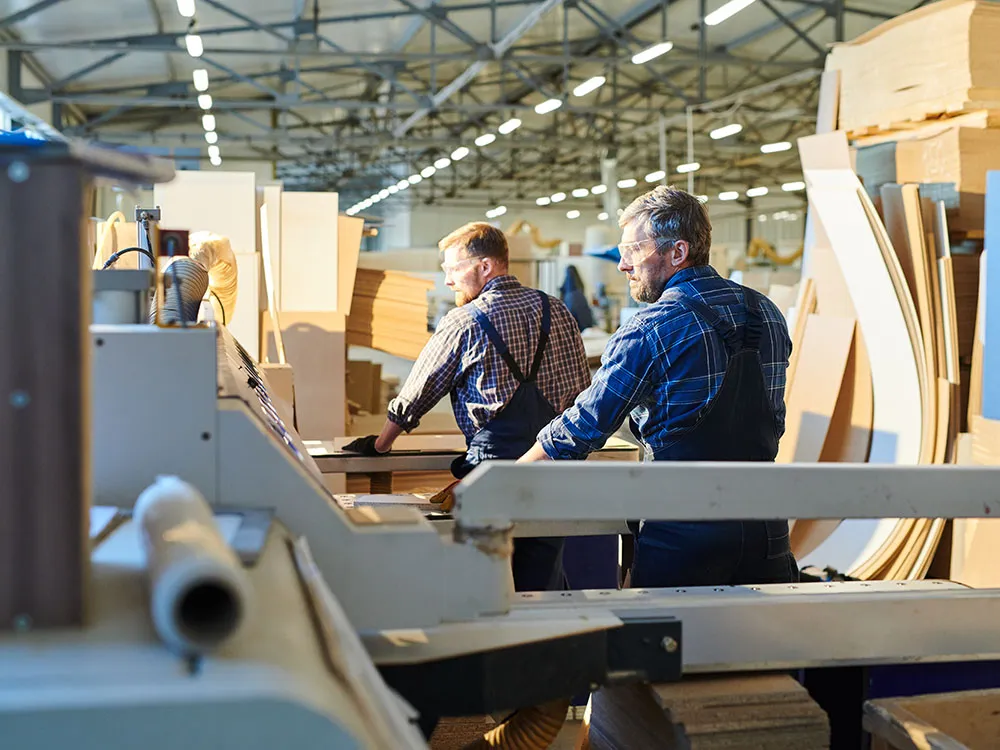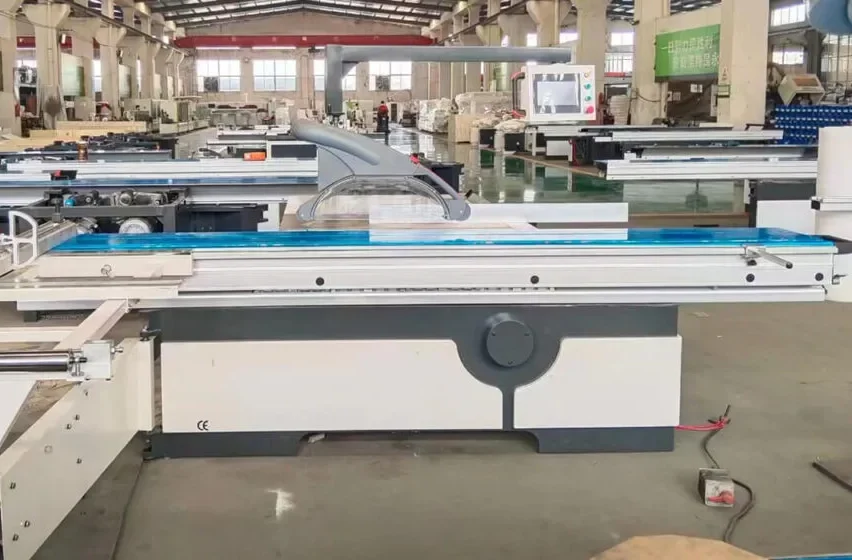


The short answer is that the cost of wood panel saw cutting machines varies greatly, ranging from a few thousand dollars for a basic, entry-level manual machine to well over $100,000 for a fully automated, high-precision industrial workhorse. The kind of machine, its features, and the brand ultimately determine how much you will pay. Recognizing the Elements that Affect Panel Saw Costs. Knowing what makes one machine more expensive than another is helpful when trying to budget for a panel saw.
There is much more going on behind the scenes than just size. Machine Type: Automatic, Semi-Automatic, and Manual. Probably the most significant factor affecting price is the degree of automation. Panel saws operated by hand.
If you’re interested in understanding the pricing dynamics of wood panel saw cutting machines, you may find it useful to explore related articles that delve into the specifics of different models and their features. One such resource is an article about the bottom shaft gang saw, which is particularly relevant for the Southeast Asia market. You can read more about it here: Bottom Shaft Gang Saw Supplier for Southeast Asia Market. This article provides insights that could help you make informed decisions regarding your investment in wood panel cutting technology.
These are the most economical choice for you. The majority of the work is done by you, including pushing the panel, clamping, & frequently manually adjusting the blade height. They work well for hobbyists or smaller businesses with less demand. The typical price range is between $2,000 & $10,000. Ideal For: Low-volume production, custom furniture manufacturers, small workshops, and prototyping.
Advantages: Lowest upfront cost, easier upkeep, and frequently requires less space. Cons: More human error, slower production, labor-intensive, & less accurate for intricate cuts. Panel saws that are semi-automatic. These devices add some automation, typically related to the movement of the blades & frequently equipped with digital readouts for accurate measurements.
もちろん、ここにクリッカブルリンクの文章がある:
I am interested in purchasing a Panel Saw for my woodworking business, you can find more information about it here: パネルソー.
The cutting process is more automated, but you will still need to load & unload the material. The typical price range is between $10,000 and $30,000. Ideal For: Cabinet shops, medium-sized workshops, and companies with modest production volumes. Advantages: Reduced operator fatigue compared to fully manual, increased efficiency over manual, and improved precision. Cons: May not be able to meet extremely high demand; still needs a lot of operator involvement; more expensive than manual.
When considering the investment in a wood panel saw cutting machine, it’s essential to understand the various factors that influence its price. A comprehensive analysis can be found in a related article that discusses the different types of wood bandsaw blades and their impact on overall cutting efficiency and cost. For more details, you can explore the article on wood bandsaw blades, which provides valuable insights into how blade selection can affect your machinery expenses.
| ブランド | モデル | Cutting Capacity | Price |
|---|---|---|---|
| Brand A | Model 1 | 3000 x 2200 mm | 15,000 |
| Brand B | Model 2 | 2500 x 1800 mm | 12,500 |
| Brand C | Model 3 | 3500 x 2500 mm | 18,000 |
CNC (automated) panel saws. This is where the expensive, industrial-grade machinery comes into play. These devices, which are frequently connected to CAD software, are capable of executing intricate cutting patterns with remarkable accuracy. They can load, cut, and occasionally even offload materials with little assistance from humans. Price Range: You should budget between $30,000 and more than $150,000, with large-format or highly specialized machines costing more.
When considering the investment in a wood panel saw cutting machine, understanding the various factors that influence its price is essential for making an informed decision. A comprehensive resource that delves into the specifics of these machines, including pricing and features, can be found in this article about a bottom shaft multi-blade saw. For more details, you can explore the information provided in this related article, which offers insights into the technology and market trends that affect the cost of wood panel saw cutting machines.
Ideal For: Businesses that need high volume, accuracy, & repeatability; industrial production lines; large-scale furniture manufacturers. Advantages: Extremely high accuracy and repeatability, substantially faster production, long-term labor cost reduction, and ability to make intricate cuts. Cons: Expensive initial outlay, more complicated troubleshooting, larger footprint, and need for skilled operators for programming & maintenance. Horizontal versus. Saws that are vertical panels. The machine’s orientation affects both its price and, more crucially, how well it fits into your workspace and workflow.
Saws for horizontal panels. These are the classic “beam saws” in which the saw blade travels horizontally across a flat panel on a table. They work well for high-volume straight cuts and large panels. Space Requirement: Because of the flat table design, more floor space is typically needed.
Typical in: Industrial & larger workshop environments. Cost Impact: Because automated versions are typically more feature-rich and robust, they are frequently more expensive. Saws that are vertical panels. By keeping the panel upright, vertical saws save a significant amount of floor space.
They are a favorite among smaller businesses or those with limited space. Space Requirement: They are perfect for small workshops because they have a much smaller footprint. Typical in: Custom fabricators, smaller cabinet stores, & companies with constrained space. Cost Impact: Although high-end automated vertical saws can still be expensive, manual and semi-automatic vertical saws may be less expensive than their horizontal equivalents.
Precision Notes: Modern vertical panel saws, particularly automated ones, provide exceptional accuracy, despite being perceived as slightly less precise than horizontal beam saws for very long cuts. Important Features and How They Affect Cost. Beyond the most basic machine type, a number of features can greatly affect the cost. Consider these as the improvements that increase capability & value.
Reduce Power and Capacity. This relates to the horsepower of the motor and the largest size of panel that the saw can process. Maximum length and depth of cutting.
Naturally, the cost of a machine capable of cutting thicker materials or wider or longer panels will increase. Stronger frames and parts are needed for larger machines. Impact: When all else is equal, a saw that can cut a 10-foot panel will cost more than one that can only cut an 8-foot panel. A thicker material results in a stronger motor and a more robust blade carriage. HP, or motor horsepower.
Faster cuts, cleaner cuts (particularly in dense materials), & less machine strain are all possible with a more powerful motor (higher HP). Higher production volumes or the cutting of hardwoods and laminated panels require this. Impact: Compared to machines with 3–5 HP motors, expect a discernible price increase for those with motors over, say, 7.5 HP. Accuracy & precision features. These are essential for producing high-quality work and cutting down on material waste.
Software for optimization and digital readouts, or DROs. Compared to tape measures, digital readouts greatly simplify & improve the accuracy of cut dimensions. Long-term cost savings can be achieved by using optimization software to determine the optimal cutting pattern to reduce waste.
Impact: The cost is slightly increased by basic DROs, but it is greatly increased by sophisticated optimization software, particularly when combined with CNC systems. Blades that score. In order to avoid chipping on the lower edge of the cut, a scoring blade is a smaller blade that cuts slightly ahead of the main blade, severing the laminate or veneer.
This is essential when working with melamine or veneered plywood. Impact: Scoring blade-equipped machines (as well as the related mechanisms) will cost more than those without. Higher-end computers typically come with it as standard. Positional systems and linear guides. For extremely accurate and smooth blade movement, high-precision machines use ball screws or linear guides in place of conventional rails.
Fences and pushers that can be programmed are examples of this. Impact: Although these advanced mechanical and electronic systems are more expensive, they provide better long-term accuracy and durability. Improvements to user experience and safety. Even though they are occasionally disregarded, these features make things safer and simpler to use, which has an indirect effect on output. Ports & shrouds for collecting dust.
Efficient dust collection is essential for machine longevity, operator health, & a cleaner shop. Effective dust shrouds efficiently direct sawdust toward the collection system. Impact: High-quality integrated dust ports are a sign of a more expensive, better-engineered machine, even though the dust collector itself is typically separate. Safety equipment (emergency stops, blade guards).
Basic safety features are included in every machine, but more advanced sensors or interlocks may be found in more expensive models. Impact: Robust and well-designed safety systems are a sign of overall machine quality and can increase the build cost, though they are typically a smaller part of the price. Easy maintenance & replacement of blades.
A busy shop can save a lot of downtime by using machines that are made to change blades quickly or make maintenance locations more accessible. Impact: By increasing productivity, this feature justifies a higher price point rather than directly driving price. Novel vs.
utilized panel saws. Choosing whether to purchase new or used goods is another important budgetary consideration. Each has a unique set of benefits and drawbacks. Purchasing Panel Saws. When you purchase a new machine, it comes directly from the manufacturer and frequently comes with a warranty, training, & continuous support.
Advantages. Warranty: Relief from manufacturing flaws. Modern Technology: Availability of the most recent features, accuracy, and efficiency gains. Reliability: No wear and tear from prior owners. Support: Parts availability, training, & manufacturer support.
Financing Options: Obtaining funding for new equipment is simpler. Drawbacks. The biggest expense is a large initial outlay.
Depreciation: As soon as new equipment leaves the showroom, it starts to lose value. purchasing pre-owned panel saws. Although the used market can result in significant savings, there are possible risks involved. Pros.
Reduced Cost: Frequently much less expensive than brand-new, sometimes even half as much. Instant Availability: There are no manufacturing or shipping lead times. Proven Performance: Before purchasing, you can frequently observe the machine in use. Drawbacks.
Lack of Warranty: “As-is, where-is” is typical; repairs are your responsibility. Unknown History: Its prior workload & level of maintenance may be unknown to you. Wear and Tear: After purchase, components may need to be replaced due to wear and tear. Outdated Technology: It might not have digital controls or contemporary safety features.
Availability of Parts: It can be difficult to locate parts for older models. Inspection is Essential: A skilled technician must thoroughly inspect a used machine. Examine motor health, play in the blade carriage, and the state of the fence and support systems.
Brand image and post-purchase assistance. For good reason, the manufacturer’s name is significant. Although well-known brands are frequently more expensive, they usually provide superior dependability & assistance.
premium brands. Businesses with a reputation for precision engineering, sturdy construction, and cutting-edge features include Schelling, HOLZMA (Homag Group), SCM, Altendorf, and Martin. Impact: Although these brands are at the higher end of the price range, their equipment is made for harsh industrial settings & can endure for decades with the right upkeep.
You’re paying for excellent engineering, parts availability, and frequently outstanding after-sales support. mid-range brands. A good balance between features, quality, and price is frequently achieved by brands like Casadei Busellato, Genisis, and some products from Grizzly or Powermatic. Impact: For a lot of expanding companies, these can be great options. When compared to entry-level devices without the premium price tag, they provide a notable increase in capability and durability.
Support can be helpful, but it’s a good idea to look up local dealer availability and reviews. Budget and entry-level brands. More reasonably priced options are provided by numerous smaller or lesser-known manufacturers, frequently from Asian markets. Impact: Although the low prices may be alluring, it’s important to carefully examine the build quality, motor specifications, and user feedback regarding parts availability & dependability. These might not work well in a production setting, but they might be good for very light use or hobbyists.
Support from local dealers is essential. For installation, training, maintenance, & emergency repairs, don’t undervalue the importance of hiring a local dealer or certified technician. If you can’t get your machine serviced, even the best one can be a hassle.
Impact: Although a robust dealer network may result in a small price increase, it can ultimately save you a great deal of downtime & annoyance. Running expenses and long-term worth. The purchase price is only one factor to consider. When creating a budget, keep ongoing expenses in mind. replacement and sharpening of blades.
Panel saws employ big, frequently specialized saw blades. These cost a lot of money. Cost: Each high-quality blade can cost anywhere from $150 to $500 or more. The cost of sharpening services is also high. Depending on the type & volume of your material, consider how frequently you’ll need to replace or sharpen. consumption of power.
Bigger motors consume more electricity. Over time, this can add up to a substantial operational cost, particularly for industrial machines that run constantly. Impact: Take into account the efficiency and HP ratings. Larger machines frequently need three-phase power, which could require additional electrical installation if you don’t already have it.
upkeep and parts. Regular maintenance is necessary even for the most dependable machines. Eventually, it will be necessary to replace worn belts, bearings, brushes, and other parts.
Cost: Allocate funds for prospective repairs and preventative maintenance. Brands can differ significantly in terms of spare part availability and cost. Operator Education. Appropriate operator training is crucial for complex CNC panel saws in order to maximize productivity and avoid mistakes.
This might be an extra charge from the manufacturer or dealer. Impact: Set aside money for both initial & possible refresher training. Choosing the Correct Option for Your Store. When selecting a panel saw, you must weigh your needs both now & in the future against your budget. Take into account the entire cost of ownership as well as the long-term effects on your output and quality rather than just focusing on the best deal.
Determine Your Volume: How many panels must you cut each day or each week? Material Types: Are you primarily cutting solid wood, plywood, melamine, or a combination of these? Space Restrictions: What is your available floor area? Precision Requirements: How important is precise accuracy for your finished product?
Budget (Initial and Ongoing): What are your anticipated operating expenses and what can you reasonably afford up front? You can reduce your options and find a wood panel saw that meets your needs and budget without any unpleasant surprises later on by carefully weighing these factors.
.
A wood panel saw cutting machine is a type of woodworking machinery used to cut large sheets of wood into smaller, more manageable pieces. It is commonly used in furniture manufacturing, cabinet making, and other woodworking industries.
A wood panel saw cutting machine typically consists of a large, flat table with a vertical saw blade that can be adjusted to different heights and angles. The operator feeds the wood panel into the machine, and the saw blade cuts through the material to create the desired pieces.
The price of a wood panel saw cutting machine can be affected by factors such as the size and capacity of the machine, the quality of materials and construction, the brand and manufacturer, and any additional features or accessories included with the machine.
Investing in a wood panel saw cutting machine can lead to increased efficiency and productivity in woodworking operations. It can also help to improve the accuracy and precision of cuts, reduce material waste, and ultimately save time and labor costs.
Wood panel saw cutting machine prices can be found through various sources, including woodworking machinery suppliers, manufacturers’ websites, industry trade shows, and online marketplaces. It is recommended to compare prices from multiple sources to ensure the best value for your investment.


 English English
 العربية
 Bahasa Indonesia
 ไทย
ไทย Deutsch
 Русский
 Español
 Nederlands
 Italiano
 Tiếng Việt
 Português do Brasil
 Français
 Dansk
Dansk Xhosa
Xhosa 日本語
日本語 香港中文
香港中文