
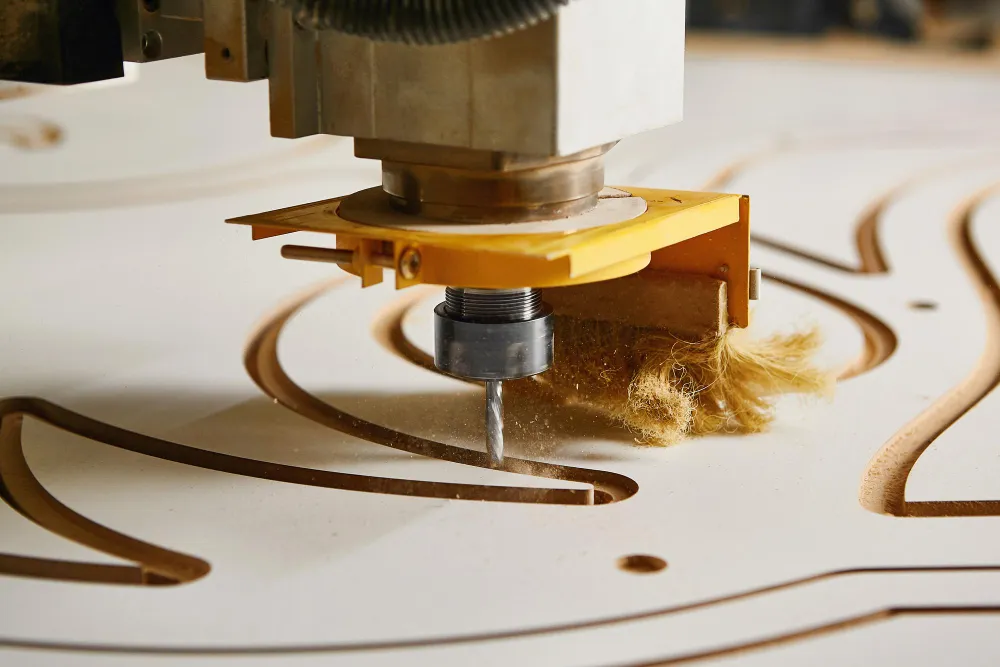
The advantages of CNC wood carving for optimizing efficiency. The development of Computer Numerical Control (CNC) technology has completely changed the ancient craft of wood carving, which previously required a great deal of patience, a single skill, and many hours of manual labor. Woodworkers of all skill levels, from hobbyists to industrial manufacturers, can achieve previously unheard-of levels of efficiency with the powerful combination of accuracy, speed, and repeatability that CNC wood carving offers.
This article will examine the many advantages of using CNC technology for woodworking, including how it improves output, simplifies procedures, & eventually helps to maximize operational efficiency. The innate capacity of CNC wood carving to provide unmatched accuracy and constant consistency is one of its biggest benefits. CNC machines function under strict digital control, in contrast to manual carving, where human fatigue, slight tremors, or variations in tool pressure can result in subtle inaccuracies. Every step of the woodworking process benefits directly from this. Digital File Integrity and Design.
The digital design is the foundation of CNC wood carving. The design file determines the precise result, whether it is generated from scratch using specialized CAD (Computer-Aided Design) software or imported from pre-existing digital models. CAD software’s power in woodworking.
CAD programs like AutoCAD, Fusion 360, and SketchUp offer a flexible platform for producing complex 3D models and detailed 2D outlines. With a level of accuracy not possible with conventional drafting techniques, these programs enable designers to precisely define dimensions, curves, angles, and surface details. The possibility of design errors is greatly decreased by the ability to zoom in, virtually manipulate shapes, and view the finished design before any material is cut, ultimately saving time and money. Vector vs. Raster: Knowledge of Design Formats.
Sicher, hier ist der Satz mit dem klickbaren Link:
Ich bin daran interessiert, mehr über CNC-Maschinen für die Holzschnitzerei zu erfahren, die Sie unter hier.
For CNC wood carving, it’s essential to comprehend the distinction between vector and raster graphics. Lines & curves are defined by mathematical equations in vector files, such as those produced by CAD software. This makes them perfect for accurate cutting & engraving with CNC machines because they can be scaled indefinitely without losing quality. Conversely, raster files are made up of pixels and may become pixelated when they are enlarged. Vector formats like DXF, DWG, and AI are recommended for the majority of carving applications.
Easy Iteration and Prototyping. Rapid iteration and prototyping are made possible by the digital nature of CNC design. Designers can quickly and affordably create several prototypes, experiment with various iterations, & modify existing designs with ease. Before committing to mass production, this iterative process enables functionality and aesthetics to be refined, guaranteeing that the finished product satisfies all requirements. Accuracy and repeatability of robots.
The CNC machine takes over once a design is complete and converted into machine-readable instructions (G-code). With its cutting tools, the robotic arm follows the preprogrammed path with minuscule deviations and moves with amazing accuracy. removing human error from repetitive tasks. It can be difficult and prone to error to repeatedly replicate the same complex detail or shape in manual carving.
However, CNC machines are very good at this. They can replicate identical pieces with perfect fidelity once they are programmed, guaranteeing that each part in a batch is structurally and aesthetically consistent. This is especially useful for applications requiring multiple identical parts, such as cabinetry and furniture manufacturing. Machine Control Can Achieve Complexity and Subtlety.
Even though expert craftspeople are capable of producing amazing detail by hand, creating incredibly fine textures, complex patterns, or delicate undercuts can be time-consuming and physically taxing. These intricate designs can be executed with ease and precision by CNC machines thanks to their fine control over toolpath, speed, & depth of cut. This opens up new possibilities for intricate decorative elements and functional components. Optimizing Toolpaths for the Best Outcomes.
Toolpaths can be carefully planned and optimized with the help of sophisticated CAM (Computer-Aided Manufacturing) software. This entails choosing the appropriate tools, figuring out feed rates and cutting speeds, and establishing the sequence of operations. By minimizing tool wear, cutting down on machining time, & guaranteeing a smooth and clean finish on the carved wood, proper toolpath optimization can further improve the quality of the finished product. In addition to accuracy, CNC wood carving offers a significant increase in production speed over conventional techniques.
Businesses are able to take on more projects & fulfill orders more quickly as a direct result of this increase in throughput. shorter machining times for each piece. The time needed to finish individual pieces is greatly reduced by the automated nature of CNC carving. The machine can work nonstop and complete intricate details and complicated cuts in a fraction of the time it would take a human hand. Processing of operations in parallel.
CNC machines are frequently capable of carrying out several tasks in one configuration. For instance, without the need for human intervention in between steps, a machine can be programmed to rough out a shape, then switch to another tool to refine details, and finally perform chamfering or edge finishing. This saves important time by removing the need to move the workpiece between different workstations or tools.
Fast Material Removal and Tooling. High-speed spindles and a range of cutting tools intended for effective material removal are features of contemporary CNC machines. Because of this, they can cut through wood far more quickly than with manual techniques, greatly cutting down on the total amount of time needed to machine each piece.
Automation and ongoing operation. Particularly in industrial settings, CNC machines can operate for extended periods of time, even around-the-clock, unlike human operators who need breaks. This continuous operation significantly raises a workshop’s total production output while optimizing machine utilization.
Reduced labor input and streamlined workflow. A woodworking operation’s workflow is drastically changed by the incorporation of CNC technology, which frequently results in a decrease in the amount of manual labor required for some tasks. With little human involvement, from design to production.
The human role changes from direct carving to supervision and material management after the design is finished & sent to the machine. This frees up skilled woodworkers from repetitive manual carving to concentrate on more valuable tasks like design refinement, quality control, material sourcing, and customer interaction. Decreased Waste and Optimal Material Use. CNC machines can maximize the arrangement of parts on a piece of wood by closely adhering to preprogrammed paths, reducing material waste.
In order to maximize yield and minimize scrap and overall material costs, sophisticated nesting software can strategically arrange several parts on a sheet. quicker times for setup & switchover. Although programming and tool selection may be necessary for the initial setup of a new design, this process is frequently far quicker and more reliable than manually setting up tools and jigs for a complicated project. Also, many CNC machines enable rapid tool changes, which further minimizes downtime between various carving operations. improved scalability & capacity.
Increased production capacity is a direct result of the efficiency gains provided by CNC wood carving. This scalability is essential for companies trying to expand & satisfy growing demand. Managing Higher Order Volume. CNC-equipped workshops can confidently take on larger orders and meet tighter deadlines because they can produce pieces quickly and consistently.
This makes it possible to take on bigger projects & serve more clients. increasing the number of product lines & personalization choices. Offering a greater variety of products and customization options is made simpler and more affordable by the accuracy & repeatability of CNC machines. CNC technology makes it simple to create intricate designs or custom engravings that would be too challenging to make by hand. In addition to increasing the efficiency of current procedures, CNC wood carving opens up previously unachievable or unaffordable levels of artistic potential and design complexity. delicate & complex carvings.
Extremely delicate and complex carvings can be produced thanks to CNC machines’ fine control. This includes intricate 3D relief work, intricate texture mapping, and delicate filigree. Getting Fine Textures and Micro-Detail. Micro-tooling on CNC machines can produce incredibly fine details, like realistic wood grain textures, delicate floral patterns, or individual hair strands in a portrait.
With manual tools, this level of detail is frequently unachievable. intricate 3D surfaces and sculptural shapes. Complex 3D surfaces, flowing curves, and sculptural forms are all expertly created by CNC carving. This makes it possible to create artistic furniture, ornamental panels, and custom sculptures with flowing, organic designs that would be very difficult to make by hand.
Precision in Inlay and Engraving. CNC machines are perfect for complex engraving & inlay work because they can precisely control depth and toolpath. This enables the production of intricate designs that skillfully combine various materials, personalized inscriptions, and detailed logos. Surface treatments & advanced texturing. A vast range of sophisticated texturing and surface treatments that give wooden objects depth and visual appeal can be produced using CNC technology.
producing natural textures and realistic wood grain. To replicate natural wood grain patterns or produce completely new textured surfaces, sophisticated software and techniques can be used. This can enhance the tactile appeal & realism of carved elements. Using Debossed and Embossed Designs.
CNC machines are capable of producing both recessed (debossed) and raised (embossed) designs with remarkable consistency and clarity. This is perfect for making signage, decorative panels, or any other application where a tactile design element is needed. utilizing intricate geometric patterns and designs. CNC machines’ digital control makes it possible to create intricate mandalas, tessellations, and perfectly repeating geometric patterns that would be very challenging & time-consuming to replicate by hand.
Customization and personalization on a large scale. Offering highly customized and personalized products at a scale never before possible is made possible by the accuracy and efficiency of CNC technology. Product customization in large quantities. Companies can use CNC machines to provide mass customization, enabling clients to add specific dimensions, etched details, or design elements to their orders. This meets the increasing need for distinctive & customized goods. Making Custom Artistic Works.
CNC machines can be extremely useful tools for fine woodworkers and artists to realize their most ambitious designs. It is now possible to realize intricate designs that were previously only conceptual with amazing fidelity. reproducing designs and patterns from the past. Historical carving patterns & designs can be faithfully replicated thanks to CNC technology.
This is very useful for replicating antique furniture, architectural features, and restoration projects. Although productivity & efficiency are the main goals of CNC wood carving, the technology also has a lot to offer in terms of risk reduction and improved workplace safety. lowering exposure to potentially dangerous instruments and procedures.
Chisels, planes, and other sharp tools are frequently used directly when carving wood by hand, which increases the risk of deep cuts, nicks, and other injuries. CNC devices drastically lessen this direct exposure. Direct Contact is Minimized by Automated Tool Operation. A CNC machine’s cutting tools are mostly automated & work inside a confined space. This significantly lowers the possibility of an unintentional injury since the operator is not in direct contact with the moving blades during the carving process.
Systems for Containment and Dust Extraction. Dust extraction systems are built into a lot of CNC machines. By effectively collecting wood dust and debris produced during carving, these systems enhance workshop air quality and lower the risk of respiratory problems brought on by extended exposure to fine wood particles.
Flying debris is reduced in a controlled working environment. Many CNC workstations are enclosed or semi-enclosed, which reduces flying debris and wood chips and makes the workplace safer. This reduces the possibility that airborne particles will cause eye injuries or other unintentional harm. reducing injuries from repetitive strain. Repetitive strain injuries (RSIs) like tendinitis or carpal tunnel syndrome can result from the physical demands of manual wood carving, particularly when done for extended periods of time.
Manual labor is being replaced by supervisory labor. As previously stated, direct manual labor is no longer the woodworker’s primary role; instead, supervision and operation are. The risk of developing RSIs is greatly decreased by this decrease in direct, repetitive physical exertion.
Operators are more comfortable and experience less fatigue. CNC machines make it possible for operators to work more comfortably and with less fatigue by automating the most physically taxing parts of carving. This may make working more pleasurable and sustainable. raising the bar for overall workshop safety. A more controlled and orderly workshop environment is frequently the result of integrating CNC technology, which enhances overall safety.
standardized protocols for safety and operations. Standardized operating procedures and safety protocols for material handling, maintenance, and machine operation are frequently required when implementing CNC technology. This encourages adherence to best practices and a culture of safety. decrease in the amount of heavy or awkward materials that are handled by hand.
CNC machines can frequently be integrated with automated loading & unloading systems, which further reduces the need for manual lifting of large or awkward pieces of wood, even though some material handling is still necessary. regulated setting for the upkeep & storage of tools. Tooling storage solutions are frequently included with CNC machines, and maintenance protocols are usually thoroughly documented. The possibility of misplaced sharp objects or poor maintenance that could result in safety risks is decreased by this methodical approach to tool management.
In the end, the advantages of CNC wood carving come together to significantly improve a company’s bottom line, maximizing return on investment and promoting long-term growth. Lower running costs. CNC technology directly lowers operating costs by increasing efficiency and mitigating risk. Reduced Labor Expenses for Repeated Work. Businesses can maximize their workforce and possibly lower labor costs related to repetitive carving operations by automating tasks that would otherwise require a significant amount of manual labor.
Reduced material waste and better use of available resources. Lower material procurement costs result from precise cutting and clever nesting, which minimize material waste. Utilizing wood resources effectively makes an operation more economical & sustainable. Lower Tooling Costs with Optimal Use.
Cutting tool lifespans can be increased with proper toolpath optimization and machine maintenance, which lowers the frequency of tool replacement and related expenses. reduced rework and rejection of products. Because of its unmatched accuracy, CNC carving greatly lowers the possibility of mistakes, which lowers the amount of rework and rejected products. Time and materials are saved as a result.
greater competitive advantage & profitability. Higher profitability and a more competitive position in the market are directly impacted by the combination of lower costs and higher output. Reduced unit costs & increased output. Businesses can increase their profit margins per unit sold by producing more with less. This enables pricing strategies that are more competitive.
Enhanced client satisfaction and quicker fulfillment. Improved customer satisfaction and repeat business are the results of prompt delivery of high-quality goods. In a market where competition is fierce, quicker turnaround times can be a big differentiator. increased market penetration and fresh commercial prospects.
CNC wood carving opens up new markets and business opportunities. It becomes possible to offer high-volume production or complex customization, which enables companies to target new customer segments. Long-term growth through strategic investment. Investing in CNC wood carving technology is a strategic move that positions a company for long-term growth & adaptation in a changing industry, not just for short-term efficiency gains. adjusting to the market’s demands for individuality and customization.
The capabilities of CNC technology are ideal for satisfying the increasing demand from consumers for customized & distinctive products. Companies that adopt this strategy can remain innovative. Adopting New Technologies for Innovation. Businesses can innovate and provide cutting-edge goods and services by staying on the cutting edge of technology developments.
CNC wood carving is an excellent illustration of this development. establishing a reputation for excellence, accuracy, and dependability. A solid reputation for dependability and excellence is fostered by CNC machines’ consistent quality and precision.
For long-term success, this brand recognition is crucial. In conclusion, adopting CNC wood carving is now a strategic necessity for any manufacturing company or woodworker looking to improve operations. The technology provides a wide range of advantages that not only boost productivity and efficiency but also open up new creative possibilities, increase safety, and eventually promote profitability & long-term growth.
CNC wood carving is a revolutionary advancement that allows woodworkers to maximize productivity and push the limits of what is feasible in the field of woodworking, from the painstaking detail of intricate carvings to the quick production of useful components.
.
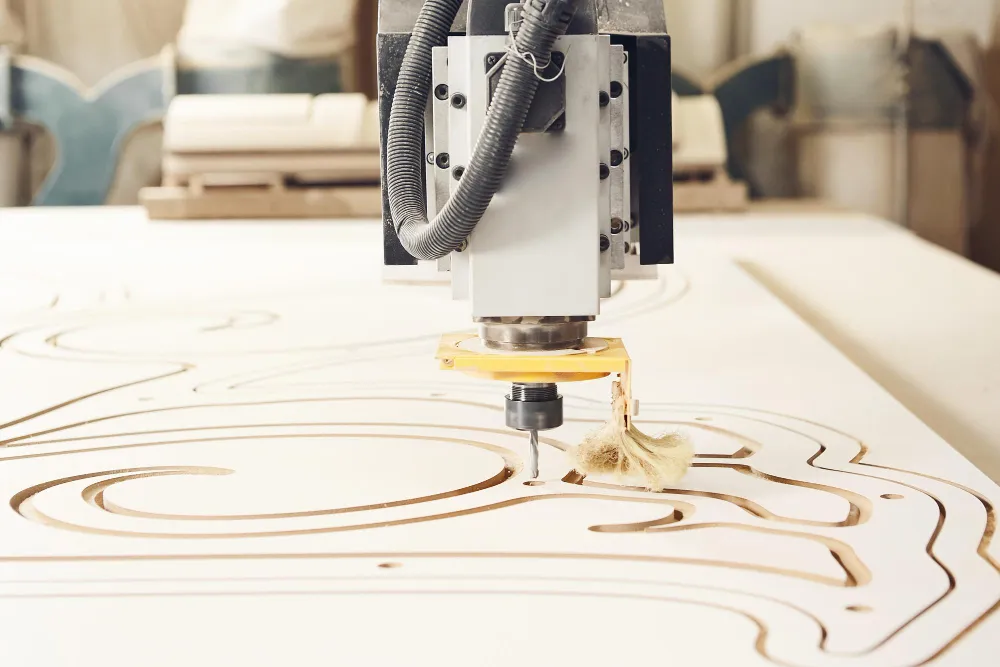
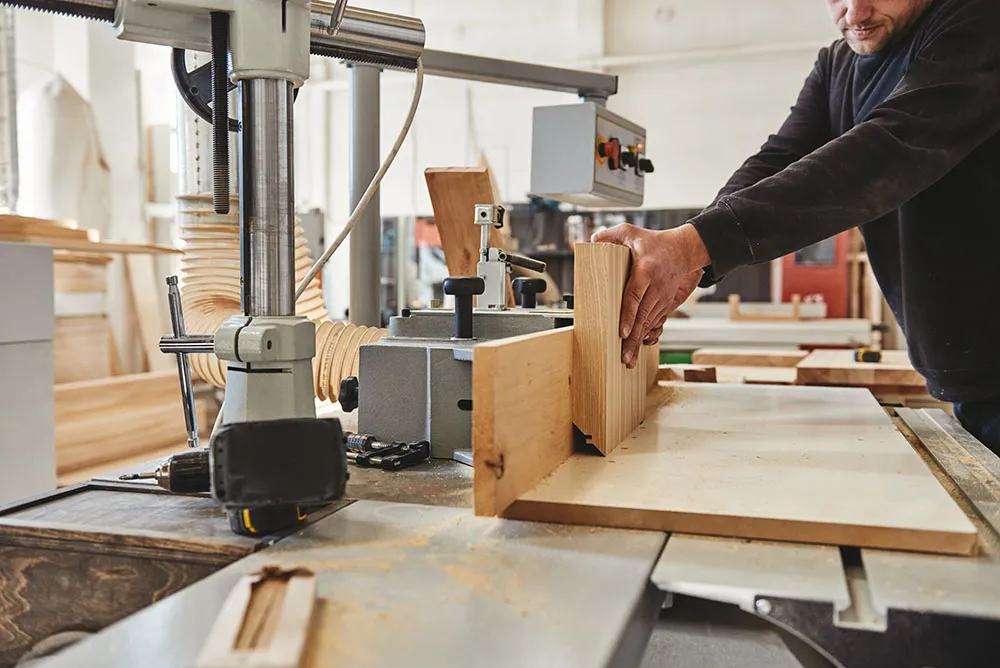
CNC wood carving is the process of using computer numerical control (CNC) machines to carve and shape wood according to a pre-programmed design. These machines use computer-aided design (CAD) software to create precise and intricate wood carvings.
Using CNC for wood carving offers several benefits, including increased precision, efficiency, and repeatability. CNC machines can produce intricate designs with high accuracy, reduce material waste, and streamline the production process.
CNC wood carving offers several advantages over traditional wood carving methods, including faster production times, greater precision, and the ability to replicate designs with consistent quality. Additionally, CNC wood carving can handle complex designs that may be challenging or impossible to achieve with traditional methods.
CNC wood carving can be used with a wide range of wood types, including hardwoods such as oak, maple, and cherry, as well as softwoods like pine and cedar. Additionally, CNC machines can also carve other materials such as MDF, plywood, and even some plastics.
Various industries can benefit from CNC wood carving, including furniture manufacturing, cabinetry, woodworking, and artistic wood carving. Additionally, CNC wood carving can be used in architectural design, signage production, and custom woodworking projects.

 English English
 العربية
 Bahasa Indonesia
 ไทย
ไทย Deutsch
 Русский
 Español
 Nederlands
 Italiano
 Tiếng Việt
 Português do Brasil
 Français
 Dansk
Dansk Xhosa
Xhosa 日本語
日本語 香港中文
香港中文
