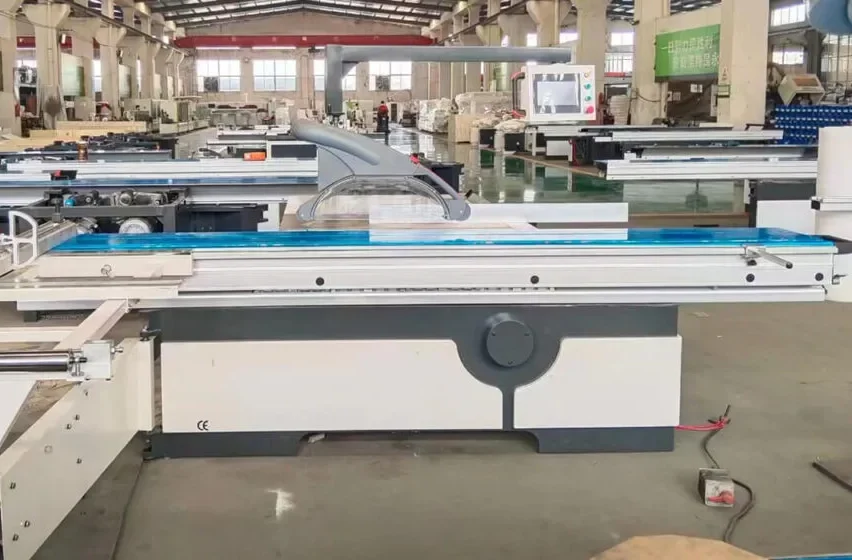

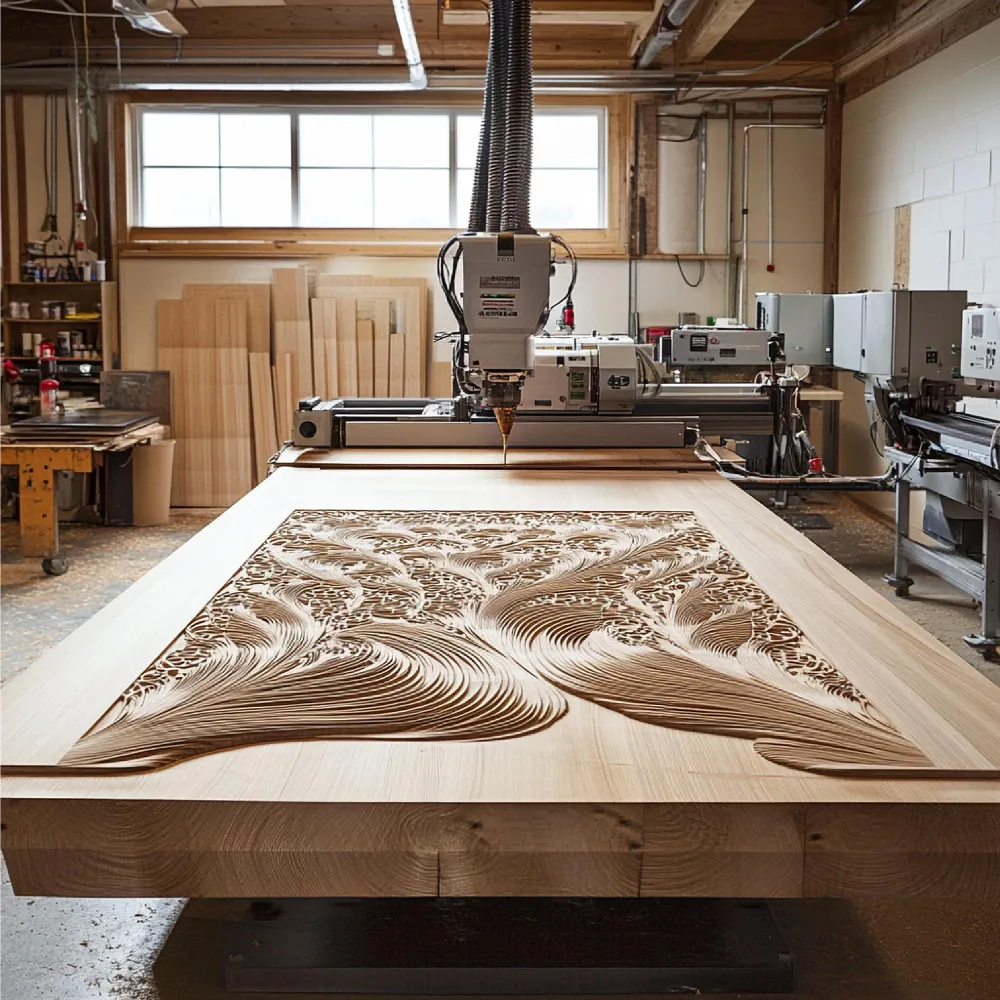
For both seasoned woodworkers looking to advance their skills and aspirational hobbyists taking on challenging designs, Mastering Woodworking with CNC Carving Machines offers a transformative approach. These advanced machines open up a world of fine detail, repeatable accuracy, and unmatched efficiency, free from the constraints of manual carving. It takes more than just operating a piece of technology to comprehend and use a CNC carving machine effectively; it requires embracing a new paradigm in woodworking that combines engineering skill with artistic vision. It is necessary to be open to learning, adapting, and discovering the enormous potential that these digital sculptors possess.
A thorough comprehension of the fundamental concepts is essential for mastering CNC wood carving. This entails understanding the mechanics of the machine itself, how digital designs are translated into physical form, and the critical role software plays in bridging the gap between concept and creation. Here, having a solid foundation is crucial because it influences every decision that follows, from choosing materials to creating toolpaths. The machine remains an inert tool with unrealized potential in the absence of this fundamental knowledge.
The workflow from digital design to tangible output. It all starts in the digital sphere. A user uses computer-aided design (CAD) software to create the object they want. In woodworking applications, this usually entails making a three-dimensional model. Options range from extremely complex professional-grade software used in engineering and architecture to simple, user-friendly programs targeted at novices.
Making a model with the appropriate geometry, dimensions, and features is crucial. After the design is finished, it must be converted into instructions that the CNC machine can follow. Computer-Aided Manufacturing (CAM) software can help with this. The CAM software creates toolpaths—basically, the paths the cutting tool will take—from the 3D model. This entails establishing parameters like:. Choosing and configuring tools.
Sicher, hier ist der Satz mit dem klickbaren Link:
Ich bin daran interessiert, mehr über CNC-Maschinen für die Holzschnitzerei zu erfahren, die Sie unter CNC Carving Machines.
Just as important as the design itself is selecting the appropriate cutting tool, or bit. Wood carving bits are available in a wide range of sizes, shapes, and materials, each of which is appropriate for a particular task. For example, a ball-end mill works well for clearing out large areas or producing smooth, curved surfaces, while a V-bit is perfect for producing intricate relief work and text. The bit’s composition (e. (g). carbide, high-speed steel) also determines how long it lasts and how well it cuts. Detailed information about the selected bit, such as its diameter, flute length, and tip shape, is required by the CAM software.
This data is essential for precise collision detection & toolpath computation. Poor cut quality, broken bits, or even damage to the machine or workpiece can result from choosing the wrong bit. The properties of materials and their effects. The physical characteristics of various wood types vary greatly, which has a big impact on how they behave when CNC carved. Compared to softer woods like pine or basswood, hardwoods like oak or maple are dense & frequently call for slower feed rates & more durable tooling.
Another important consideration is the grain structure. While carving against the grain may result in tear-out and a rougher finish, carving with the grain is typically smoother and requires fewer forceful cuts. Beyond hardwoods and softwoods, engineered wood products like plywood and MDF (Medium-Density Fiberboard) have advantages and disadvantages of their own. Although MDF provides a consistent, grain-free surface ideal for fine details, it can be abrasive and rapidly deteriorate tools. Because of its layered structure, plywood is susceptible to delamination if it is not carved carefully.
By comprehending these material properties, toolpath strategies can be optimized, producing better outcomes and longer tool life. Recognizing the functions of machine components. Fundamentally, a CNC carving machine is an automated, accurate cutting system. Its main parts cooperate to convert digital commands into motion. Among them are the following.
The function of software in CNC wood carving. The transition from concept to physical creation is made possible by software, which is the CNC carving operation’s brain. The machine’s mechanical parts would be useless without complex software. Thus, using software correctly is essential to mastery. Design creation with CAD software.
For woodworking, computer-aided design (CAD) software is the digital canvas. It enables users to produce two-dimensional sketches or, more frequently for carving, three-dimensional models of the projects they want to do. Simple, user-friendly interfaces are available for novices, frequently with pre-built shapes & libraries to speed up the design process. More experienced users may choose to use professional-grade software that provides precise dimensioning, parametric modeling, and extensive control over complex geometries.
The complexity of the intended designs frequently influences the choice of CAD software. For straightforward relief carving or intarsia, a simple 2D/3D model may be adequate. Advanced surfacing techniques & detailed modeling capabilities become essential for intricate sculptures or custom furniture parts. During the design phase, it is essential to learn how to use the selected CAD software, comprehend its features, and form effective modeling habits.
Toolpath Generation with CAM Software. Computer-Aided Manufacturing (CAM) software connects the executable instructions of the machine with the designed model. It creates the precise movements, or toolpaths, that the cutting tool will follow based on the 3D CAD model. Here, the science of machining and the craft of woodworking collide. The following are important CAM software functions. Execution Software for Machine Control.
After the CAM software generates the toolpaths, they are typically saved in a particular file format, most often G-code. The controller, sometimes referred to as the machine control software, of the CNC machine then receives this G-code. After receiving the G-code instructions, this software converts them into electrical signals that power the machine’s motors and move the cutting head in the X, Y, and Z directions.
Real-time monitoring of the carving process, including feed rates, spindle speed, and the cutting tool’s current position, is made possible by machine control software. Also, it offers crucial controls for manually adjusting or “probing” the workpiece for exact positioning, as well as for initiating, stopping, & pausing the task. Understanding the particular machine control software is essential for effective and safe operation. Compared to traditional hand carving, designing specifically for CNC carving necessitates a different mindset. To get the best results, the machine’s advantages and disadvantages must be taken into account, even though artistic vision is still crucial. Designs that are both elegant and effectively implemented are made possible by an understanding of how the machine “thinks” & cuts.
improving designs for material removal & tool access. Making sure the cutting tool can access all desired areas of the material is one of the most important aspects of designing for CNC carving. The diameter and reach of the selected bits must be taken into account.
For instance, a round-ended bit cannot produce sharp interior corners. To make room for the tool, designs frequently need to include tiny radiuses in the corners. Similarly, complex details concealed in cavities or deep undercuts may call for specialized equipment or a multi-step carving procedure. Strategies for material removal are also important design factors. The amount & sequence of material removal will be determined by CAM software.
Overly complicated designs or ones that require a lot of material to be removed in a single pass can result in longer cutting times, wear on the tools, and a higher chance of mistakes. Generally speaking, simpler, more streamlined designs that facilitate effective clearing and finishing passes will produce better outcomes and be more profitable. The significance of accuracy & tolerance in digital models. Wood can vary in density, hardness, and even moisture content because it is a natural material.
CNC machines follow the instructions from the digital model, despite their extreme precision. As a result, the digital model needs to be made with the right tolerances in mind. For instance, if a design calls for incredibly tight fits between components, the digital model may need to include small offsets or clearances to account for the inherent variability of wood. Designing parts that will correctly assemble and hold up over time requires an understanding of how various wood species expand and contract in response to variations in humidity. The accuracy of the physical carving is directly correlated with the accuracy of the digital model.
Developing Multiple-Pass and Layered Carving Techniques. A layered approach to design and carving is frequently advantageous for complex projects. Greater control & accuracy can be achieved by dividing the design into several passes or layers rather than trying to carve everything at once. For example, in a deep relief carving, finer details may be carved with smaller bits in later passes after the bulk of the material has been removed using a larger bit.
This multi-pass approach considers efficiency & tool longevity in addition to detail. It enables the use of increasingly smaller and sharper finishing tools, guaranteeing smooth surfaces & sharp edges. Also, it makes it possible to find and fix any problems early on, saving time and expensive materials. The cutting tool is just as important as the CNC machine’s precise movement. Achieving high-quality cuts and extending the life of your tooling depend on careful setup, careful tool selection, and diligent maintenance.
Recognizing the various types of cutting bits and their uses. It can be daunting to navigate the vast world of CNC router bits. Nonetheless, it’s a good idea to start by comprehending the main types & their typical uses. V-Bits: For Chamfering and Detailed Engraving. The cutting edges of V-bits meet at a point, giving them a cone-like shape.
They are essential for producing complex lettering, decorative lines, and engravings. The bit’s angle and the depth of the cut determine the width of the engraved line, while the machine’s Z-axis movement controls the depth of the cut. They are also very good at making chamfered edges. For 3D contouring and smooth surfaces, use ball-end mills.
Ball-end mills are perfect for contouring, producing smooth, curved surfaces, and removing material from 3D carving operations because of their rounded tips. A larger ball-end mill can remove material more quickly, but the surface finish will be coarser. To achieve smoother transitions and finer detail, smaller ball-end mills are employed. Straight Bits: For pocketing & slotting.
Slots, pockets, and dados are made with straight bits, which have parallel cutting edges. They are great at effectively removing a lot of material, leaving a flat bottom. The width of the necessary slot or pocket determines the diameter. For clean cuts in plywood and laminates, use compression and spiral bits.
In materials like plywood and laminates where tear-out can be a major problem, spiral bits—which come in up-spiral and down-spiral configurations—offer superior chip evacuation and cleaner cuts. In a single pass, compression bits combine up and down cutting edges to produce a clean cut on the material’s top and bottom surfaces. The Importance of Feed Rate and Spindle Speed. Feed rate is the speed at which the machine passes the cutting tool through the material, whereas spindle speed (RPM) is the speed at which the tool rotates. For the best cutting, these two parameters must be carefully balanced because they are inextricably linked.
For optimal cutting, spindle speed and feed rate must be balanced. The tool may overheat, resulting in burning & a poor surface finish, if the spindle speed is too high and the feed rate is too low. On the other hand, if the feed rate is too high and the spindle speed is too low, the material may be pushed or torn instead of cut, & the tool may chip or break. Based on the material & bit type being used, CAM software frequently offers suggested settings.
These are just beginning points, though. Test cuts on scrap material are essential for fine-tuning these settings for your particular machine, tooling, and wood. The ideal balance is influenced by various factors, including the bit’s sharpness, the wood’s density, and the depth of cut. Keeping Your Cutting Tools Sharp & Maintainable. Consumables include CNC router bits, particularly those used for wood carving. Over time, they will become dull and perform worse.
It is crucial to routinely check bits for wear, chipping, or damage. Tool replacement and inspection are crucial. A dull bit will rub, burn, and rip the wood instead of cutting cleanly.
This increases the machine’s strain, results in a poor surface finish, and raises the possibility of bit breakage. In the long term, replacing a dull bit is far more cost-effective than continuing to use it & running the risk of damaging your machine or workpiece. Methods of Sharpening and Resharpening Tools.
Certain CNC bits can be resharpened, but some are made to be thrown away. This calls for a certain level of expertise as well as specific sharpening stones or grinding wheels. You can save a lot of money and greatly increase the lifespan of your tools if you are comfortable with sharpening techniques. Maintaining the bit’s original geometry is essential for precise cutting, though.
Replacing worn bits with new ones is frequently the easiest and most dependable method for many users, particularly those who are new to CNC. After the basic ideas are grasped, the emphasis switches to streamlining the entire process for optimal effectiveness & output. To reduce time and resource waste, this entails optimizing the design, setup, and cutting procedures.
Methods for Effective Job Setup and Material Handling. The CNC machine setup and the actual handling of wood can be major time wasters. By using effective tactics, throughput can be significantly increased. Safe & efficient workpiece fixturing and securing. For both safety and cut accuracy, the workpiece must be fixtured correctly.
During the carving process, the material needs to be held firmly to prevent movement. The following are common fixturing techniques. Batch processing & repetitive tasks.
Batch processing becomes very useful for projects with several identical components. This entails configuring the machine to carve multiple parts in a single run or carrying out the same action on several pieces without requiring a lot of retooling. This maximizes machine utilization and reduces setup time.
The accuracy of CNC is also very helpful for repeatable tasks like engraving logos or making standard joints. Recognizing & addressing common machining problems. During CNC wood carving, difficulties can occur even with the best practices. Maintaining workflow and avoiding expensive errors require quickly identifying and resolving common problems. Steer clear of tear-out and chip-out when cutting.
The annoying issues of chip-out and tear-out lead to damaged surfaces and sharp edges. The following frequently causes them. Diagnosing Wood Burning and Overheating.
Burning is an obvious sign that the cutting tool is producing excessive heat. The following could be the cause. Applying the Best Practices for Finishing After Carving. A CNC machine’s raw output is frequently only the initial stage.
For the carved wood to reach its full potential & beauty, proper finishing methods are essential. Techniques for sanding and preparing surfaces. Different levels of sanding may be necessary for the carved surface, depending on the CAM settings and the type of bits used. It is customary to start with sandpaper with coarser grits & gradually switch to finer grits.
Methods such as using belt sanders, orbital sanders, or even hand sanding certain intricate areas are used. applying protective coatings, finishes, and stains. The raw wood is transformed into a finished product by applying finishes, stains, and protective coatings after the surface has been sufficiently prepared. This comprises. The desire to experiment with more sophisticated methods & keep up with new trends naturally emerges as one gains confidence and experience with CNC wood carving.
What really takes a user from operating a machine to mastering the craft is this constant learning and adaptation. Investigating Complex Geometries via Multi-Axis Carving. More sophisticated CNC machines include additional axes (A and B) that enable rotation of the cutting tool or the workpiece, whereas the majority of entry-level machines only use three axes (X, Y, & Z). Creating extremely intricate, organic shapes that are not achievable with conventional 3-axis machines is made possible by multi-axis carving. This can include elaborate sculptures, flowing-line furniture, and intricate architectural features. CNC & conventional woodworking methods combined.
The real potential of CNC carving frequently resides in enhancing rather than replacing traditional woodworking. Many woodworkers discover that incorporating CNC into their workflow improves their current abilities and makes previously impossible projects possible. For instance, a CNC machine can be used to create complex inlays that are then completed using conventional techniques or to precisely cut joinery that is then assembled by hand. The combination of digital and analog techniques can result in pieces that are both exceptionally beautiful and useful.
Automation and Artificial Intelligence in Woodworking’s Future. Woodworking & CNC are two industries that are always changing. Automation advances & the incorporation of artificial intelligence (AI) have the potential to further transform the sector. AI may help with design optimization, automatically create toolpaths based on intended results, and even keep an eye on the carving process in real time to make corrections and avoid mistakes. More powerful & user-friendly tools for woodworkers are anticipated in the future.
Gaining proficiency in woodworking using CNC carving machines is a continuous process. It calls for commitment, an eagerness to learn, & a love of investigating the nexus between art and technology. Woodworkers can unleash a new level of creativity & precision and realize their most ambitious designs with unmatched accuracy and efficiency by grasping the fundamentals, mastering tool selection and setup, streamlining workflow, and adopting advanced techniques. The digital chisel is waiting to be used by the expert hands of the contemporary woodworker.
.
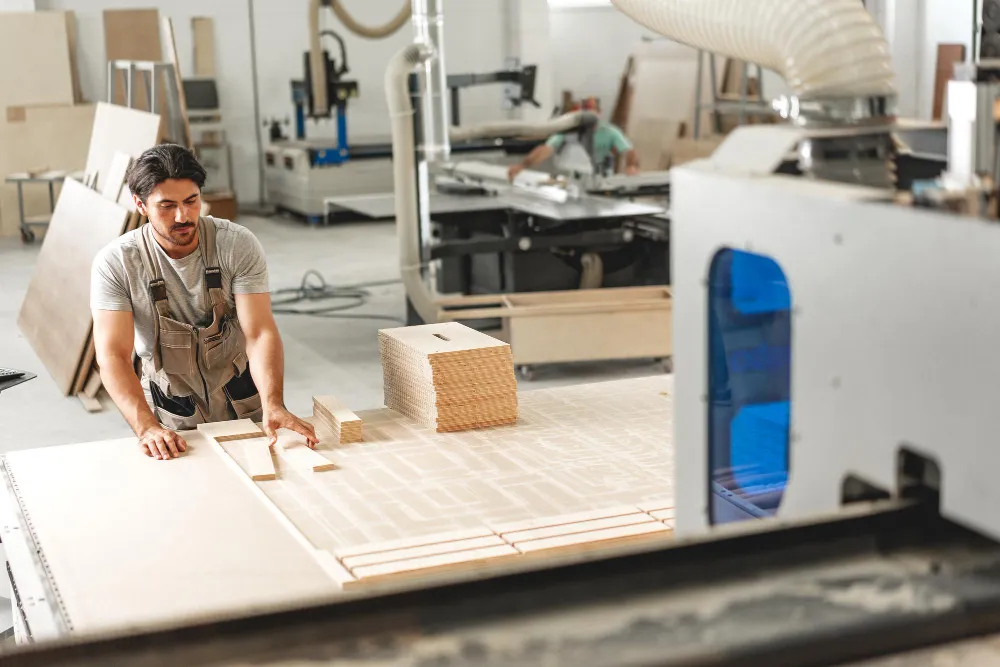
A CNC wood carving machine is a computer-controlled device that uses rotating cutting tools to carve and shape wood according to a pre-programmed design. It can create intricate and precise wood carvings with high accuracy.
A CNC wood carving machine works by following a digital design or pattern, which is programmed into the machine’s computer. The machine then uses various cutting tools, such as routers or drills, to carve and shape the wood according to the design.
Using a CNC wood carving machine offers several benefits, including the ability to create complex and detailed wood carvings with high precision and repeatability. It also allows for efficient production and can reduce the amount of manual labor required for carving wood.
CNC wood carving machines can work with a variety of wood types, including hardwoods like oak, maple, and cherry, as well as softwoods like pine and cedar. Additionally, they can also carve other materials such as MDF, plywood, and even some plastics.
CNC wood carving machines are commonly used in woodworking and furniture production, as well as for creating decorative wood carvings, signage, and architectural elements. They are also used in the production of musical instruments, mold making, and prototyping.

 English English
 العربية
 Bahasa Indonesia
 ไทย
ไทย Deutsch
 Русский
 Español
 Nederlands
 Italiano
 Tiếng Việt
 Português do Brasil
 Français
 Dansk
Dansk Xhosa
Xhosa 日本語
日本語 香港中文
香港中文
