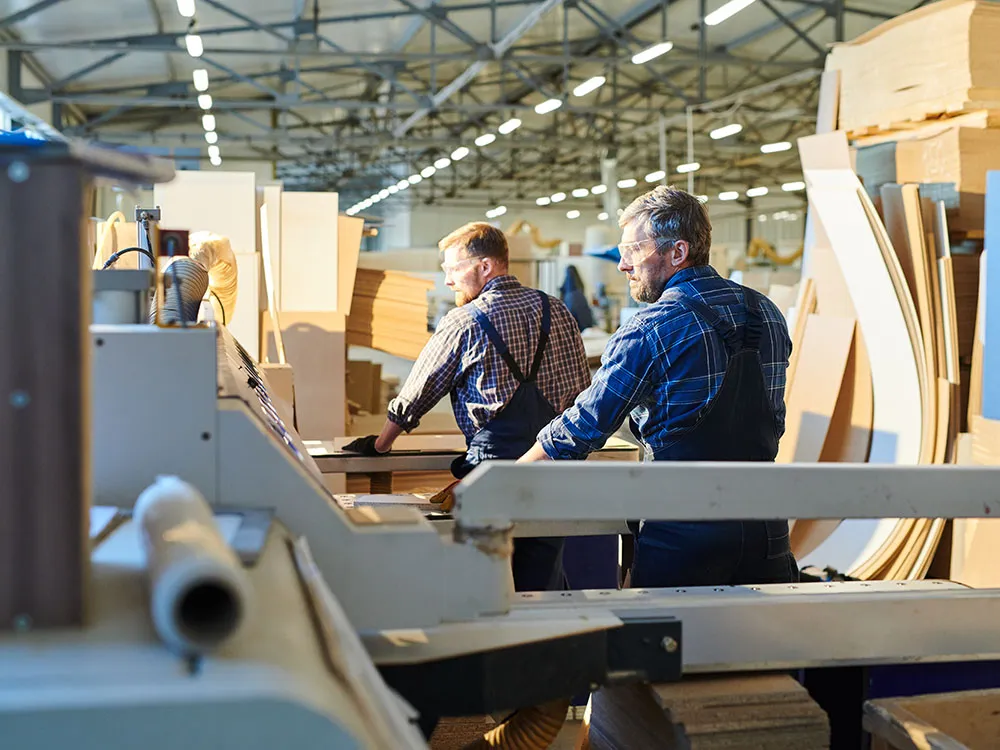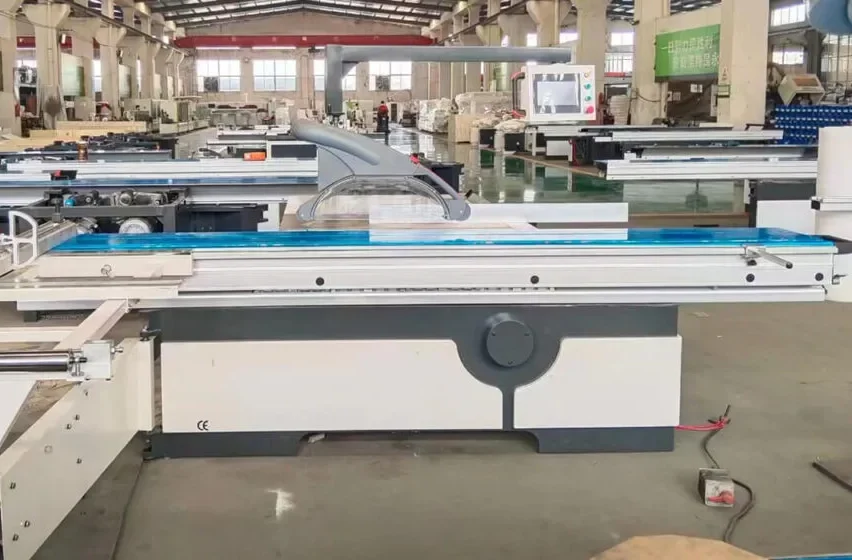


You may be curious about panel saw machines for cutting wood. To put it briefly, a panel saw is a type of specialized saw that can cut through large sheets of material, such as solid wood panels, plywood, or MDF, with accuracy and straightness. Imagine it as a super-powerful, super-accurate circular saw made especially to cut large boards into manageable chunks with uniform, clean edges. Anyone who regularly works with sheet goods—from cabinet shops to furniture makers to serious do-it-yourselfers—will find it revolutionary.
When cutting large sheets, a panel saw’s primary functions are efficiency and accuracy. Frustration and material waste are inevitable when attempting to wrestle an 8×4 foot sheet of plywood onto a table saw while maintaining its square shape and obtaining a perfectly straight cut. By offering a steady, guided system for your cuts, panel saws remove these headaches. The Issue with Conventional Sheet Goods Methods.
For those interested in enhancing their woodworking capabilities, a related article on drilling machines can provide valuable insights into complementary tools that work alongside panel saw machines for efficient wood cutting. Understanding the various types of drilling machines and their applications can help woodworkers achieve precision and accuracy in their projects. To learn more about these essential tools, you can visit this informative article on drilling machines at Sheng Heng Machinery.
To be honest, cutting large panels with a straight edge and a standard circular saw can be risky. The saw may wander due to the weight of the material, & even a small misalignment could result in a crooked cut & possibly ruin an expensive sheet. Table saws work better for smaller pieces, but handling a whole panel on a table saw is frequently dangerous and still prone to mistakes, particularly for lengthy rip cuts. These Problems Are Solved by Panel Saws. These issues are directly addressed by panel saws. They guarantee that the sheet stays flat and stable throughout the cut by offering a special platform that supports the entire sheet.
Because the saw blade is guided, it cannot deviate from a perfectly straight line. This produces accurate and repeatable cuts, which is a major benefit when you need several identical pieces. There isn’t a panel saw that works for everyone. There are various kinds, each with unique advantages and best uses. Selecting the ideal machine for your workshop requires an understanding of these distinctions.
Ja, her er sætningen med det klikbare link:
I am interested in purchasing a Panel Saw for my woodworking business, you can find more information about it here: Panelsav.
Horizontal Panel Saws: For Accuracy in High Volume. Workhorses, horizontal panel saws are frequently found in larger professional shops. They are perfect for cutting hundreds or even thousands of panels per day because they are made for automated, high-volume production.
When considering the efficiency and precision of wood cutting, a panel saw machine stands out as an essential tool for both professional and hobbyist woodworkers. These machines are designed to deliver clean and accurate cuts, making them ideal for a variety of woodworking projects. For those interested in exploring more about the different types of panel saw machines available, you can find valuable insights in this related article on woodworking machinery. Check it out her to enhance your understanding of these powerful tools.
| Metrics | Værdi |
|---|---|
| Maskintype | Panelsav |
| Materiale | Wood |
| Cutting Capacity | Up to 4 inches thick |
| Cutting Length | Up to 10 feet |
| Accuracy | High precision |
| Speed | Adjustable, up to 100 feet per minute |
The benefit of the sliding table. A horizontal panel saw’s large, frequently numerically controlled (CNC) sliding table is its distinguishing characteristic. After being loaded onto this table, the material passes by a saw blade that is stationary. This computer-controlled movement guarantees incredibly accurate and consistent cuts.
For those interested in enhancing their woodworking capabilities, exploring the features of a panel saw machine can be quite beneficial. These machines are designed to provide precise cuts and improve efficiency in wood cutting tasks. If you’re looking for a reliable option, you might want to check out this related article that details a CNC positioning automatic panel saw, which showcases advanced technology for achieving high precision in cuts.
For flawless edges, score blades. A scoring blade is a common feature on horizontal panel saws. This smaller blade scores the material’s upper surface by cutting just ahead of the main blade. This keeps the face veneer from tearing out, which is especially important when working with veneered or laminated panels. Software for optimization and automated features.
Advanced features like automatic loading and unloading systems & integration with optimization software are frequently found in high-end horizontal panel saws. Large operations can save a lot of money by using this software to plan the most effective cutting pattern that minimizes waste and maximizes material yield. Vertical Panel Saws: Exceptionally accurate & space-saving.
Smaller stores or those with limited floor space often choose vertical panel saws. The material is arranged vertically, as the name implies, and requires a lot less space than a horizontal machine. Unchangeable vs.
The moving gantry. There are typically two primary designs found in vertical panel saws. Vertical Fixed Gantry Saws. When using a fixed gantry vertical saw, the material is pushed through for rip cuts (longitudinal cuts) while the saw carriage—the part that holds the blade—moves horizontally along a fixed gantry.
The saw head may pivot or the material may be rotated for cross-cuts, which are brief perpendicular cuts. These are frequently manual and more entry-level. Vertical Saws with a Sliding Frame (Moving Gantry). More sophisticated vertical panel saws have a gantry that moves.
In order to make rip cuts, the gantry—which supports the saw carriage—moves across the stationary material. The material stays in place while the saw head rotates 90 degrees to create a cross-cut. Because you don’t have to wrestle the entire sheet as much for different cut directions, this design frequently offers greater precision and ease of use. Efficiency in Space Is Crucial. A vertical panel saw’s main benefit is its small footprint.
They can frequently be tucked up against a wall to free up important workshop floor space. Because of this, they are very appealing to sign shops, cabinet makers, & any other business where every square foot matters. Manual versus. automatic clamping. The majority of vertical panel saws require manual material loading and positioning.
Higher-end models, on the other hand, come with automated clamping systems that improve accuracy and safety by holding the panel in place. Drilling down into specific features is essential after you’ve chosen the general type. Knowing these differences will help you choose a panel saw that best suits your needs & price range.
Cutting Capacity: Dimensions Count. Crucial requirements are the maximum cutting height and length. Consider the biggest sheets you’ll be cutting. Make sure the saw can handle the standard sheet goods’ dimensions, which are 8 by 4 feet (2440 x 1220 mm), with a margin. Remember that the cutting depth determines the thickest material that the saw can handle.
The main advantage is precision and accuracy. Perhaps the most significant factor is this. See if there are any cut tolerance requirements.
Cut tolerances of a fraction of a millimeter are possible with top-notch panel saws. Assist with System Quality. How smoothly and precisely the saw carriage moves depends on the quality of the guide rails and bearings.
Seek out sturdy, well-designed guide systems that can withstand wear & deflection over time. digital stops and readouts. Setup time is accelerated and accuracy is significantly increased with digital readouts for cut dimensions. For batch work, programmable stops save a ton of time by enabling repeatable cuts without continual measuring.
Power and Blade Diameter: Managing Hard Materials. The maximum blade diameter that the saw can handle & its motor power (in horsepower or kilowatts) are crucial. Cleaner cuts and less strain on the motor result from a stronger motor’s ability to handle denser or thicker materials without bogging down. Larger blade diameters frequently result in smoother cuts in certain materials by lowering the angle of attack. Dust collection is essential for visibility and safety.
Panel saws are just one type of woodworking that produces a lot of dust. Cleanliness is important, but so are operator health and cut line visibility in an efficient dust collection system. integrated ports for dust. Seek out devices that have thoughtfully positioned & well-designed dust ports. Dust will be collected from the blade’s top and bottom by an effective system. Conformance to External Collectors.
Make sure the dust ports on the saw can be used with common external dust collectors. For the best dust extraction, your dust collector’s CFM (cubic feet per minute) rating should correspond with the saw’s specifications. Safety Features: Avoid taking short cuts. In any workshop, safety is of utmost importance.
Because of their strong blades, panel saws necessitate careful consideration of safety features. Blade Controls and Guarding. Standard features include effective blade guards that retract as the saw cuts. E-stops, or emergency stops, ought to be conveniently located. To reduce uncomfortable movements, controls should be easy to use & strategically positioned.
mechanisms for clamping materials. In addition to preventing kickback, secure material clamping guarantees that the material remains in place throughout the cut. This could be a vacuum hold-down system, pneumatic clamps, or manual clamps, depending on the type of saw. Build Sturdiness & Quality: A Long-Term Investment.
The cost of a panel saw is high. You want a machine that can endure the rigors of regular use & be built to last. construction of frames.
Seek out sturdy, rigid, welded steel frames. Vibration is reduced by a strong frame, which improves cut accuracy and machine longevity. component quality. Think about the quality of parts such as electrical systems, motors, & bearings.
Reputable producers usually use better-quality parts. Once you have your panel saw, you can get the most out of it by properly configuring it and learning how to use it. Accuracy starts with installation and leveling.
There is no compromising on proper installation. For horizontal saws, the machine must be perfectly level, and for vertical saws, it must be firmly fixed to the wall or floor. Cut accuracy will be directly impacted by any irregularities. fastening to the wall or floor.
For anchoring, refer to the manufacturer’s instructions. This guarantees stability & stops the machine from moving while in use. evaluating perpendicularity and squareness. Make sure that every component is square & perpendicular to the manufacturer’s tolerances after installation.
Using straightedges, levels, and precision squares may be necessary for this. Blade Selection: The Right Tool for the Job. The quality of the cut is greatly influenced by the blade you use. Certain blade types are necessary for different materials & cutting tasks. Teeth Number (TPI).
Diminished Teeth (e. A g. 24–40T): Excellent for quickly tearing thicker sheet goods and solid wood. More Teeth (e. (g). 60-80T or higher): Perfect for melamine, laminates, plywood, and fine cross-cutting to reduce tear-out. Teeth geometry. Alternate Top Bevel, or ATB, is frequently used for plywood and general-purpose cutting.
For tearing solid wood, FTG (Flat Top Grind) works best. TCG (Triple Chip Grind): Because it minimizes chipping, it is great for laminates, melamine, and non-ferrous metals. Kerf Width.
The kerf is the width of the cut made by the blade. Thinner kerf blades waste less material but might require a more powerful saw to prevent deflection. Safe Operation: Prioritizing Your Well-being. Never compromise on safety. Always follow the manufacturer’s safety guidelines and implement good workshop practices.
Personal Protective Equipment (PPE). Always wear appropriate PPE: safety glasses or a face shield, hearing protection, and dust mask or respirator. Avoid loose clothing or jewelry that could get caught in moving parts. Understanding Controls and Emergency Stops. Familiarize yourself with all controls, especially the emergency stop button, before operating the machine.
Know how to quickly shut down the saw in an emergency. Proper Material Handling & Support. Ensure the material is properly loaded, clamped, and supported before initiating a cut. Never try to cut material that is improperly secured. Use outfeed support where necessary. Regular maintenance extends the life of your panel saw & ensures it continues to perform accurately.
Routine Cleaning: The First Line of Defense. Sawdust build-up can clog mechanisms, overheat motors, & affect accuracy. Blade and Guard Cleaning. Regularly clean the saw blade and blade guards to remove pitch and sawdust.
A clean blade cuts better and reduces strain on the motor. Guide System Maintenance. Keep guide rails and sliding mechanisms clean and free of debris. Lubricate according to the manufacturer’s recommendations. Blade Sharpening and Replacement: Sharp Cuts Matter. Dull blades lead to poor cut quality, tear-out, and increased strain on the motor.
When to Sharpen. Sharpen blades as soon as you notice a decline in cut quality, increased burn marks, or a need for more force to push the material through. When to Replace. Eventually, blades will wear out or get damaged beyond repair.
Always use new, high-quality blades that are appropriate for the material you’re cutting. Troubleshooting Common Issues: Quick Fixes. Even well-maintained machines can have occasional hiccups. Cut Quality Problems (Burn Marks, Tear-out). Tear-out: Usually brought on by a dull blade, the wrong kind of blade for the material, or inadequate scoring or support.
Burn marks are typically a sign of a dull blade, an improper feed rate (too slow), or a lack of motor power. Noise or vibration from machines. Increased noise or vibration can signal loose components, worn bearings, unlubricated parts, or an unbalanced blade. Investigate and address these issues promptly. Electrical Problems.
If the saw isn’t powering on or behaving erratically, first check the power supply, circuit breaker, & all connections. If the problem persists, consult a qualified electrician or the manufacturer’s service manual. Deciding if a panel saw is the right investment really boils down to your needs.
If you frequently work with large sheets of material, value precision & efficiency, and want to reduce waste & effort, then a panel saw is likely an indispensable tool. It transforms the challenging task of breaking down sheet goods into a much more manageable, accurate, and arguably even enjoyable process. Consider your budget, available workshop space, and the volume of work you anticipate. For professional shops, the increased productivity and material savings often justify the investment quickly.
For serious hobbyists or smaller operations, a well-chosen vertical panel saw can offer significant advantages without breaking the bank or overwhelming your space. Ultimately, it’s about making smarter, safer, & cleaner cuts.
.
A panel saw machine is a woodworking tool used to make straight and precise cuts in large sheets of wood, such as plywood, MDF, and particleboard. It is commonly used in furniture manufacturing, cabinet making, and woodworking shops.
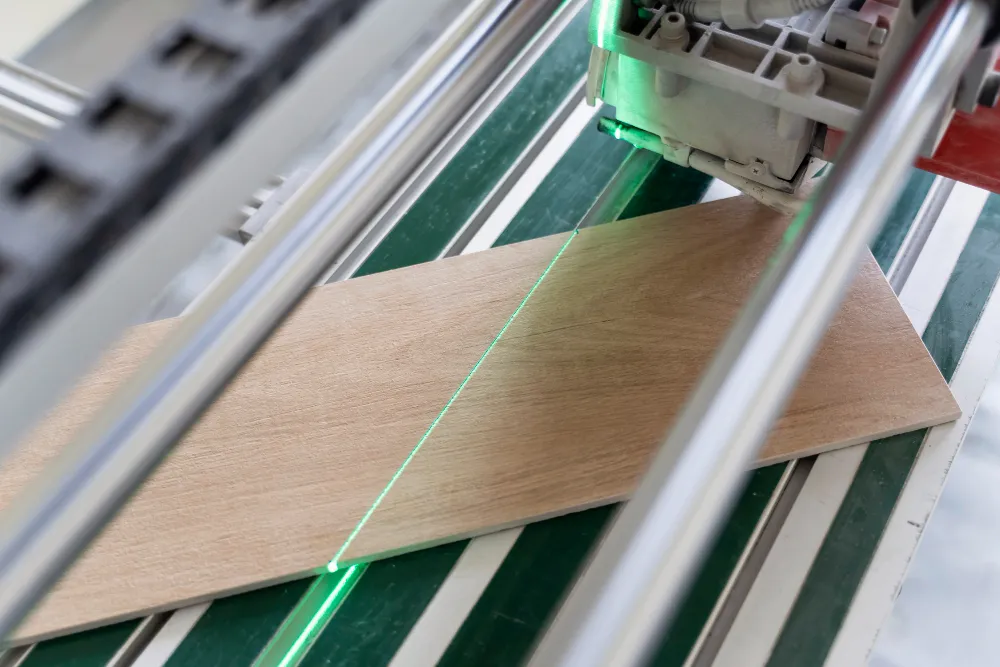
A panel saw machine typically consists of a large, flat table with a vertical blade that can be adjusted for height and angle. The wood sheet is placed on the table, and the blade is used to make straight cuts along the length or width of the sheet.
Using a panel saw machine allows for efficient and accurate cutting of large wood sheets, saving time and reducing waste. It also enables woodworkers to produce precise cuts for various woodworking projects.
There are various types of panel saw machines, including vertical panel saws, horizontal panel saws, and sliding table panel saws. Each type has its own unique features and advantages, catering to different woodworking needs.
When using a panel saw machine, it is important to wear appropriate safety gear, such as goggles and ear protection. Operators should also be trained on how to use the machine safely, and always follow the manufacturer’s guidelines for operation and maintenance.


 English English
 العربية
 Bahasa Indonesia
 ไทย
ไทย Deutsch
 Русский
 Español
 Nederlands
 Italiano
 Tiếng Việt
 Português do Brasil
 Français
 Dansk
Dansk Xhosa
Xhosa 日本語
日本語 香港中文
香港中文