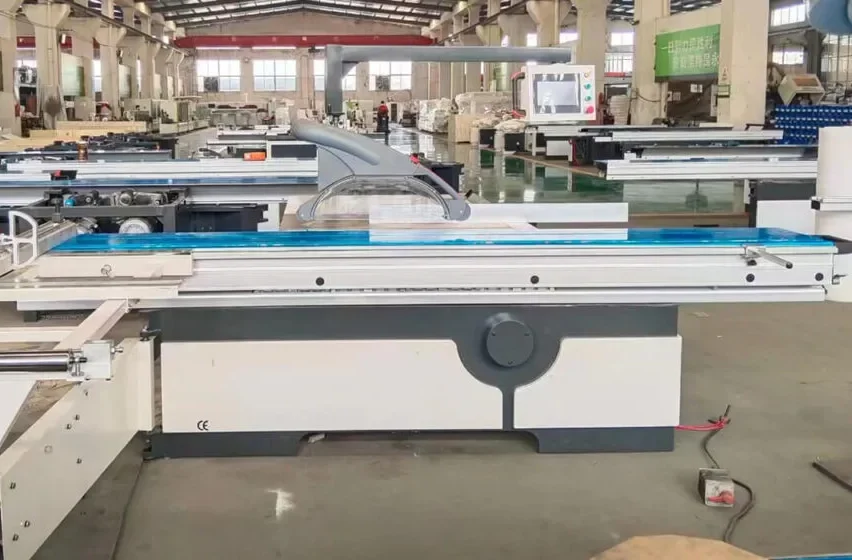
🔥 الشركة الرائدة عالميًا في تصنيع ماكينات النجارة: جودة ممتازة لتصنيع المعدات الأصلية/التصنيع حسب الطلب بأسعار المصنع مباشرةً.

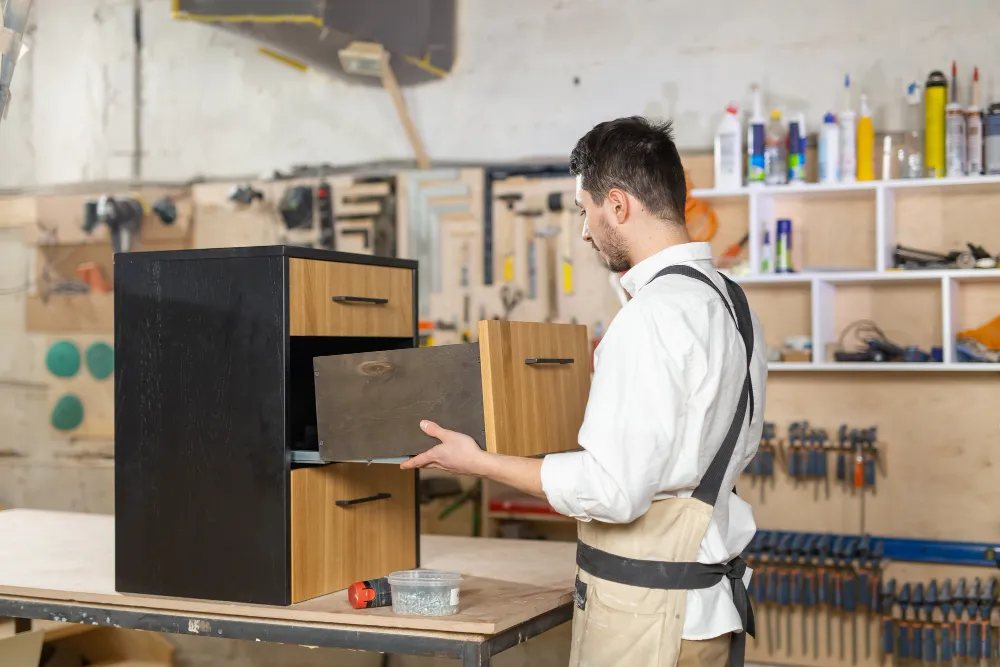
If you’re doing a respectable amount of work and want your cabinetry to look more polished and professional, the short answer to the question of whether an auto edge banding machine is a wise investment for your cabinet-making company is definitely yes. Achieving a long-lasting, factory-quality finish is now more important than simply applying tape. In essence, an auto edge banding machine automates a critical final step. It applies a decorative edge band neatly, smoothly, and effectively to the raw edge of your particleboard or MDF panel.
This greatly accelerates your process and, more importantly, greatly improves the final product’s quality. Let’s examine why cabinet makers will find this to be so revolutionary. The ability of an auto edge banding machine to increase production speed is one of its most immediate and significant advantages. Although it is possible, manual edge banding is a laborious procedure.
Each edge requires individual care. Manual application’s time sink. Each edge banding strip must be cut to size, adhered (using hot melt glue or contact cement), carefully positioned, and then trimmed.
This is a routine task. Drying Times: If you’re using specific kinds of adhesives, you may need to wait for them to cure before cutting, which will cause additional delays in your workflow. Trimming & Finishing: It takes a lot of skill & time to get a really clean trim around every corner and seam, even with the best manual tools. Basically, you’re battling friction and gravity. How Automation Modifies the Situation.
Continuous Flow: The panel and the edge banding material are fed through a number of stations by an automated machine that completes several tasks in one pass. This indicates that the machine continues to run without you stopping and starting. Multiple steps are combined in the majority of auto edge banders.
The machine may have three sections: one that applies glue, another that presses the band, and a third that trims. It is this parallel processing that propels the speed boost. Decreased Handling: You can move a panel to the next stage more quickly if you have to pick it up & handle it less frequently. Precise alignment and heavy lifting are handled by the machine. This increased speed directly translates into more projects completed and, consequently, more revenue for companies producing several cabinets each week. Let’s face it: even if a cabinet is structurally sound, the entire thing suffers if the edges appear sloppy.
Customers will notice & value your consistently professional finish if you have an auto edge banding machine. The Problem of Manual Finishes That Are Consistent. Dependency on Skill: The operator’s skill & experience are crucial in achieving a flawless edge band finish by hand. Even experienced woodworkers occasionally have bad days, which can result in variations between panels. Glue Lines and Gaps: It can be very difficult to spread the glue precisely evenly and prevent air bubbles or gaps beneath the edge banding. These flaws are frequently apparent.
Trimming Marks: Although manual trimmers are efficient, if they are not used correctly, they may occasionally leave faint marks or an uneven edge. It may take several passes to achieve a perfect cut. An automated system’s accuracy.
Uniform Glue Application: A uniform, even layer of hot melt adhesive is applied by machines using carefully regulated glue pots and applicators. Strong adhesion is guaranteed, and glue squeeze-out and dry spots are avoided. Consistent Pressure: To securely attach the edge banding to the panel, pneumatic or hydraulic systems apply consistent pressure.
This guarantees a tight, long-lasting seal and removes lifting. Clean Trimming Mechanisms: Auto edge banders usually feature specialized trimming units that precisely follow the panel contour. These units frequently have scraping blades. This produces a smooth, handleable edge and a clean, flush cut with few or no visible marks.
The machine is built to perform this task flawlessly and repeatedly. Beyond appearance, the durability of the cabinet is greatly impacted by the application of an edge band. Particularly in demanding workshop or kitchen settings, a poorly applied edge can result in early failure. The reasons why manual application may not be as durable.
Weak Adhesion: Weak bonds may arise from inconsistent glue application or inadequate pressure during manual application. This implies that over time, the edge banding may peel off, particularly at corners or edges that come into frequent contact. Moisture Ingress: If the edge banding isn’t applied precisely, moisture may seep in through tiny holes or flaws. For MDF or particleboard, which can swell and deteriorate when exposed to water, this is especially problematic.
Impact Resistance: A loosely fastened edge band is more prone to chipping or snagging, which can result in damage that is challenging to fix smoothly. The machine application’s robustness. Superior Bond Strength: A much stronger and more dependable bond is produced by the regulated application of hot melt adhesive and steady pressure from an auto edge bander.
The edge band is much less likely to delaminate as a result. Sealed Edges: The panel’s core material is successfully sealed by a precisely applied edge band. In order to avoid moisture damage, dust intrusion, and general wear and tear, this protection is essential. Resistance to Stress: The edge banding is better able to endure the stresses of daily use, such as bumping into the cabinet, cleaning, or the general movement and structural demands on cabinetry, because of its uniform application and strong bond.
Even though the initial cost of an auto edge banding machine may seem high, it frequently results in less waste and more efficient use of your materials, which ultimately saves you money. Manual Material Waste’s Dangers. Over-application of Glue: When applying glue by hand, it’s simple to use too much, which results in excess that is essentially wasted and needs to be cleaned up. This is particularly valid for contact adhesives.
Band Material Errors: You frequently have to discard the entire piece of edge banding along with the time and glue used on it when errors occur during manual application, such as improper cuts, misalignments, or bubbles. Scrap Generation: More material may be scraped off as waste as a result of ineffective trimming and finishing. How Material Use Is Optimized by Automation. Precise Glue Control: Only the required amount of adhesive is used thanks to machines that use metered glue applicators. This maximizes glue consumption while reducing waste.
Reduced Trimming Scrap: Only the extra edge banding material is removed thanks to the accurate trimming mechanisms, leaving a clean, flush finish with little waste. Rejects resulting from operator error become much less frequent. Effective Edge Band Utilization: A wide range of edge banding widths and thicknesses can be handled by numerous machines, making it possible to use common materials effectively.
In order to guarantee the best adhesion and minimize breakage, some even have features for conditioning or preheating the band. Decreased Rework: Because the finish is so uniform, there is much less need to rework or remake panels because of subpar edge banding quality, which saves both labor and material. Being more profitable and efficient is the ultimate objective for any business. An auto edge banding machine is more than just a piece of equipment; it is a strategic investment that directly supports both.
The Effect of Manual Processes on the Bottom Line. High Labor Costs: Banding edges by hand requires a lot of labor. The longer it takes, the more skilled labor you have to hire, which has a direct effect on your overhead and cabinet costs. Limited Throughput: As previously indicated, the number of cabinets you can produce in a given amount of time is limited by slow manual processes. This sets a limit on your earning potential.
Customer dissatisfaction: Although it isn’t a direct expense, poor quality that results in returns or complaints from customers can seriously harm your brand and cost you future business. Increasing Profitability through Automation. Decreased Labor Per Unit: The number of labor hours needed per cabinet can be greatly decreased by automating the edge banding procedure. This enables you to take on more work with your current team or frees up your skilled workers for more complex tasks. Enhanced Production Capacity: You can produce more cabinets in less time thanks to the speed and efficiency improvements.
More revenue opportunities & a higher potential output follow directly from this. Enhanced Perceived Value: Your cabinets will look more upscale with a polished, consistent finish, which may help you charge more or set yourself apart from rivals who employ less advanced techniques. Faster Project Turnaround: By delivering completed cabinets to clients more quickly, you can increase customer satisfaction & possibly win repeat business. Decreased Material Costs (as previously mentioned): Each project’s profit margin is directly impacted by reduced waste & more effective material use.
In conclusion, an auto edge banding machine is more than just a fancy device; it’s a potent instrument that can significantly raise the caliber, productivity, and profitability of your cabinet manufacturing company, despite the initial cost. It ensures that your products meet the high standards required in today’s market by streamlining a critical finishing step.


 English English
 العربية
 Bahasa Indonesia
 ไทย
ไทย Deutsch
 Русский
 Español
 Nederlands
 Italiano
 Tiếng Việt
 Português do Brasil
 Français
 Dansk
Dansk Xhosa
Xhosa 日本語
日本語 香港中文
香港中文