

You want to improve your woodworking skills? That’s fantastic! Building things by hand is a craft that can be very fulfilling.
The good news is that becoming proficient in woodworking is not a secret skill that only a select few possess. It really comes down to knowing a few fundamental concepts, practicing regularly, and simply approaching your projects with intelligence. Consider it as you would any new skill. Running a marathon on your first day is not something you would expect, and woodworking is no different. There are methods to learn, safety to prioritize, and an effective workflow to figure out.
However, don’t be afraid of that. You can develop your abilities and produce some truly fulfilling pieces with a little concentration & the correct guidance. Let’s examine some of the most important topics that will aid you in your woodworking endeavors. Wood is used in woodworking, as everyone knows, but not all wood is made equal.
Understanding the distinctions between different kinds of wood is essential to creating projects that are better. It has an impact on the final product’s durability, appearance, & ease of handling. Softwoods versus. wood floors. This is the simplest differentiation.
بالتأكيد، إليك الجملة مع الرابط القابل للنقر:
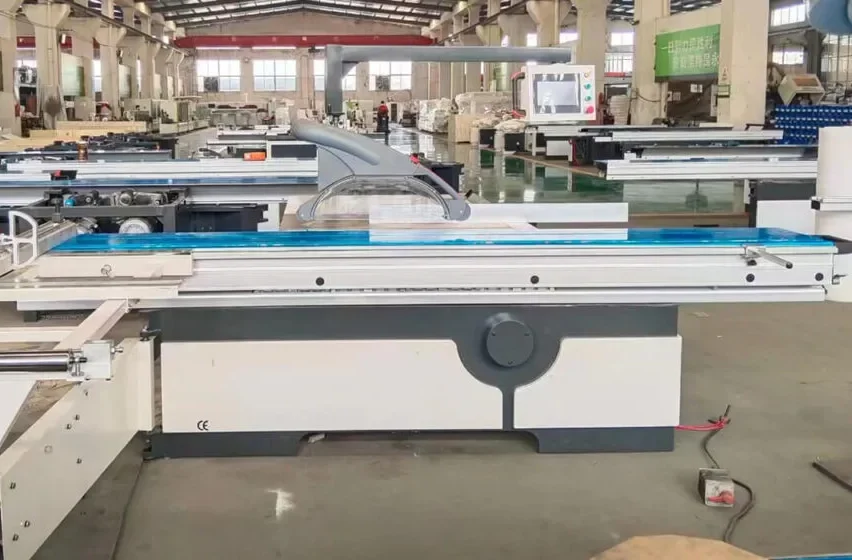
I am interested in purchasing a sliding table saw table for my woodworking projects, you can find more information about it at منشار الطاولة المنزلق CNC.
In general, softwoods like pine, fir, and cedar are less dense, simpler to cut and sand, and frequently more reasonably priced. They work well for construction, framing, and simple projects that don’t require a large financial outlay. They are more prone to scratches and dents, though. Denser, more resilient, and longer-lasting are hardwoods like walnut, cherry, oak, and maple. They are favored for furniture, cabinetry, & projects where durability and a high-end appearance are crucial because they typically have more appealing grain patterns.
They can be more difficult to handle, requiring more work and sharper tools. Kiln-dried versus. Wood that has been air dried. Have you ever seen wood that appears slightly distorted or cracked? This is frequently the result of improper drying.
Kiln-dried wood is dried in a regulated oven, which eliminates moisture more rapidly and evenly. Once you get it home and begin using it, this makes it more stable and less likely to warp or crack. Over time, air-dried wood naturally dries. Although it takes longer & the moisture content may not be as consistent as kiln-dried wood, it may be more stable than green (unseasoned) wood. Kiln-dried is preferred by most hobbyists due to its consistency.
Recognizing Wood Movement. Wood breathes; it’s not static. Changes in temperature & humidity cause it to expand and contract. “Wood movement” is the term for this. Ignoring this will undoubtedly lead to the eventual failure of your projects. Connectivity and Motion.
The manner in which wood pieces are joined is very important. For instance, the wood will expand and contract & is likely to buckle or crack if you build a tabletop and secure it firmly to an apron (the frame underneath) around all edges. Using methods like slotted screws or floating tenons, you must design your joinery to accommodate this movement. finalizing & sealing. By sealing the wood and slowing down moisture absorption, a finish like paint, oil, or varnish can help reduce movement. But it doesn’t get rid of it.
Mastering your materials also includes understanding how various finishes affect the movement of wood. This is a non-negotiable recommendation. If you’re not careful, woodworking can be risky. Even skilled carpenters have mishaps. Putting safety first safeguards your workshop, yourself, and your capacity to continue woodworking. PPE is personal protective equipment.
This serves as your initial line of defense. eye protection. When sawing, routing, sanding, or using any other tool that can produce flying debris, always wear safety glasses or a face shield. Dust, wood chips, and even tiny tool bits can cause severe eye injuries.
Protect your hearing. Power tools have a lot of noise. Long-term noise exposure can cause irreversible hearing loss. When operating routers, saws, planers, or any other noisy equipment, earmuffs or earplugs are a must. respirators or dust masks.
Not only is wood dust bothersome, but it poses a health risk. Over time, fine sawdust can irritate your lungs and cause respiratory issues. When sanding or working with specific types of wood, wear a respirator or a dust mask for activities that produce more dust.
Foot safety. Lumber and heavy tools are prone to falling. Steel-toed boots are an excellent option if you want to shield your feet from falling objects. instrument safety. There are specific safety rules for every tool.
Recognizing Your Resources. Read the handbook before using any tools. Recognize its intended use, safety features, and any cautions. Avoid attempting to use a tool for purposes for which it was not intended. Tools with sharp edges are safer.
It may seem paradoxical, but cutting with a sharp tool requires less force. This reduces the possibility of an injury from the tool slipping. Bits and blades that are dull can snag, bind, and cause unanticipated movements. Make sure your tools are kept up to date and sharp. appropriate setup and modifications.
Make sure all of your fences & guards are in their proper locations, your router bits are firmly fastened, & your saw blades are set to the proper height. An accident is inevitable when a tool is not properly set up. Organization & Awareness of Workshops. A workshop that is cluttered is hazardous. Organizing Your Workspace.
It’s easier to find what you need when there are clear floors, well-organized benches, and designated areas for tools. After using a tool, always store it. being conscious of your environment. Keep an eye on your workspace.
Keep an eye out for potential hazards, cords, and other people if your space is shared. When you’re distracted or exhausted, don’t work. Joinery is the process of joining wood pieces to create a larger structure. Strong joinery adds to the overall integrity of your project and has a pleasing appearance. It’s where form & function come together in a big way. recognizing the various types of joints.
There are numerous varieties of joints, each with a specific use. Butt joints. End-to-end or edge-to-edge butting of two pieces of wood is the most basic type of joint. They are frequently strengthened with dowels or splines & mainly depend on glues, screws, or nails. Excellent for simple boxes or situations where strength isn’t a top priority.
lacerations. Overlapping wood pieces are used in these. They can be half lap (removing half the thickness of one piece while leaving the other full thickness) or full lap (removing half the thickness of both pieces).
They are stronger than basic butt joints and provide more glue surface area. joints with dovetails. Dovetails are a staple of fine woodworking because they are so powerful and appealing. They entail “tails” & “pins” that interlock. They offer remarkable resistance to tearing apart, but they are difficult to cut.
Cut by hand in the past, but increasingly using jigs on routers. Tenon joints and mortises. An extremely robust and adaptable joint. A “tenon” is a corresponding projection that fits into a “mortise,” which is a rectangular hole. used extensively in window frames, doors, and furniture construction.
Through mortise and tenon, blind mortise and tenon, & stub tenon are some variations. Glue’s function. For joinery, wood glue is your greatest ally.
Wood glue varieties. The most popular kind of glue is PVA (polyvinyl acetate). Yellow wood glue works well in all situations. Look for Type II or Type III glues for water resistance. Epoxies are more costly and have a shorter working time, but they have amazing strength & gap-filling qualities.
Applying and clamping correctly. Spread glue evenly over the two surfaces that will be connected. Don’t use too little, but also avoid drowning the joint.
Clamping is essential. Without squeezing out all of the glue, apply enough pressure to bring the joint surfaces firmly together. Use the appropriate kind of clamps for the task, such as band clamps, pipe clamps, bar clamps, and hand screw clamps. The key is accuracy. Cutting accuracy is crucial for any kind of joint. A weak joint is the result of a careless cut.
When taking measurements and making cuts, be patient. Dull tools are dangerous, ineffective, and frustrating. A basic skill that will significantly enhance your woodworking experience is learning how to sharpen your chisels, plane blades, and even saw blades.
Sharpening is important. Easier Cutting: Sharp tools cut through wood more easily & with less force, which reduces fatigue & error risk. Cleaner Cuts: Sharp edges produce precise, clean cuts that minimize tear-out and need less sanding.
Safety: Dull tools can cause injuries by slipping, snagging, and jumping unexpectedly. The behavior of sharp tools is predictable. Tool Longevity: Well-sharpened tools function better and last longer.
methods for sharpening. You can get a sharp edge in a number of ways. Stone sharpening. This is a conventional approach that works very well.
It entails honing an edge with abrasive sharpening stones (oil or water stones) of progressively finer grits. Water Stones: Usually cutting more quickly, these need to be soaked in water before use. various grits (e.g. A g. 1000, 4000, & 8000) are offered for both finer polishing & coarser sharpening.
Oil Stones: Compared to water stones, these typically cut more slowly & use oil as a lubricant. They have a comparable variety of grits. Jigs and guidance for honing.
A honing guide is quite helpful for novices. It keeps your plane or chisel blade at a steady angle so you can keep the proper bevel. Stropping leather. The edge is polished to a razor-sharp finish on a leather strop using a fine abrasive compound (such as chromium oxide) after being sharpened on stones. “Honing” is a common term for this. A “.
Methods for Sharpening Various Tools. Chisels: Pay attention to keeping the bevel angle constant (usually between 20 and 25 degrees for general work), and then apex the edge on a strop or fine stone. Learn to feel for the burr, which is a sign that the blade has been ground through to the back. Like chisels, plane blades preserve the bevel angle & produce a smooth apex. Flattening and honing the plane blade’s rear is also necessary.
Card scrapers are sharpened by “burring” the edge with a small file and then using a hardened steel rod to burnish it. While it may be tempting to simply grab some wood & begin cutting, doing so frequently results in errors, wasted material, and projects that don’t quite work out as intended. Success requires careful planning and design.
Visualizing and sketching. Get a pencil & paper before you touch any tools. basic illustrations. You can see the dimensions of your project, how various components will fit together, & potential obstacles even with crude sketches.
Detailed Dimensions and Plans. Make detailed drawings with accurate measurements for more complicated projects. This serves as your road map. Errors can be reduced by knowing precise lengths, widths, and thicknesses.
Taking proportion and functionality into account. Consider the item’s intended use. ergonomic design. Take comfort into account when creating furniture.
Are the dimensions—such as the height of a table or the depth of a chair seat—suitable for the intended user? structural coherence. Are the materials you’re using appropriate for the anticipated loads?
Will the design be robust enough for its intended use? beautifulness. Beyond functionality, what will it look like?
Take into account the overall form, the joinery style, and the wood’s grain. Material Assessment. You can estimate how much lumber you’ll need once you have a plan.
This helps prevent buying too much or running out in the middle of a project. Don’t forget to account for possible errors and waste from cuts. Preparing for Assembly. Think about the piece’s assembly. Operational sequence. What must be completed before what?
For example, a tabletop cannot typically be attached prior to the construction of the supporting frame. Likewise, before pieces are glued together, some joinery must be cut. Dry assembly and fitting. Make a “dry fit” before applying glue. To make sure everything fits perfectly, put the pieces together without using glue.
This is your final opportunity to make changes without significant issues. In the craft of woodworking, attention to detail is crucial. Your work will go from “okay” to “really good” if you cultivate a sense of precision & aim for accuracy in your cuts, measurements, and assembly. A “. Measurement accuracy is crucial.
It all begins here. employing high-quality measurement instruments. It’s possible that a cheap tape measure is not straight. Invest in high-quality equipment such as a combination square, a precise ruler, a sharp pencil, and a trustworthy tape measure. Verify your measurements twice.
Measure twice and cut once, always. If it’s a crucial dimension, it’s even better to measure a third time. It saves you hours of rework and only takes a few seconds. Marking Methods.
Learn how to draw with accuracy & clarity. For the best lines, use a marking knife or a sharp pencil. Recognize whether the cut line is on the waste side or the keeper side and know where to mark it.
Attaining Straightness and sq.ness. For the majority of woodworking projects, this is essential. utilizing a square.
To mark 90-degree angles, a combination square or a framing square is necessary. Verify that your cuts are square to the material’s edge. checking assemblies for squareness. Make sure the pieces are joined at perfect right angles.
The assembly is square if the measurements taken diagonally across the corners are equal. surfaces with straight edges. A straight edge to register against is essential for many operations.
This could be a precisely milled edge on your workbench or a jig, or it could be a factory edge on a piece of lumber. Methods for Exact Cutting. How you cut matters more than just how you measure. Sawing Methods.
Learn to control your stroke, stay on course, and avoid “drifting” when using a hand saw. Power Saws (Table Saw, Miter Saw): To precisely guide your cuts, use fences, miter gauges, & sleds. Recognize how the material and blade behave.
Avoid reaching over a blade that is spinning. Precision Routing. Routers can be used for extremely precise tasks, such as shaping edges and making rabbets and dadoes. Repeatable accuracy can be attained with the aid of templates and guides. Jigs & fixtures’ function.
Jigs are specially designed tools that assist you in accurately and repeatedly completing particular tasks. Building Your Own Jigs. Jigs are essential for increasing accuracy and safety, from basic stop blocks for repetitive cuts on a miter saw to more intricate sleds for the table saw. Recognizing Current Jigs. A lot of power tools include jigs or guides. Acquire proficiency in their use.
Your woodworking projects will become more successful, pleasurable, and ultimately satisfying if you concentrate on these areas. Accept the process; it’s a journey of ongoing learning!
.
Some essential woodworking tools for beginners include a saw, a drill, a sander, a measuring tape, and a set of chisels.
Some safety tips for woodworking include wearing safety goggles, using ear protection, keeping work areas clean and organized, and using push sticks or blocks when operating power tools.
To prevent wood from splitting when working with it, you can pre-drill holes before inserting screws, use a pilot hole before driving in nails, and avoid using blunt or damaged tools.
Some common types of wood joints used in woodworking include butt joints, dado joints, rabbet joints, and dovetail joints.
Some tips for finishing and staining wood projects include sanding the wood thoroughly before applying any finish, using a pre-stain wood conditioner to prevent blotchiness, and applying multiple thin coats of stain for a more even finish.

 English English
 العربية
 Bahasa Indonesia
 ไทย
ไทย Deutsch
 Русский
 Español
 Nederlands
 Italiano
 Tiếng Việt
 Português do Brasil
 Français
 Dansk
Dansk Xhosa
Xhosa 日本語
日本語 香港中文
香港中文
